The Hidden Behaviors Maintaining Body Image Distress (And How to Target Them)

When we think about eating disorders and body image work, we often focus on food behaviors first. But in session, some of the most persistent maintaining factors show up in far subtler ways: body checking and body avoidance.
In The Eating Disorder and Body Image Toolbox, Deanna Smith highlights how these behaviors quietly reinforce body dissatisfaction and why therapists need concrete tools to address them directly.
The Sneaky Forms of Body Checking
Body checking isn’t just mirror-gazing or stepping on the scale. It often shows up as:
- Body pinching – Repeatedly pinching areas like the stomach or thighs to assess size, firmness, or “change.”
- Compulsive clothing adjustment – Tugging at shirts, pulling down hems, or repositioning fabric out of fear that it accentuates a “problem area.”
While occasional adjustment is developmentally normal, the function matters. When clothing behaviors are driven by anxiety and constant self-surveillance, they become maintaining mechanisms.
Body Avoidance: The Other Side of the Coin
Body avoidance operates through restriction of experience. Clients may:
- Avoid in-person shopping or trying on clothes
- Refuse certain styles (tight clothing, trends, fitted items)
- Avoid haircuts or appearance changes due to fears about looking “bigger”
- Decline activities where their body feels exposed or judged
Avoidance temporarily reduces distress—but reinforces the belief that the body is unsafe, unacceptable, or intolerable.
Why This Matters in Treatment
Unchecked, these behaviors:
- Increase body preoccupation
- Strengthen distorted beliefs
- Maintain shame and disgust
- Interfere with exposure-based progress
Naming them clearly and targeting them systematically can shift treatment from insight to behavioral change.
If you’re looking for structured, weight-inclusive, ready-to-use interventions to address body checking and avoidance, The Eating Disorder and Body Image Toolbox offers over 100 practical tools you can bring directly into session.
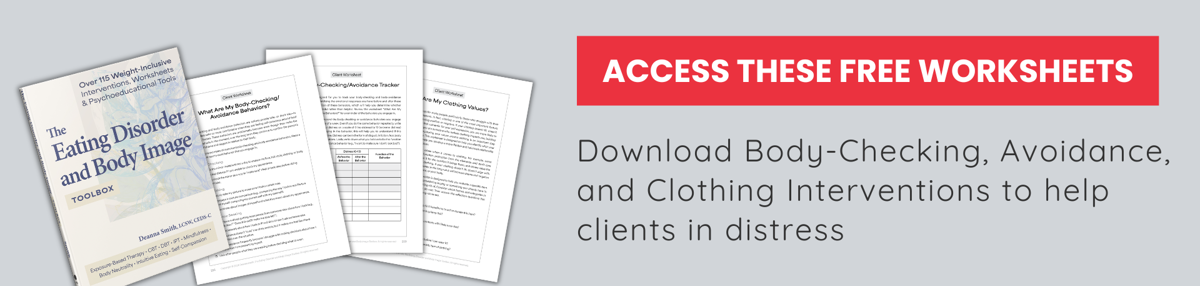
To get started, download these free Body Checking Worksheets for Therapists you can use immediately.
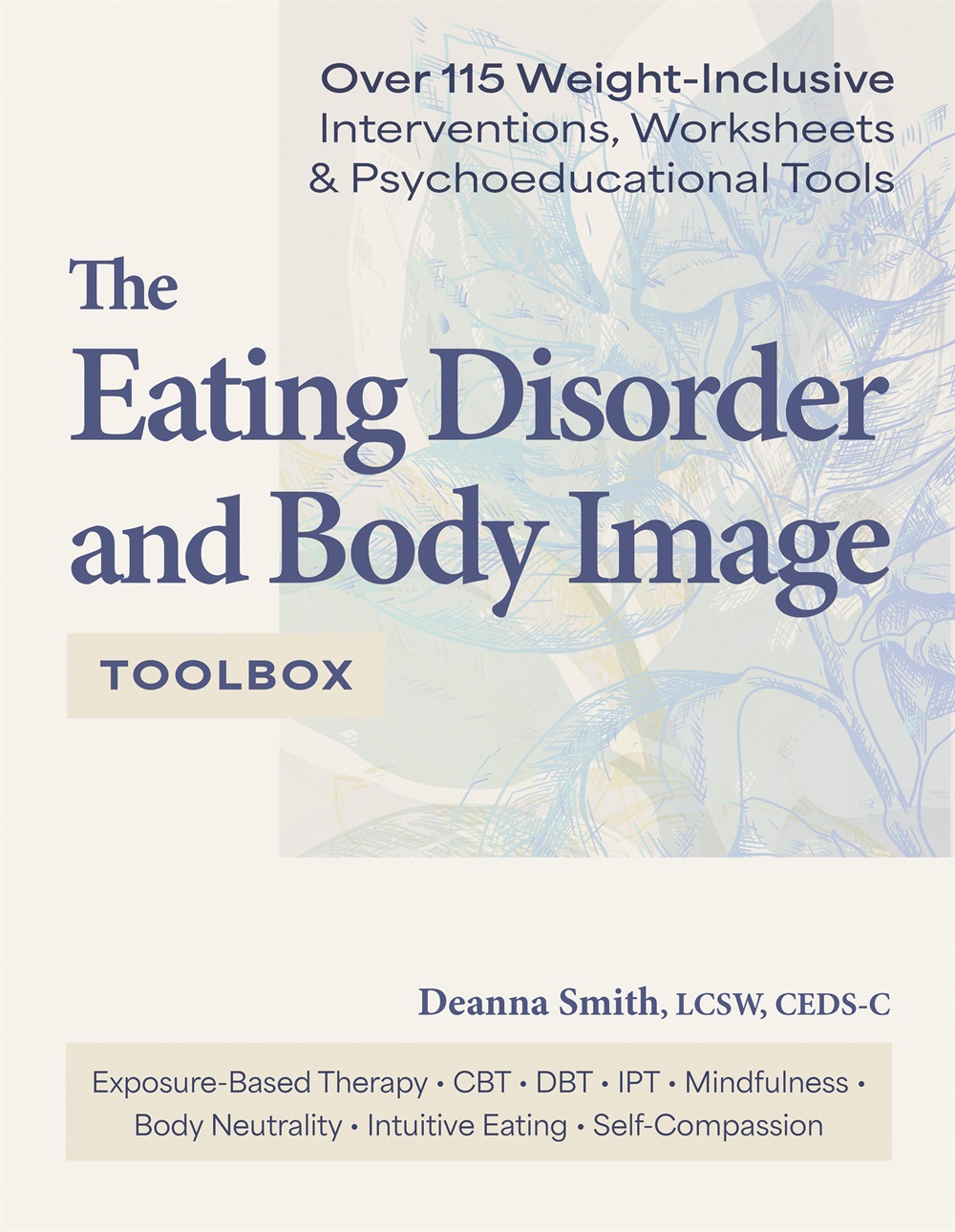
Divided into four easy-to-navigate sections (core knowledge, general interventions, disorder-specific tools, and body image work), this toolbox gives you the foundation you need to support individualized, recovery-oriented care. Think of it as your companion to reshape your clients’ relationships with food and their bodies – starting right now.


Deanna Smith, LCSW, CEDS-C, is a licensed clinical social worker, author, educator, and owner of The Center for Growth, a private practice specializing in eating disorders, body image concerns, body dysmorphic disorder (BDD), obsessive-compulsive disorder (OCD), anxiety disorders, and perfectionism. She has over a decade of clinical experience working with adolescents and adults across multiple levels of care and has presented in specialized spaces on proper assessment and intervention techniques to address these complex disorders.
Deanna is the author of the book The Eating Disorder and Body Image Toolbox, a comprehensive, weight-inclusive resource offering over 115 evidence-based interventions, worksheets, and psychoeducational tools for clinicians. She has served as an Adjunct Professor at the University of Utah and is an author and presenter for PESI, providing professional education locally and internationally on topics including BDD, OCD, perfectionism, body image, and effective therapeutic interventions.
Her clinical work is grounded in evidence-based approaches such as Exposure and Response Prevention (ERP), Cognitive Behavioral Therapy (CBT), Dialectical Behavior Therapy (DBT), and Acceptance and Commitment Therapy (ACT). Deanna is passionate about collaborative, compassionate care and supporting meaningful, sustainable change to support long-term change in clients who are struggling with body dissatisfaction and disordered eating responses.
Speaker Disclosures:
Financial: Deanna Smith maintains a private practice and receives royalties as a published author. She receives a speaking honorarium and recording royalties from PESI, Inc. She has no relevant financial relationships with ineligible organizations.
Non-financial: Deanna Smith has no relevant non-financial relationships.


