How Social Media Subtly Fuels Tension in Couples

The couples that arrive in our offices may not name it, or even consciously acknowledge it, but social media is affecting their relationships. While it doesn’t always create new problems, online influences can often amplify existing ones by inciting a kind of relational restlessness, a persistent sense that the relationship should be better than it is.
Of course, there are the obvious ways in which the screen in our hand steals our attention from our partner as we turn away, ignore, or disengage from the present moment. There might be jealousy or questions around who they’re following or communicating with online. However, there are more insidious influences at play, so subtle that it’s easy for them to go unnoticed.
Our feeds tell us life should be a certain way. It dictates standards for our homes, our bodies, and even our relationships. Each snapshot tells us we’re doing it wrong, that there’s a better, healthier, or more ideal way to function in our lives. It’s easy to feel as if we’re failing and to assume the grass is greener elsewhere. When in reality, we know social media is a series of highlights, with less desirable or mundane images strategically left out.
Here’s a snapshot of how it works: Jane proposes dance lessons to her partner, Dan. With a gentle laugh, he immediately shuts the idea down. She feels dismissed and hurt, even if she already had an idea what his answer would be. She then turns to her phone for comfort where, following her online search for local dance studios, her feed serves up a montage of couples dancing in their living rooms. She then begins to compare their relationship to these strangers’ lives, easily assuming that these couples are stronger, that their partners are more fun, open, or adventurous and the resentment builds. Her scrolling serves her up evidence to support her restlessness.
Then there are the relationship influencers who are more overtly telling us what to do. There was a recent trend encouraging women to test their partner by mentioning a bird they saw out the window to see how they might engage. Based on Gottman’s bids for connection, if they turned toward them with interest, they passed the test, but if they brushed the comment off, they failed. In the latter scenario, the tester is left standing in their living room wondering if they are with the wrong person, while their partner has no idea what they did wrong.
When things go right, these experiments might bolster feelings of success in one’s relationship. But when they go wrong, it’s easy for this one letdown to become fuel for a whole negative internal dialogue about how their partner isn’t good enough. But we know, as therapists, there is no one test that answers the question of whether a relationship will stand the test of time. Some days, depending on what’s going on in our lives, we’re less present, less available. Could it be a signal that they could make more time for connection? Sure. But, it’s certainly not a final prescription for the future.
So, what can we do as couples therapists? What often goes unnamed in the room is the relational restlessness, the if-only thinking that tells us our partner should be different in some way. We can bring awareness to that cultural side effect and educate clients about the influences of media, along with the relationship skills these “tests” are actually based on. We can assess how much social content they’re consuming, ask them directly how they think it’s shaping their relationship, and help them identify the hopes, dreams, and worries underneath the comparisons they’re making.
When we help our clients understand what’s behind comparisons, we get to the heart of their own unmet needs, fears, and longings. The goal is not to blame social media for relationship issues, but to help couples see how it might be exacerbating areas of tension.
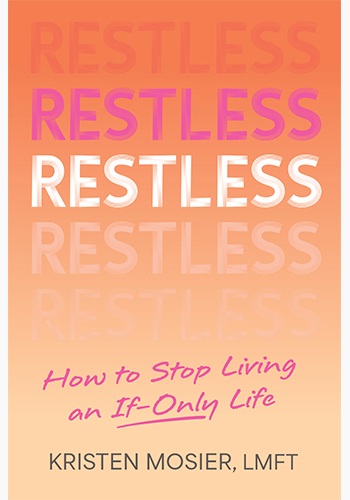
Restless will remind you that you are enough, just as you are. It will help you find the deeper message beneath your discomfort and align your choices with what truly matters to you. Most importantly, you’ll learn how to find the adventure, meaning, and inspiration you long for, right where you are.


