Helping Clients Address Household Inequities in the Therapy Room


Understanding the Mental Load
The mental load is the cognitive and emotional labor involved in household management and caregiving. It includes not just tasks but the anticipation, planning, and execution of those tasks. Research shows that while men often believe they contribute equally, women typically carry two-thirds of this labor. This imbalance can erode trust, satisfaction, and mental health, especially in dual-earner households.6 Ways to Help Clients Address the Invisible Labor
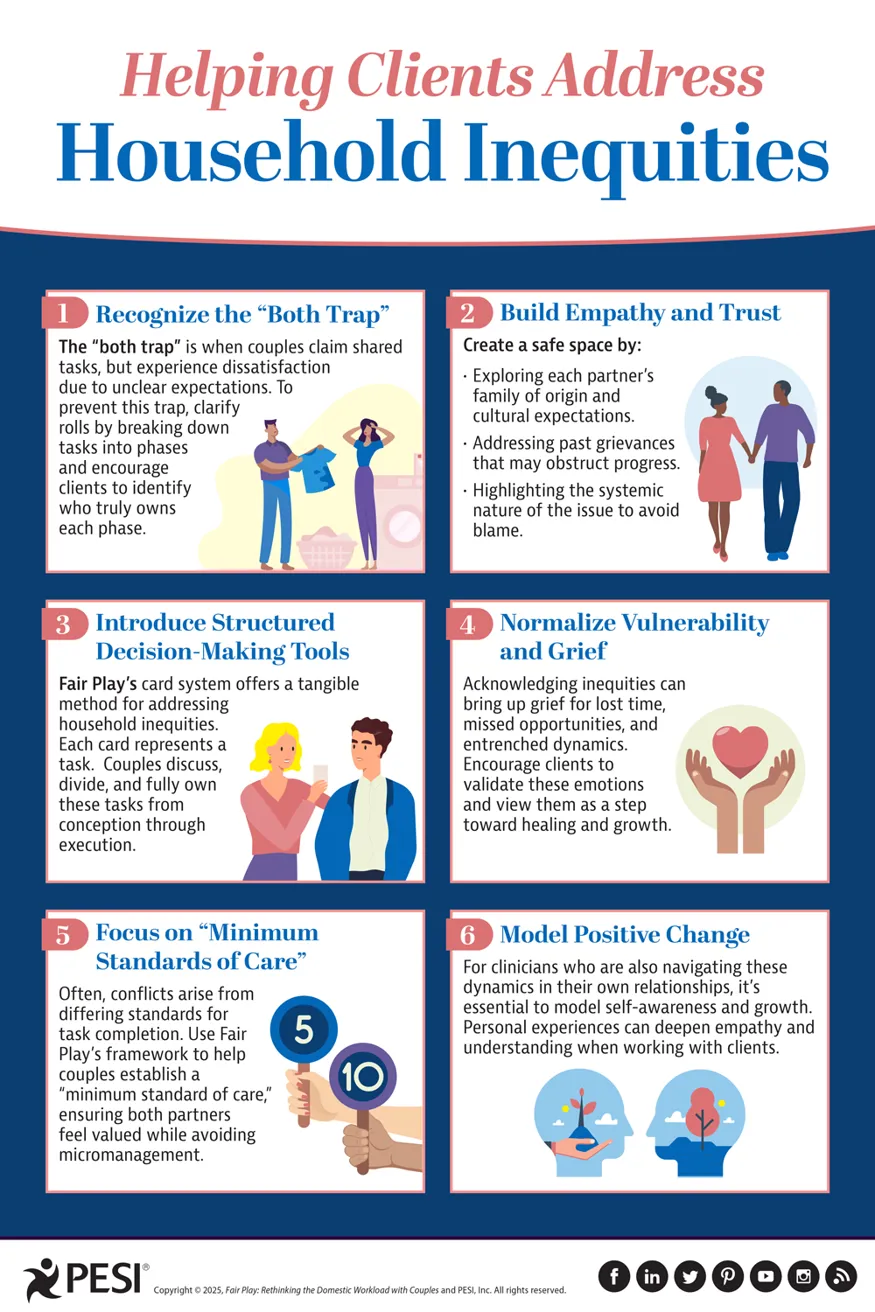
1. Recognize the "Both Trap"Couples frequently fall into the "both trap," where they claim shared responsibility for tasks but experience dissatisfaction due to unclear expectations. Rodsky’s concept of breaking down tasks into Conception, Planning, and Execution (CPE) phases helps clarify roles. Encourage clients to identify who truly owns each phase to avoid misunderstandings and resentment.
2. Build Empathy and Trust
As a therapist, it’s crucial to create a safe space where both partners feel seen and heard. This involves:
- Exploring each partner’s family of origin and cultural expectations.
- Addressing past grievances that may obstruct progress.
- Highlighting the systemic nature of the issue to avoid blame.
Fair Play’s card system offers a tangible method for addressing household inequities. The cards represent 100 possible responsibilities, such as grocery shopping or child’s extracurricular activities. Couples discuss, divide, and fully own these tasks from conception through execution. Use this tool to foster intentional conversations about values and priorities.
4. Normalize Vulnerability and Grief
Acknowledging inequities can bring up grief for lost time, missed opportunities, and entrenched dynamics. Encourage clients to validate these emotions and view them as a step toward healing and growth.
5. Focus on "Minimum Standards of Care"
Often, conflicts arise from differing standards for task completion. Use Fair Play’s framework to help couples establish a "minimum standard of care," ensuring both partners feel valued while avoiding micromanagement.
6. Model Positive Change
For clinicians who are also navigating these dynamics in their own relationships, it’s essential to model self-awareness and growth. Personal experiences can deepen empathy and understanding when working with clients.
As therapists, you have the unique ability to transform lives by helping couples navigate the intricacies of household dynamics. Implementing tools like the Fair Play method empowers clients to foster communication, build empathy, and reestablish trust. By addressing the underlying inequities in household labor, you not only strengthen relationships but also contribute to a broader cultural shift toward fairness and equality.


Eve Rodsky received her B.A. in economics and anthropology from the University of Michigan, and her J.D. from Harvard Law School. She is the author of instant New York Times bestseller, Fair Play. After working in foundation management at J.P. Morgan, she founded the Philanthropy Advisory Group to advise high-net-worth families and charitable foundations on best practices for harmonious operations, governance, and disposition of funds. In her work with hundreds of families over a decade, she realized that her expertise in family mediation, strategy, and organizational management could be applied to a problem closer to home – a system for couples seeking balance, efficiency, and peace in their home. Rodsky was born and raised by a single mom in New York City and now lives in Los Angeles with her husband and their three children.
Speaker Disclosures:
Financial: Eve Rodsky is the founder of Fair Play Policy Institute and receives royalties as a published author. She receives a speaking honorarium, recording, and book royalties from Psychotherapy Networker and PESI, Inc. She has no relevant financial relationships with ineligible organizations.
Non-financial: Eve Rodsky has no relevant non-financial relationships.


