Can’t vs. Wont: The No-Drama Strategy to Help You Respond to Your Child’s Needs


“Mom…….Come in here….. Please!”
It’s well past his bedtime, and he has to be exhausted. When you check-in on him, he says, “Mom, I need water.”
It's easy to grab him a glass of water to pacify him and get him to sleep, but a few minutes later he’s calling again. And again. The excuses keep coming, and your frustration is rising. Is it that he can’t sleep or won’t sleep?
Making this distinction between can’t and won’t will help you respond to your child’s needs, and support him in moments when he is having difficulty managing his emotions and behaviors. Instead of reacting to disobedience, you can respond to your child in a way that builds connection and reduces the unwanted behavior.
In their new book, The No-Drama Discipline Workbook, Dr. Daniel J. Siegel and Dr. Tina Payne Bryson give you resources to distinguish can't from won't. You can download the worksheet to use at home, or provide it as a resource to the parents you work with.
Download the Worksheet: Distinguishing Can’t From Won’t
Daniel J. Siegel, M.D., psychotherapy practice spans 30 years, and he has authored three New York Times bestsellers: Brainstorm, and two books with Tina Payne Bryson, Ph.D., The Whole-Brain Child and No-Drama Discipline. His other books include Mindsight, Pocket Guide to Interpersonal Neurobiology, The Developing Mind, Second Edition, The Mindful Therapist, The Mindful Brain, and Parenting from the Inside-Out (with Mary Hartzell, M.Ed.), and The Whole-Brain Child Workbook (with Tina Payne Bryson), and he is the founding editor of the Norton Series on Interpersonal Neurobiology. Dr. Siegel has been invited to lecture for the King of Thailand, Pope John Paul II, His Holiness the Dalai Lama, Google University, and TEDx.
Dr. Tina Payne Bryson, is a pediatric and adolescent psychotherapist and the Executive Director of the Center for Connection in Pasadena, CA. She is also the co-author (with Dan Siegel) of two New York Times bestsellers: The Whole-Brain Child and No Drama-Discipline, along with The Whole-Brain Child Workbook. You can learn more about her at www.TinaBryson.com, where you can subscribe to her blog and read her articles about kids and parenting.

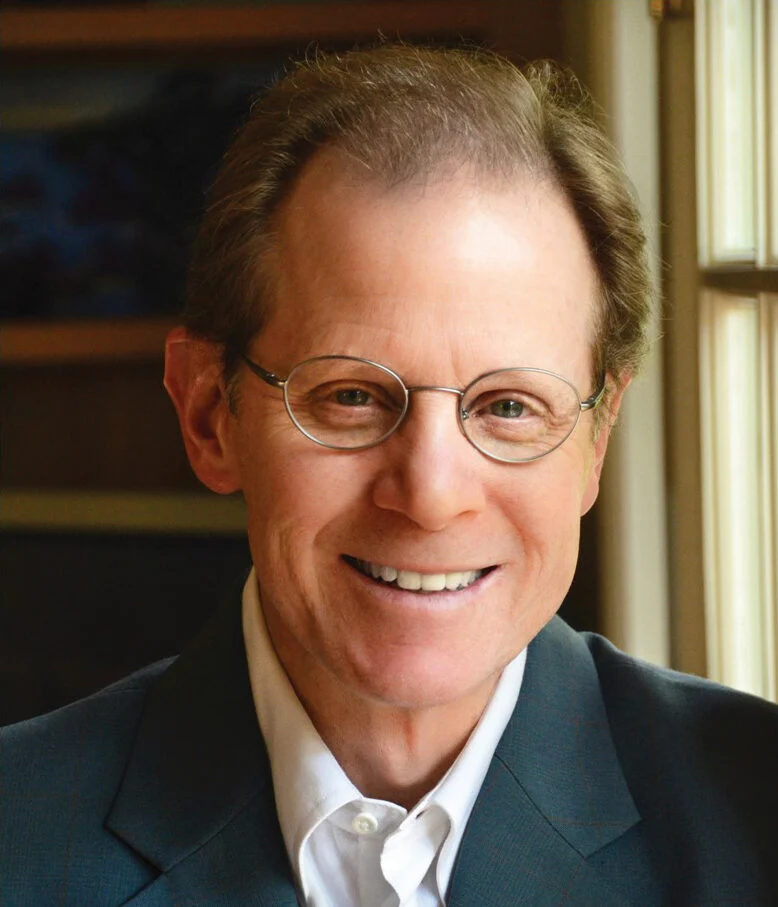
Dr. Dan Siegel is the founder and director of education of the Mindsight Institute and founding co-director of the Mindful Awareness Research Center at UCLA, where he was also co-principal investigator of the Center for Culture, Brain and Development and clinical professor of psychiatry at The School of Medicine.
An award-winning educator, Dan is the author of five New York Times bestsellers and over fifteen other books which have been translated into over forty languages. As the founding editor of the Norton Professional Series on Interpersonal Neurobiology (“IPNB”), Dan has overseen the publication of over one hundred books in the transdisciplinary IPNB frame which focuses on the mind and mental health.
A graduate of Harvard Medical School, Dan completed his postgraduate training at UCLA specializing in pediatrics, and adult, adolescent, and child psychiatry. He was trained in attachment research and narrative analysis through a National Institute of Mental Health research training fellowship focusing on how relationships shape our autobiographical ways of making sense of our lives and influence our development across the lifespan. Financial: Dr. Dan Siegel serves as the Medical Director at the Lifespan Learning Institute and is the Co-Founder and Director of Education at the Mindsight Institute. He is also the founding editor of the Norton Series on Interpersonal Neurobiology. Dr. Siegel receives royalties as a published author and serves as a scientific advisor for the Inner Development Goals initiative and as an advisor for the Center for Child Well-Being. Additionally, he receives honoraria and recording royalties from Psychotherapy Networker and PESI, Inc. Dr. Siegel has no relevant financial relationships with ineligible organizations.
Speaker Disclosures
Financial: Dr. Dan Siegel serves as the Medical Director at the Lifespan Learning Institute and is the Co-Founder and Director of Education at the Mindsight Institute. He is also the founding editor of the Norton Series on Interpersonal Neurobiology. Dr. Siegel receives royalties as a published author and serves as a scientific advisor for the Inner Development Goals initiative and as an advisor for the Center for Child Well-Being. Additionally, he receives honoraria and recording royalties from Psychotherapy Networker and PESI, Inc. Dr. Siegel has no relevant financial relationships with ineligible organizations.
Non-financial: Dr. Dan Siegel is an honorary member of the Austrian Federal Association for Mindfulness. He also serves on the Board of the Garrison Institute and as an advisory board member for both Gloo and Convergence.
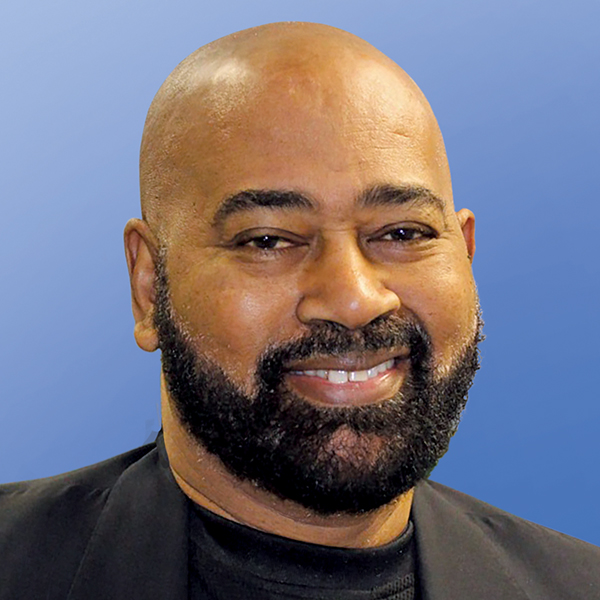
Kenneth V. Hardy, PhD, is president of the Eikenberg Academy for Social Justice and clinical and organizational consultant for the Eikenberg Institute for Relationships in NYC, as well as a former professor of family therapy at both Syracuse University, NY, and Drexel University, PA. He’s also the author of Racial Trauma: Clinical Strategies and Techniques for Healing Invisible Wounds, and The Enduring, Invisible, and Ubiquitous Centrality of Whiteness, and editor of On Becoming a Racially Sensitive Therapist: Race and Clinical Practice.
Speaker Disclosures:
Financial: Kenneth Hardy receives compensation as a Clinical and Organizational Consultant. He receives royalties as a published author. Kenneth Hardy receives a speaking honorarium and book royalties from Psychotherapy Networker and PESI, Inc. He has no relevant financial relationships with ineligible organizations.
Non-financial: Kenneth Hardy has no relevant non-financial relationships.

Dr. Tina Payne Bryson (she/her) is the co-author (with Dan Siegel) of two New York Times bestsellers - The Whole-Brain Child selling over a million copies. Dr. Bryson is also the author of The Bottom Line for Baby (Random House 2020) and co-author (with Dan Siegel) of The Power of Showing Up (Random House 2020) and The Yes Brain (Random House 2018). Her upcoming book, The Way of Play (Random House 2025), co-authored with Georgie Wisen-Vincent, will be released January 2025.
Tina is an LCSW, and the founder/executive director of The Center for Connection (“CFC”), a multidisciplinary clinical practice with an interpersonal neurobiology lens; of the Play Strong Institute, a center devoted to the study, research, and practice of play therapy through a neurodevelopment lens; and The Center for Connection and Neurodiversity, a wing of the CFC devoted to celebrating neurodifferences and providing brain-based occupational therapy, and interdisciplinary clinical work across the lifespan.
Tina keynotes conferences and conducts workshops for kids, parents, educators, clinicians, and industry leaders all over the world, and she makes frequent media appearances (for example, in TIME Magazine, Good Morning America, Huffington Post, Redbook, The New York Times, The Wall Street Journal, and Real Simple). When she isn’t teaching, she consults with various companies and organizations, including the Nike Sport Research Lab (NSRL) where she was project director for mental or emotional performance, offering direct support to athletes and supporting research. She also works as a child development specialist at St. Mark’s School in Pasadena, CA. A graduate of Baylor University, Tina earned her LCSW and PhD from the University of Southern California, where her research explored attachment science, childrearing theory, and the emerging field of interpersonal neurobiology.
Tina emphasizes that before she’s a parenting educator, or a researcher, she’s a mom. She limits her clinical practice and speaking engagements so that she can spend time with her family. Alongside her husband of 30 years, parenting her three boys is what makes her happiest.
Tina’s professional life now focuses on taking research and theory from various fields of science, and offering it in a way that is clear, realistic, humorous, and immediately helpful. As she puts it, “For parents, clinicians, and teachers, learning about how kids’ (and their own) brains work is surprisingly practical, informing how they approach discipline, how they help kids deal with everyday struggles, and ultimately how they connect with the children they care about.”
Speaker Disclosures:
Financial: Tina Payne Bryson is the Founder and Executive Director of The Center for Connection and The Play Strong Institute and has an employment relationship with Saint Mark's Episcopal School. She receives royalties as a published author. Tina Payne Bryson receives a speaking honorarium, book and recording royalties from PESI, Inc. She has no relevant financial relationships with ineligible organizations.
Non-financial: Tina Payne Bryson serves on the advisory board for Austin Interpersonal Neurobiology and Fuel Ed. She is a member of the National Association of Social Workers, is a distinguished member of the San Gabriel Valley Psychology Association, and a member of Sensorimotor Psychotherapy Institute.


