
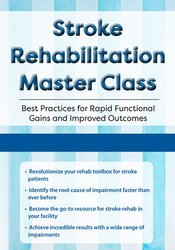
Stroke Rehabilitation Master Class
Best Practices for Rapid Functional Gains and Improved Outcomes
- Speaker:
- Jonathan S. Henderson, PT, DPT, C/NDT
- Duration:
- 5 Hours 38 Minutes
- Format:
- Audio and Video
- Copyright:
-
Oct 04, 2019
- Product Code:
- POS063830
- Media Type:
- Digital Seminar

Description
Working with stroke patients is deeply meaningful and incredibly rewarding.
And you strive to help each patient who’s counting on you to facilitate improvements that will change their lives. But some patients are so impaired that treatment becomes overwhelming.
Others make exceptional gains in clinical settings, only to hit a wall in less controlled environments.
As time passes without results, even the most promising patient can feel the sun setting on the person she used to be, growing disengaged and depressed -- convinced she can’t progress further with therapy.
If you’re not up to speed on the latest treatment strategies, she might be right.
Built on today’s best practices, this program will show how to apply effective techniques that completely redefine what’s possible for your patients!
Discover tools and strategies that have helped countless survivors leave their limitations behind, even 10 years post stroke.
Leave this one-of-a-kind training knowing that when your next patient tells you how she hopes to return to work or stay active with her grandkids, you’ll be able to confidently guide her toward rapid functional improvements with the best methods available in neurological rehab!
Credit
Handouts/Brochure
| File type | File name | Number of pages | |
|---|---|---|---|
| Manual - Stroke Rehabilitation Master Class (1.7 MB) | 34 Pages | Available after Purchase |
Speaker
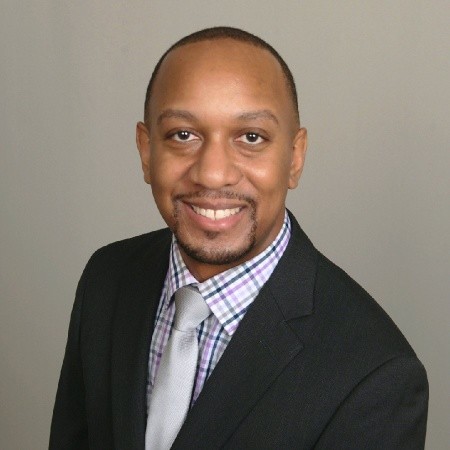
Jonathan S. Henderson, PT, DPT, C/NDT Related seminars and products
Bartlett NeuroRehab Physical Therapy
Additional Info
Access for Self-Study (Non-Interactive)Access never expires for this product.
Questions?
Visit our FAQ page at www.pesi.com/faq or contact us at www.pesi.com/info
Objectives
- Analyze the latest advances in stroke recovery and their implications for therapy.
- Determine strategies for identifying the root causes of post-stroke impairments faster.
- Integrate effective interventions that can be used immediately to improve function, multitasking, balance, gait, strength, flexibility and mobility.
- Combine multiple interventions more effectively for better results, including dual task interventions, NDT, constraint induced movement therapy, balance and gait training, exercise, and functional activities.
- Design effective, innovative plans of care for a wide range of neurological impairments.
- Apply the assessments and interventions discussed in this seminar to a series of interactive case scenarios.
Outline
Hot Topics and Innovations in Stroke Rehabilitation- How your patients can benefit from cutting edge research
- Today’s best evaluations for:
- Sensory and coordination
- Visual changes
- Synergies and motor recovery
- Weakness and reflexes
- Muscle tone and flaccidity
- Perception and cognition
- Postural control
- Gait, balance and coordination
- Hands-on Lab
- Effective techniques you can use immediately to:
- Ignite neuroplasticity for breakthrough results
- Restore functional strength more quickly
- Enhance function and multi-tasking ability
- Reduce spasticity
- Restore limb use
- Resolve impairments from a more functional, person-centered perspective
- Improve transfers with less strain
- Prevent falls with effective gait training
- Improve strength, balance and coordination
- Design a more effective home program
- Intensify therapy safely and effectively
- Re-engage difficult or depressed patients
- Hand-on Lab
- Practice integrating:
- Constraint-induced movement therapy
- Task-specific training
- Dual task interventions
- Neuro-developmental Treatment (NDT)
- Neuro-handling techniques
- Balance and gait training
- Postural control
- PNF (proprioceptive neuromuscular facilitation)
- Functional activities
- Therapeutic exercise
- Technological advances
- Neuroplasticity-building interventions
- Hands-on Lab
- Comprehensive treatment strategies for specific impairments, including:
- Ataxia
- Hemiparesis
- Neglect
- Pusher syndrome
- Spasticity
- Subluxation
- Gait and mobility
- Decreased sensation
- Reduced flexibility
- Muscular weakness
- Timing/coordination
- Hand-on Lab
- Case study 1: Correctly select the root cause of impairment
- Case study 2: Apply advanced gait training and multitasking techniques
- Case study 3: Re-engage a difficult or depressed patient
- Case study 4: Overcome barriers to effective strategy implementation
- Case study 5: Adjust your plan of care for technological advances
- Coding and billing updates
- Justify therapy with the right progress measures
- Avoid denials and audits with these tips
Target Audience
- Physical Therapists
- Physical Therapist Assistants
- Occupational Therapists
- Occupational Therapy Assistants
- Therapy Directors
- Nurses
- Nurse Practitioners
- Physician Assistants
Reviews
| 5 |
|
| 4 |
|
| 3 |
|
| 2 |
|
| 1 |
|
Overall: 4.6
Total Reviews: 11
Satisfaction Guarantee
Your satisfaction is our goal and our guarantee. Concerns should be addressed to: PO Box 1000, Eau Claire, WI 54702-1000 or call 1-800-844-8260.
ADA Needs
We would be happy to accommodate your ADA needs; please call our Customer Service Department for more information at 1-800-844-8260.
PESI Mobile App
Access CE trainings on your phone or tablet through our free mobile app. Choose video or audio-only versions of online courses from the world’s best instructors, and complete your CE requirements anywhere, anytime, at your own pace.




Please wait ...