Why is Narcissistic Abuse So Hard to Treat?


Many times, they may say, “I don’t even feel like I’m myself when I’m reacting to this person.”
But on some level, our clients’ reactions when they’re having to manage someone with a difficult personality is nothing more than normal behavior.
So – why are we too often coming up short in helping these individuals? And how can we begin to do better?
We Don’t Talk About People Outside of the Room or Infer Motivation
To give us context, let's imagine we're dealing with a married man and woman.
The woman is coming to you and talking about manipulative patterns in her relationship. She feels confused and as though her truth and reality are being denied. There’s frequent lying and a lot of antagonistic patterns.
As clinicians, we have to grapple with whether or not the husband in this case matters – or is our sole concern the experience of the person who’s up against these patterns?
We have to decide whether the husband matters in this case. Or is our sole concern the experience of the person who’s up against these patterns?
Can we actually help a client in this situation without understanding narcissism? Can we help the client who is being affected by these patterns without explaining what the nature of these personality patterns are?
As therapists, we're trained not to talk about people who are not in the room. We’re trained not to infer their motivations or make too many presumptions about them. The fact is, though, that clients suffering from narcissistic abuse are coming to your practice.
We Pathologize and Diagnose Those Experiencing Relational Abuse
Our field has a long history of pathologizing and diagnosing those who are experiencing relational abuse.
What we need to ask ourselves is if their response to this chronic manipulation is actually normal. But we don’t see the perpetrators, and so we’re left to pathologize the survivors.
We Apply Traditional Models Ineffectively
Many people work within a cognitive behavioral therapy format. This can be used in people who are experiencing narcissistic abuse, but it has to be used carefully. Too often, it tends to internalize conflicts solely within the individual who is then told to think differently or find a different way to think about the situation.
We need to use a different psychoeducational format to approach these cognitive behavioral techniques. Otherwise all we’re telling our client is to think differently about what’s happening to them in a narcissistic relationship.
We Avoid Addressing Structural and Systemic Issues
As therapists, we always have to keep in mind structural and systemic issues.
There's a world our clients are based in, not just their relationships and families, but many, many other societal structures that they're having to intersect with. This is where intersectionality matters. We need to see our client wholly on the basis of race, ethnicity, gender, sexual orientation, religion, nationality, and culture. All of those things matter.
Each of our clients lives in a world that's going to result in differential experiences and double down on antagonistic relational dynamics through other issues like systemic oppression, racism, discrimination, and classism.
We Lack Training in Personality Disorders
A lot of therapists aren't trained in personality disorders. I know when I look back at my graduate school experience, we didn't even have a singular course on personality disorders, and they got only a brief mention in the psychopathology course that I took.
This is a real issue, because high conflict personality styles are so much of what can really sap a clinician's bandwidth. Not only that, but they cause a lot of distress for family members, colleagues, partners, and friends. We need to be aware of these patterns.
And when we do talk about people with personality disorders, we often focus on the trauma-informed perspectives and sometimes even neurobiology. We rarely talk about how this impacts other people in their purview. If you’ve worked with clients with personality disorders, you know this is hard work. It took a toll on you. If it's taken a toll on you, wouldn't it then take a toll on the other people in proximity to the client with the personality disorder?
So How Can We Begin to Do Better?
Psychoeducation is a key element of this. You’re not diagnosing the person who's not in the room, but you can talk about this in language that doesn't even use narcissism. It almost becomes the game we play with our kids where you have to describe an ice cream cone without saying the word cold. You may have to describe a narcissistic individual without saying the word narcissistic. And it's quite doable.
By understanding the dynamics of narcissism and narcissistic relationships, you can actually give more realistic kinds of recommendations to these clients and have a more realistic sense of the course of therapy with them.
This is an adapted excerpt from Working with Narcissistic Abuse: Addressing the Impact of High-Conflict Personality Styles, a presentation by Ramani Durvasula, PhD, LCP, at the 2021 Psychotherapy Networker Symposium.

Featuring the biggest names in the field, including Dr. Ramani Durvasala, Terry Real, Wendy Behary, Dr. Lindsay Gibson and 8 other experts, this course will give you the strong foundation you need to identify this hidden manipulative abuse and respond to it effectively. Our experts will give you the clinical tools you need to identify gaslighting, avoid clinical mis-steps, help your clients establish boundaries, safely leave abusive situations, end their self-blame and self-shame, regain their personal power and much more!
If you have clients in your caseload who lack self-esteem, can’t say no, and blame themselves for everything... you can’t miss this chance to learn from the field’s leading experts, and help clients break free from the cycle of toxic abuse!
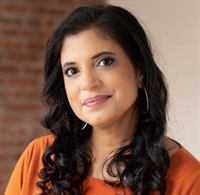
Ramani Durvasula, PhD is a psychologist in California, the founder and CEO of LUNA Education, Training and Consulting, and professor emerita of psychology at California State University Los Angeles. She is The New York Times bestselling author of It’s Not You: Identifying and Healing from Narcissistic People. She is also the author of multiple other books including ”Don’t You Know Who I Am”: How to Stay Sane in the Era of Narcissism, Entitlement and Incivility and Should I Stay or Should I Go: Surviving a Relationship with a Narcissist. She has lectured and trained therapists around the world on best practices on working with clients experiencing narcissistic abuse and has developed a 36 hour virtual training and certification program in conjunction with PESI to train clinicians on how to use an antagonism-informed approach with clients experiencing narcissistic relationships.
Dr. Durvasula hosts a popular YouTube channel with over 2 million subscribers, maintains a program offering support and education to thousands of survivors, and is a featured expert on the digital media platform MedCircle. She also maintains an engaged online network called the Dr. Ramani Network. She has also been widely involved in the governance of the American Psychological Association, including the APA Leadership Institute for Women in Psychology and the APA Minority Fellowship Program. Dr. Durvasula received her MA and PhD degrees in clinical psychology from UCLA and completed her internship and post-doctoral training at the UCLA Department of Psychiatry. She completed her Bachelor of Science degree in psychology, with a minor in sociology in 1988 at the University of Connecticut. She resides in Los Angeles, CA.
Speaker Disclosures:
Financial: Ramani Durvasula is the founder and CEO of LUNA Education, Training, and Consulting and has an employment relationship with the University of Johannesburg. Ramani Durvasula receives royalties as a published author. She receives a speaking honorarium and recording royalties from Psychotherapy Networker and PESI, Inc. She has no relevant financial relationships with ineligible organizations.
Non-financial: Ramani Durvasula is an associate editor for Behavioral Medicine. She is a member of the American Psychological Association, the Association for Psychological Science Society for Behavioral Medicine, and the International Association of Applied Psychology.


