Using Mindfulness to Support Clients with Sociopolitical Unrest

Your clients are likely bringing their reactions to sociopolitical events into therapy more often these days. We have a responsibility to honor and address impacts of cultural and environmental circumstances on the individual experience. If this is new to you, or if you’re also feeling overwhelmed by the current sociopolitical landscape, you may find yourself experiencing strong emotions, freezing up, or deflecting thanks to a fear you may say the “wrong thing.”
How Mindfulness Can Help Support Clients
Mindfulness is the practice of intentionally bringing awareness to internal events (thoughts, emotions, physical sensations) and external events (sights, sounds, smells in your environment, etc.) without judgment (Kabat-Zinn, 2003). Based on the premise that all experiences are impermanent, mindfulness allows you to create a healthy distance from thoughts and feelings rather than being defined or overwhelmed by them. By allowing you to see and understand your emotions beforehand, this practice helps you to remain present and aware of your own reactions to unexpected topics, and to engage in values consistent clinical conversations.
Mindfulness in Practice
Mindfulness is a skill that requires regular practice. Like any muscle, it will atrophy with disuse. Here is a simple exercise for therapists to practice building mindfulness around challenging therapeutic conversations.
Practice this activity in the space where you normally conduct therapy sessions, arranging the room as if you were seeing a client. Recall a recent encounter, or imagine a potential future encounter, that may evoke a personal reaction or fear of saying “the wrong thing.” Take a few slow breaths, keeping your eyes open and notice the following:
- Physical sensations: How is your body resting or alert in different places? Can you feel your clothing or the sensation of moving air on exposed skin? How does it feel to breath in and out naturally? Notice how your body feels while you sit here as a therapist, compared to other moments in your day.
- Emotions: Name the emotions coming along with you into this exercise. What emotions are associated with the possibility of a client bringing up a recent sociopolitical event?
- Thoughts: Can you name the thoughts associated with these sensations, as you imagine a potential or past scenario? Remember to name these thoughts without judging.
Move your body and take a few, full breaths, to transition out of this state of awareness.
Noticing and naming these experiences allows you to choose how to show up as your best therapist self, not dictated by distracting emotions. From this stance, communicate with intention and recognize what your client needs from you in this moment. Do they need to know they're not alone in their reactions or fears? To have a safe space to process their thoughts and feelings? Or could they be looking for you to collude in harmful stereotypes or misinformation? Using mindfulness clears the way to identify the need and decide how you want to respond (hopefully not colluding!).
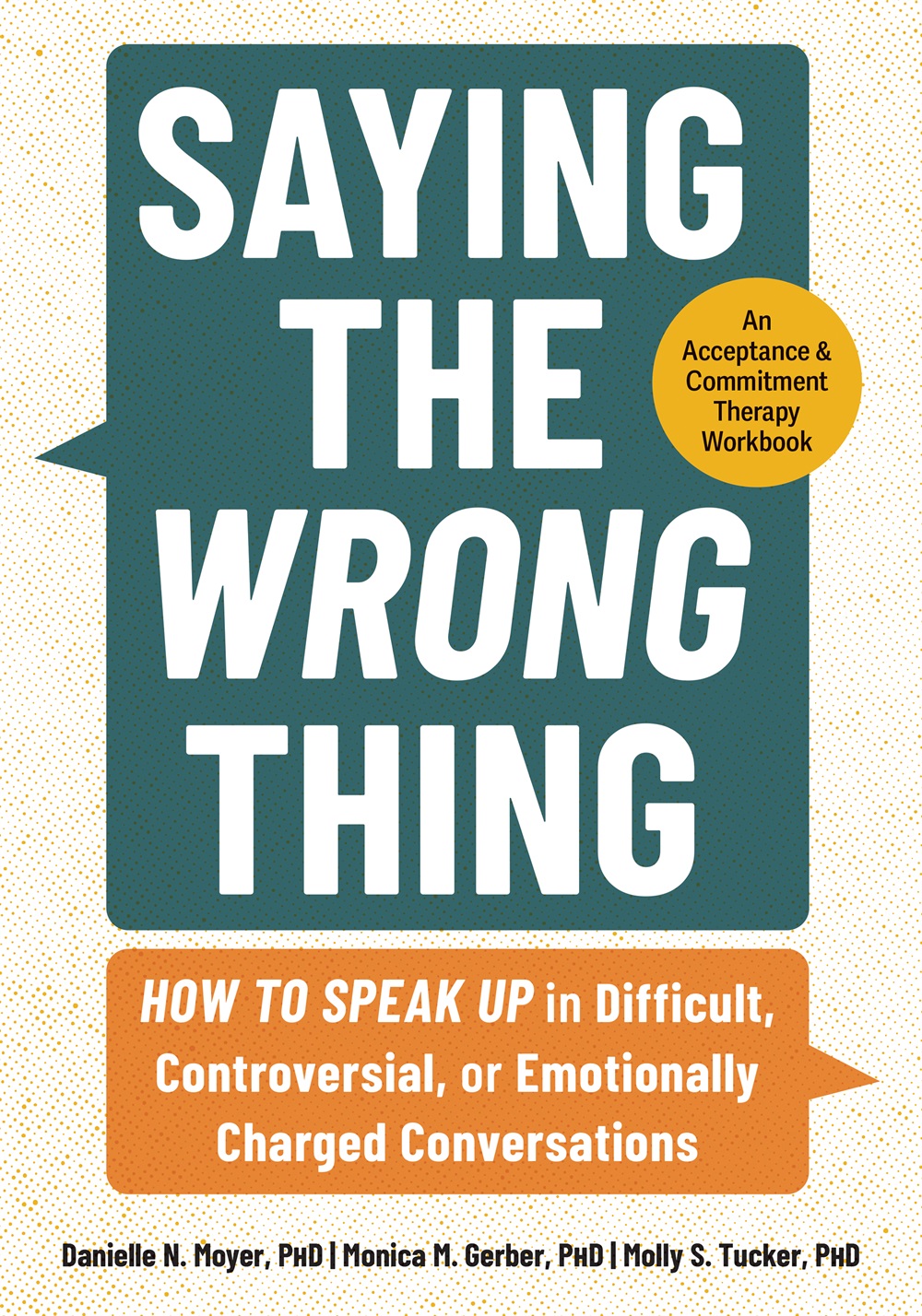
In Saying the Wrong Thing, you’ll learn a variety of skills to effectively engage in conversations that are important to you, even when they’re hard. Based on a revolutionary treatment approach known as acceptance and commitment therapy (ACT), this book provides a road map for working through your own discomfort and navigating difficult conversations before, after, and even as they occur.