Survivor’s Guilt Isn’t Cognitive Distortion—It’s Brain Protection

There is a particular pain in survivor’s guilt that does not soften just because someone can explain it.
Your client may know, logically, that they did not cause the loss. And still, the loop persists: I should have done more. I should have seen it. Why them and not me?
As clinicians and healers, we can feel the temptation to move quickly toward reframing. But survivor’s guilt often asks something different of us first.
It asks us to slow down enough to recognize that the guilt is serving a function.
Not a healthy one. Not a comfortable one. But a meaningful one.
From a neuroscience perspective, survivor’s guilt often emerges when the brain is trying to restore safety, belonging, and agency after something overwhelming. The mind begins searching for an explanation that can make the unbearable feel more predictable. And all too often, that explanation turns inward: If I can find what I did wrong, maybe I can prevent this from ever happening again.
That is why survivor’s guilt can feel so relentless. The brain is not simply holding a thought. It is holding a protective strategy.
When guilt becomes a full-body grief pattern
This is why cognitive insight alone so often falls short.
A client may be able to say, with complete clarity, “I know it wasn’t my fault,” while their chest tightens, their stomach drops, their mind races, and their body behaves as though danger is still active. Survivor’s guilt is rarely just cognitive. It lives across thought, physiology, sensation, and emotion.
That is why I often return to C.A.S.E. as a clinical guide.
Because when guilt is sticky, we need a way to map the whole system.
In the Brain Partnership approach, C.A.S.E. helps us track what the brain is doing across Cognitions, Autonomic state, Somatosensory experience, and Emotions, and then choose one small intervention to help downshift threat physiology and widen capacity (Truitt, 2024).
Using C.A.S.E. in the room
When survivor’s guilt is activated, instead of debating the thought, you can gently guide the client through the C.A.S.E. sequence.
C — Cognitions
Begin with the mind.
Ask:
What is the strongest thought your brain keeps returning to?
What is the meaning underneath that thought? Responsibility? Fairness? Loyalty? Safety?
This is such an important shift. We are not just listening for content. We are listening for what the brain is trying to protect.
A — Autonomic state
Then move to the nervous system.
Ask:
As you say that thought, do you notice your system upshifting or downshifting?
Do you feel racing, tight, agitated—or numb, heavy, foggy?
If you had to rate the intensity right now from 0 to 10, where are you?
This helps clients move from identification with the story into awareness of their state.
S — Somatosensory experience
Now bring attention to the body.
Ask:
Where do you feel this in your body?
What does it feel like in sensory words—tight, hollow, burning, frozen, aching?
What is the movement or energy of it?
This step matters because guilt is so often carried as sensation before it is fully understood as language.
E — Emotions
Then widen to the emotional field.
Ask:
What feelings are here besides guilt?
Is there shame? Sadness? Fear? Relief? Longing? Love? Numbness?
What feels primary right now, and what feels secondary?
This is often where the deeper truth begins to emerge.
Because survivor’s guilt is rarely only guilt. It is often grief, love, helplessness, fear, and longing braided together.
The goal is not to erase guilt
One of the most powerful elements of the C.A.S.E. framework is what comes next.
After mapping the pattern, we do not try to fix everything at once. We know we can’t. Instead, we choose one next right step.
Maybe the target is arousal. Maybe it is rumination. Maybe it is shame, avoidance, or meaning. And from there, we apply one small tool: gentle bilateral tapping with a slower exhale, a brief working-memory task paired with mindful touch, or one compassionate statement that helps the brain soften its grip.
Our pacing matters. Because the goal is not to eliminate guilt as quickly as possible. The goal is to help the brain update its protective strategy. To help it realize that self-blame is not the only path toward connection, control, or love.
Sometimes the most healing moment in a session is not when the guilt disappears. It is when the nervous system no longer has to organize itself entirely around it.
Why this matters for clinicians and healers
For those of us who work with traumatic grief, survivor’s guilt can be one of the places clients get most stuck—and one of the places we can feel most pressured to “say the right thing.”
But this work is not about finding the perfect reframe.
It is about helping clients experience enough safety and enough compassionate curiosity that the whole pattern can begin to open up and change.
C.A.S.E. gives us a map for that, it provides us with a grounded way to follow the brain’s logic with respect, precision, and care.
An invitation to deepen this work
If this resonates with your clinical work, and you want to deepen your capacity to hold patterns like survivor’s guilt with more confidence and embodiment, I would love to invite you to join me at my upcoming Traumatic Grief Retreat in Costa Rica.
This retreat is designed for clinicians and healers who want to move beyond theory and into lived integration—to better understand the neuroscience of grief, practice brain-based interventions in real time, and strengthen the nervous system capacity this work asks of us.
You can learn more and register here. Use KATE400 and get an additional discount when you register for the retreat.
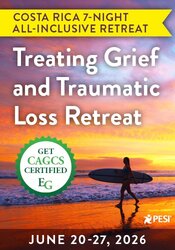
Join us for this transformative 7-night retreat in the nourishing and awe-inspiring Blue Zone area of Costa Rica for the Treating Grief and Traumatic Loss Retreat.

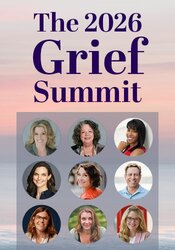
Join world-class faculty David Kessler, Kate Truitt, Erica Sirrine, Janina Fisher, Tiffani Dilworth and 5 other leading experts re-shaping how we view and work with grief.

Enhance your therapeutic toolkit with interventions that bridge the latest research in neuroplasticity and trauma treatment with the deeply human experience of grief, loss, and trauma.

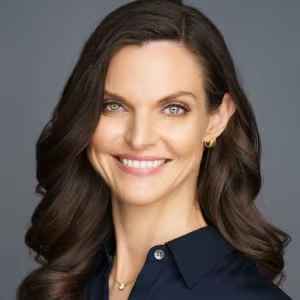
Dr. Kate Truitt, a clinical psychologist, applied neuroscientist, and international bestselling author, is an expert in trauma, stress, and resilience. She is the founder of the educational platform Truitt Institute and leads her award-winning clinical team at Dr. Kate Truitt & Associates. As a member of the Goldie Hawn Foundation’s MindUP Scientific Advisory Committee and a co-developer of the Havening Techniques®, as well as an expert contributor to the Kevin Love Fund and Girl Scouts of America, Dr. Truitt passionately advocates for mental health literacy and personal empowerment globally. Her voice in the mental health arena extends to her role as a speaker and media consultant, including being featured in BBC and Today, and speaking at prestigious platforms like the United Nations and the United States Department of Defense. Dr. Truitt founded and is the chairman of the board for the Amy Research Foundation, a 501c3 organization focused on advancing research into the innovative treatment realm of neuroscience-based mental health and wellness interventions. As the author of her memoir, #1 top new release Keep Breathing: A Psychologist’s Intimate Journey Through Loss, Trauma, and Rediscovering Life and the international bestseller Healing in Your Hands: Self-Havening Exercises to Harness Neuroplasticity, Heal Traumatic Stress, and Build Resilience, she is dedicated to advancing the treatment of traumatic stress while making significant strides in destigmatizing mental health and fostering resilience worldwide.
Speaker Disclosures:
Financial: Dr. Kate Truitt is the President and Founder of Dr. Kate Truitt & Associates; Chief Executive Officer of the Trauma Counseling Center of Los Angeles; Executive Director and Founder of the Amy Research Foundation; and Executive Director of the Truitt Institute. Dr. Truitt receives royalties as a published author and compensation as a presenter. She serves as a scientific advisor and board member for Anti-AgingGames.com and the Goldie Hawn Foundation. She also receives speaking honoraria and recording royalties from Psychotherapy Networker and PESI, Inc. All relevant financial relationships with ineligible organizations have been mitigated.
Non-financial: Dr. Kate Truitt is a member of the American Psychological Association, the Association for Psychological Science, the American Association for the Advancement of Science, the International Society for Traumatic Stress Studies, the American Cognitive Training Association, and the American College of Healthcare Executives.


