Stress vs. Burnout: Navigating the Fine Line Between Pressure and Exhaustion


Have you ever felt like you were running on empty, pushing through endless demands unable to catch your breath? As therapists, you’ve likely seen it, or even experienced it yourself. When the lines between hard work and sheer exhaustion blur, what you're experiencing might be more than just stress—it's burnout.
Stress and burnout can present themselves quite similarly at first but are two completely different issues. While stress is a short-term response to outside pressures, burnout is a chronic condition that stems from prolonged stress. Think of stress like weather, with stress levels changing day to day in response to the environment. On the other hand, burnout can be better compared to climate, having overall patterns.
Stress is generally more manageable than burnout because it tends to be a temporary response to outside stressors or challenges. Once the stressor is resolved or removed, the individual tends to return to a baseline mood and functionality quickly.
There are two different types of stress reactions:
There are three different types of burnouts:
While stress and burnout have many common attributes, they are fundamentally different in their nature and impact. Stress is a temporary response to external pressures that can often be managed or resolved, whereas burnout is a chronic, long-term condition that requires intentional intervention and lifestyle adjustments to overcome. Understanding the types and stages of burnout, along with their warning signs and actionable remedies, is the key to prevention.
Click here to download a bonus chapter on burnout from Toxic Productivity, where you can get more information on burnout including the five stages of burnout, warning signs, and replacement activities for you and your clients.
Stress and burnout can present themselves quite similarly at first but are two completely different issues. While stress is a short-term response to outside pressures, burnout is a chronic condition that stems from prolonged stress. Think of stress like weather, with stress levels changing day to day in response to the environment. On the other hand, burnout can be better compared to climate, having overall patterns.
Stress is generally more manageable than burnout because it tends to be a temporary response to outside stressors or challenges. Once the stressor is resolved or removed, the individual tends to return to a baseline mood and functionality quickly.
There are two different types of stress reactions:
- Acute stress: This type of stress results from sudden changes in our environment (for example, job interviews, presentations, work deadlines).
- Episodic stress: This stress type is a result of a frequently occurring stressor in the environment (such as a long-term work project, or conflicts in a relationship).
There are three different types of burnouts:
- Overload burnout: This occurs when an individual takes on too many responsibilities, leaving them feeling overwhelmed and unable to manage their tasks. To combat this, try “under-committing”. If you usually take on four tasks per week, try committing to just three.
- Underchallenged burnout: This type of burnout occurs when an individual is under-stimulated, or feels disconnected (think bore-out). While the individual might have things to do, they feel they are not sufficiently engaged, leading to problems with motivation, and making it difficult to be present. To overcome this, try finding new opportunities for growth at work or in your personal life. Invest in new projects that spark creativity and curiosity.
- Neglect burnout: Occurs when an individual feels unsupported by others, and their efforts are constantly being overlooked. To alleviate this, focus on what can be controlled by looking inward for an acknowledgment of efforts.
While stress and burnout have many common attributes, they are fundamentally different in their nature and impact. Stress is a temporary response to external pressures that can often be managed or resolved, whereas burnout is a chronic, long-term condition that requires intentional intervention and lifestyle adjustments to overcome. Understanding the types and stages of burnout, along with their warning signs and actionable remedies, is the key to prevention.
Click here to download a bonus chapter on burnout from Toxic Productivity, where you can get more information on burnout including the five stages of burnout, warning signs, and replacement activities for you and your clients.
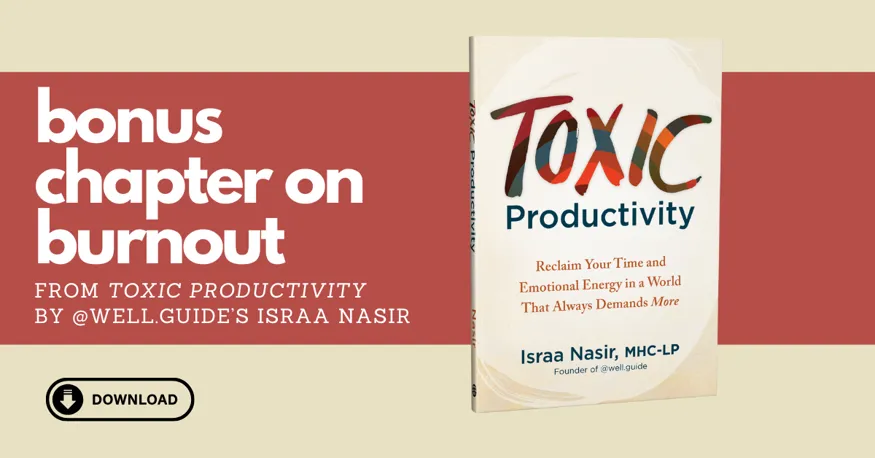
Toxic Productivity: Reclaim Your Time and Emotional Energy in a World That Always Demands More

In a world obsessed with getting more done, Toxic Productivity unmasks the hidden roots of hustle culture and dismantles the myth that “doing more makes you more worthy.”
In this timely and unsparing guide, psychotherapist and @well.guide founder Israa Nasir offers research-backed insight on dynamics such as self-worth, shame, social comparison, burnout, and perfectionism that keeps us always busy but never satisfied. Nasir gives expert and tangible guidance so you can separate who you are from what you do.
In this timely and unsparing guide, psychotherapist and @well.guide founder Israa Nasir offers research-backed insight on dynamics such as self-worth, shame, social comparison, burnout, and perfectionism that keeps us always busy but never satisfied. Nasir gives expert and tangible guidance so you can separate who you are from what you do.
The Wounded Healer’s Burnout Recovery Course: Over 25 Strategies for Helping Professionals to Break Free from Toxic Stress & Vicarious Trauma

Reignite your passion for helping others through practical strategies designed for real-world professionals. This course is your lifeline for breaking the cycle of vicarious trauma, compassion fatigue, toxic stress and more! PLUS, you'll be eligible to earn your Certified Compassion Fatigue Professional certification for free!

Israa Nasir MHC-LP
Israa Nasir, MHC-LP, is a psychotherapist, writer, and nationally recognized mental health educator specializing in the intersection of emotional well-being and achievement culture. She is the author of Toxic Productivity: Reclaim Your Time and Energy in a World That Always Demands More, a groundbreaking book that unpacks how shame, perfectionism, and over functioning quietly erode mental health – especially in high-achieving adults.
As the founder of Well.Guide, a global mental health platform with over 350,000 followers, Israa has led thousands of people in rethinking the role of productivity in their lives. She is known for translating complex psychological concepts into actionable, relatable guidance, and her work has been featured in Time, Forbes, Harvard Business Review, and Psychology Today.
Drawing from her clinical experience with ambitious, high-performing clients, Israa brings a nuanced, culturally responsive lens to therapy. She helps clinicians understand the hidden emotional toll of overachievement and offers evidence-based interventions to support clients struggling with burnout, people-pleasing, and chronic “doing.”
Through her teaching, Israa blends therapeutic insight, cultural context, and lived experience to create trainings that are emotionally resonant, clinically practical, and deeply human.
As the founder of Well.Guide, a global mental health platform with over 350,000 followers, Israa has led thousands of people in rethinking the role of productivity in their lives. She is known for translating complex psychological concepts into actionable, relatable guidance, and her work has been featured in Time, Forbes, Harvard Business Review, and Psychology Today.
Drawing from her clinical experience with ambitious, high-performing clients, Israa brings a nuanced, culturally responsive lens to therapy. She helps clinicians understand the hidden emotional toll of overachievement and offers evidence-based interventions to support clients struggling with burnout, people-pleasing, and chronic “doing.”
Through her teaching, Israa blends therapeutic insight, cultural context, and lived experience to create trainings that are emotionally resonant, clinically practical, and deeply human.
Speaker Disclosures:
Financial: Israa Nasir has an employment relationship with Anise Health. She receives royalties as a published author. Israa Nasir receives a speaking honorarium and book royalties from PESI, Inc. She has no relevant financial relationships with ineligible organizations.
Non-financial: Israa Nasir has no relevant non-financial relationships.
You May Also Be Interested In These Related Blog Posts


