Navigating Challenging Conversations with Compassion

With the holidays approaching, you may feel anticipatory anxiety about navigating dinner-table discussions about politics, food and body image, or other controversial topics. As a clinician, you are sensitive to the feelings of those around you and may wonder how to speak up authentically, without causing hurt by saying the “wrong thing.” This is challenging! Here are some strategies to generate care for yourself and even the prickliest of others in these situations.
Compassion involves both recognizing and desiring to alleviate suffering. In the context of challenging conversations, compassion for yourself and others can facilitate perspective-taking and honor uncomfortable feelings, allowing you to respond in an effective and dignified way. The three components of compassion include differentiating internal experiences, turning toward suffering, and choosing to engage in caring behaviors. Let’s try it out:
- Think of a past or upcoming interaction that is challenging for you. Get specific about the person and topic. In our example, we will imagine an impassioned relative who expresses political views that we fundamentally disagree with.
- Notice thoughts and emotions. First, notice what arises for you (e.g. “Ugh, here we go again!” and the feeling of exasperation or anxiety). Now, imagine the thoughts and feelings that may be coming up for the other person (e.g. “Finally, a platform to assert myself about this injustice!” and emotions of excitement or righteousness).
- Consider the context. Why are you having this reaction? What about your learning history, interactions with this specific person, or life experiences are contributing? Do you feel that your opinion isn’t being considered? Are you or people you care about being attacked? Has this person historically treated you or others poorly? Did you sleep poorly? Are you not feeling well? Is there something else stressing you out in your life that is limiting your bandwidth? Now, consider the same variables for the other person. Don’t skimp on this part.
- Respond with care. This may look like exiting the conversation (e.g. “I can see we don’t agree, but I care about you. I don’t want to spend our time together angry.”). It may look like engaging (e.g., “Tell me more about what you’re afraid of, or how this affects you personally.”). It may look like setting limits (e.g., “I don’t’ want to have this conversation while one of us has been drinking. I’m happy to discuss it another time.”). Whatever the response, it’s important to communicate your boundaries clearly and kindly.
Compassion for yourself acknowledges the unique hurts and secret sorrows that underlie any anxiety or anger you may feel. It also honors that even the most inflammatory people have hurt and sorrow of their own. Responding compassionately doesn’t mean excusing bad behavior. It means setting mindful limits around the way you interact and allowing all parties to feel respected, even when you disagree.
Want more tips on speaking up in difficult situations? Check out our new book, Saying the Wrong Thing: How to Speak Up in Difficult, Controversial, or Emotionally Charged Conversations — available now!
If you would like to work with Dr. Tucker and reside in Arizona or California, visit https://www.mollytuckerphd.com.
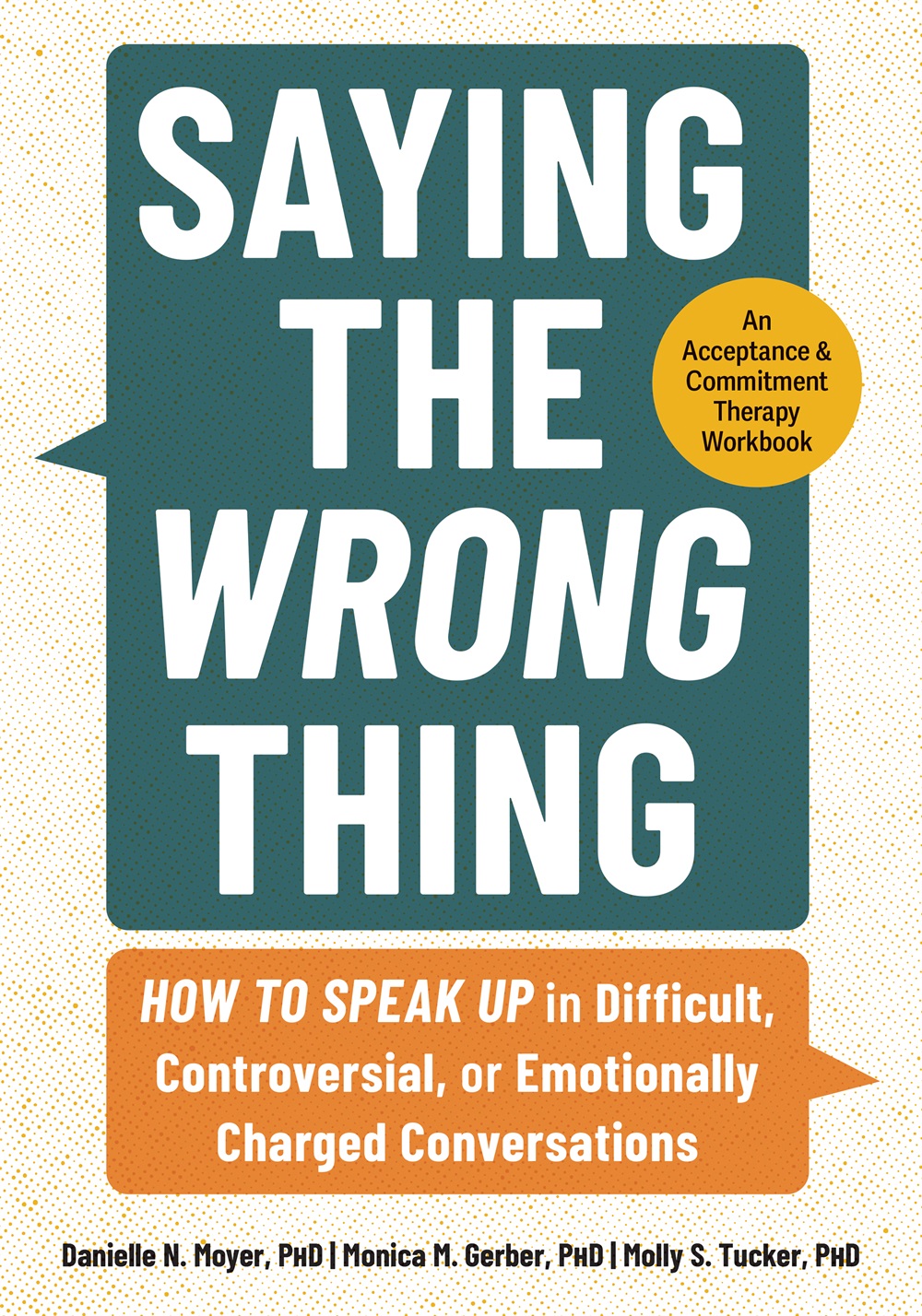
In Saying the Wrong Thing, you’ll learn a variety of skills to effectively engage in conversations that are important to you, even when they’re hard. Based on a revolutionary treatment approach known as acceptance and commitment therapy (ACT), this book provides a road map for working through your own discomfort and navigating difficult conversations before, after, and even as they occur.


