My Mother’s Story


She was highly educated and quite successful.
A contributing factor in her early death was the failure of her healthcare providers to see the red flags of the cancer that was flourishing in her body.
Her proud demeanor allowed her to fall victim to society’s view that strong Black women are somehow less sensitive to pain. As a result, they failed to realize the severity of her situation. They missed the opportunity of early detection and, consequently, early intervention.
This is part of the ancestral trauma passed down in families like mine.
It fills our stories.
Stories like how my grandmother had stones thrown at her when she went into the wrong neighborhood.
I feel the insecurities in the stories shared by my family.
And I heard every moment of lost opportunity, lack of job promotions, struggling to pay bills, despite a college education.
Yes, this can happen to anyone.
But with Black Americans, we’re starting to realize that these stories not only fill each family’s histories, they are still happening in present day.
When it comes to health and wellbeing, misdiagnoses, missed diagnoses, and late diagnoses, and a lack of application of antiracist approaches to care, we are essentially retraumatizing Black, Indigenous, and People of Color by not being aware and acknowledging this trauma.
This is not a moment to point fingers, but a moment to face the fractures in our foundation. Working with our clients, our families, and our peers, we must work to understand and acknowledge this trauma.
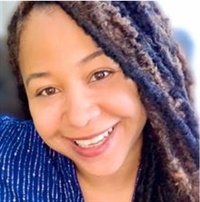
Varleisha D. Lyons (formerly Gibbs), PhD, OTD, OTR/L, ASDCS, is an occupational therapist and author with over 20 years of experience working with children and adolescents diagnosed with Autism Spectrum Disorder, sensory processing disorders and neurological disorders. She developed and founded Delaware’s first occupational therapy program and became the first black indigenous American woman to serve as the Scientific Programs Officer at the American Occupational Therapy Foundation.
Varleisha continues to lecture and provides training on sensory processing strategies and self-regulation to practitioners, parents, and teachers throughout the country and internationally. As co-author of Raising Kids with Sensory Processing Disorders, she has provided families with strategies to understand and care for their children. Dr. Lyons is the developer of the Self-Regulation and Mindfulness program and author of the best-selling book, Self-Regulation and Mindfulness: Exercises and Worksheets for Sensory Processing Disorder, ADHD, and Autism Spectrum Disorder (PESI Publishing & Media). She is the co-author of Trauma Treatment in ACTION: Over 85 Activities to Move Clients Toward Healing, Growth and Improved Functioning (PESI Publishing & Media). Her areas of expertise include neuroanatomy, self-regulation strategies across the lifespan, health inequities, and trauma responsive approaches.
Disclaimer: The views, thoughts, and opinions expressed in this presentation belong solely to the author, and not necessarily to the author's employer, organization, committee or other group or individual. Varleisha D. Lyons PhD, OTR/L is employed by the American Occupational Therapy Association (AOTA). This work is independent of her role and not affiliated with AOTA, Inc.
Speaker Disclosures:
Financial: Dr. Varleisha Lyons has employment relationships with the American Occupational Therapy Association and VDTG, Inc. She receives royalties as a published author. Dr. Lyons receives a speaking honorarium, recording and book royalties from PESI, Inc. She has no relevant financial relationships with ineligible organizations.
Non-financial: Dr. Varleisha Lyons is a member of the American Occupational Therapy Association and the National Black Occupational Therapy Caucus. She serves on the advisory board of George Washington University Programs in Occupational Therapy and is a board member of the National Association for Hearing and Speech Action.


