How to Work with Ambivalent Clients Experiencing Narcissistic Relationships


We sat down with narcissistic relationship expert Ramani Durvasula, PhD, LCP to talk about techniques to consider while working with ambivalent clients, frame psychoeducational approaches, and more to help clients at these difficult decisional nodes.
What are the classic signs of narcissistic abuse in relationships?
In narcissistic relationships, we see chronic asymmetry. If you have a client who has experienced narcissistic abuse, it’s not unusual for them to come to therapy confused, self-blaming, self-doubting, and with a strong sense of moral injury often asking themselves, “Am I the bad one?”What are the primary reasons that people choose to stay in these relationships?
There are so many reasons a client might choose to stay in a narcissistic relationship that therapists might not often be aware of or think about. Some of these are:- Lack of understanding. Often, your client might not have a good understanding of the fact that they are in a narcissistic relationship and there’s nothing the client can do to change the narcissist.
- Practical factors. Invisible factors such as money, family court, custody, duty, obligations, fear, finances, and so many more can prevent someone from leaving an abusive relationship.
- Fear. There’s often a lot of fear involved when it comes to post-separation abuse, of what would happen in family court or custody, and other unknowns that would keep someone in a relationship with a narcissist.
- Hope. Along with fear, sometimes there can be hope that the narcissist will change.
- History that people hold on to. Your client might be holding on to the good days and memories, their homes, and other aspects of their current life that they wouldn’t have if they stayed in the relationship.
With the right therapy, are narcissists like to recognize and change their antagonistic behavior?
No. The odds of all the right details lining up are so low that working with a client on the possibility of that happening is cruel. I’ve never seen it happen. It is not likely to change, and whatever change may happen on the narcissistic person is not enough to course correct for the harms that have occurred in this relationship.What is the most common mistake that clinicians make when working with clients who are trying to decide whether to remain in this kind of relationship?
Holding an agenda for your client is the most common and biggest mistake. Any form of agenda-holding is dangerous. As therapists, we cannot have an agenda for them. When working with these clients, we must be acutely aware of the delicate balance of all the factors mentioned above, as well as the cultural intersectional factors. It can be very dismissive to tell them to “just get their own apartment.” Our role is to hear their story. We are creating a safe space for our clients to mentally explore what is happening in their relationship.What is cognitive dissonance and what does it typically look like in clients in an antagonistic relationship?
Cognitive dissonance is the tension that is created by any form of mental or emotional inconsistency. In the simplest example, for some reason you can’t join your friends for dinner at a restaurant. You tell yourself, “well, that’s not a very good restaurant anyway.” It’s the things that a client might tell themselves to reduce the uncomfortable tension.In a narcissistic or antagonistic relationship, someone might attempt to restore harmony by justifying what is happening in the relationship. They take someone’s angry tantrums day after day and reduce them to “they had a tough day” or “they have a tough backstory,” therefore diminishing the tension and maintaining the status quo. Over time in a relationship, that justification become a schema belief system where the person who is being abused ends up blaming themselves.
Even if a person decides to stay, which they often do in a narcissistic relationship, therapists must guide clients in a clearheaded way, so they don’t keep justifying it or blaming themselves – and so the client has a greater likelihood of saying that the abuse they are receiving is not their fault.

If you’re ready to become a true expert in the field of narcissism treatment, then enroll today and help clients take back their lives!
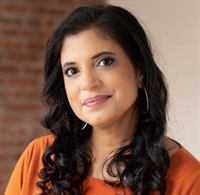
Ramani Durvasula, PhD is a psychologist in California, the founder and CEO of LUNA Education, Training and Consulting, and professor emerita of psychology at California State University Los Angeles. She is The New York Times bestselling author of It’s Not You: Identifying and Healing from Narcissistic People. She is also the author of multiple other books including ”Don’t You Know Who I Am”: How to Stay Sane in the Era of Narcissism, Entitlement and Incivility and Should I Stay or Should I Go: Surviving a Relationship with a Narcissist. She has lectured and trained therapists around the world on best practices on working with clients experiencing narcissistic abuse and has developed a 36 hour virtual training and certification program in conjunction with PESI to train clinicians on how to use an antagonism-informed approach with clients experiencing narcissistic relationships.
Dr. Durvasula hosts a popular YouTube channel with over 2 million subscribers, maintains a program offering support and education to thousands of survivors, and is a featured expert on the digital media platform MedCircle. She also maintains an engaged online network called the Dr. Ramani Network. She has also been widely involved in the governance of the American Psychological Association, including the APA Leadership Institute for Women in Psychology and the APA Minority Fellowship Program. Dr. Durvasula received her MA and PhD degrees in clinical psychology from UCLA and completed her internship and post-doctoral training at the UCLA Department of Psychiatry. She completed her Bachelor of Science degree in psychology, with a minor in sociology in 1988 at the University of Connecticut. She resides in Los Angeles, CA.
Speaker Disclosures:
Financial: Ramani Durvasula is the founder and CEO of LUNA Education, Training, and Consulting and has an employment relationship with the University of Johannesburg. Ramani Durvasula receives royalties as a published author. She receives a speaking honorarium and recording royalties from Psychotherapy Networker and PESI, Inc. She has no relevant financial relationships with ineligible organizations.
Non-financial: Ramani Durvasula is an associate editor for Behavioral Medicine. She is a member of the American Psychological Association, the Association for Psychological Science Society for Behavioral Medicine, and the International Association of Applied Psychology.


