How To Harness the Power of Values and Help Your Clients Speak Up When It Matters

Relationship and communication challenges are frequent targets of therapy. Some presenting concerns are explicitly relational, such as social anxiety, interpersonal conflict, or challenging family dynamics. Others indirectly involve communication, like overcoming social isolation, setting boundaries, or building confidence. As a clinician, you may recognize common barriers to effective communication (fear of ruining relationships, avoidance of sensitive topics, and worry about saying the wrong thing), but feel stuck about how to get traction. One proven way to help clients overcome fear and avoidance is by connecting with the reasons these conversations matter.
Values are a powerful tool to help clients step into challenging conversations, even when fear and worry threaten to stand in the way. Unlike goals - which are eventually completed – values create an ongoing sense of meaning, accomplishment, and confidence. These three simple activities can help clients identify, understand, and connect to their values in the service of improving communication and building meaningful relationships.
Values Card Sort
For this activity, use this template.
Review each value with your client, sorting them into three piles: (1) Very important, (2) Important, and (3) Not important. Notice when your client labels something important because they “should” rather than because of its personal importance. Once the piles are complete, throw out the “Not important” cards. You can toss them aside or even throw them in the trash for dramatic effect. Gently set the “Important” cards aside. Finally, lay out the “Very important” cards, briefly reflecting on anything notable or surprising. Have your client choose their top three values related to relationships and communication and use these as a guide in therapy going forward.
Values Compass
For this activity, use this template.
Guide your client through a discussion about their values around relationships and communication, having them rank their top eight in order of importance. Write the top four values at each of the long points (north, south, east, and west) and the next four at each of the shorter points between the cardinal directions. Encourage creativity, such as filling in the compass with different colors and designs and using the blank space to jot down reminders or sayings to help them connect with their values. Revisit the compass when helping your client prepare for important conversations.
Values in Action
Have your client identify one or two values related to difficult conversations. Start brainstorming concrete, achievable steps (e.g. goals) that can be taken in the direction of those values. These might include asking questions of someone they disagree with or speaking up in a conversation they would normally avoid. Discuss the challenges and rewards your client encounters when taking these steps.
Remember, conversations are usually scary when we care about the topic, the relationship, or both. Leaning into values can embolden your clients to show up more authentically in the service of what matters.
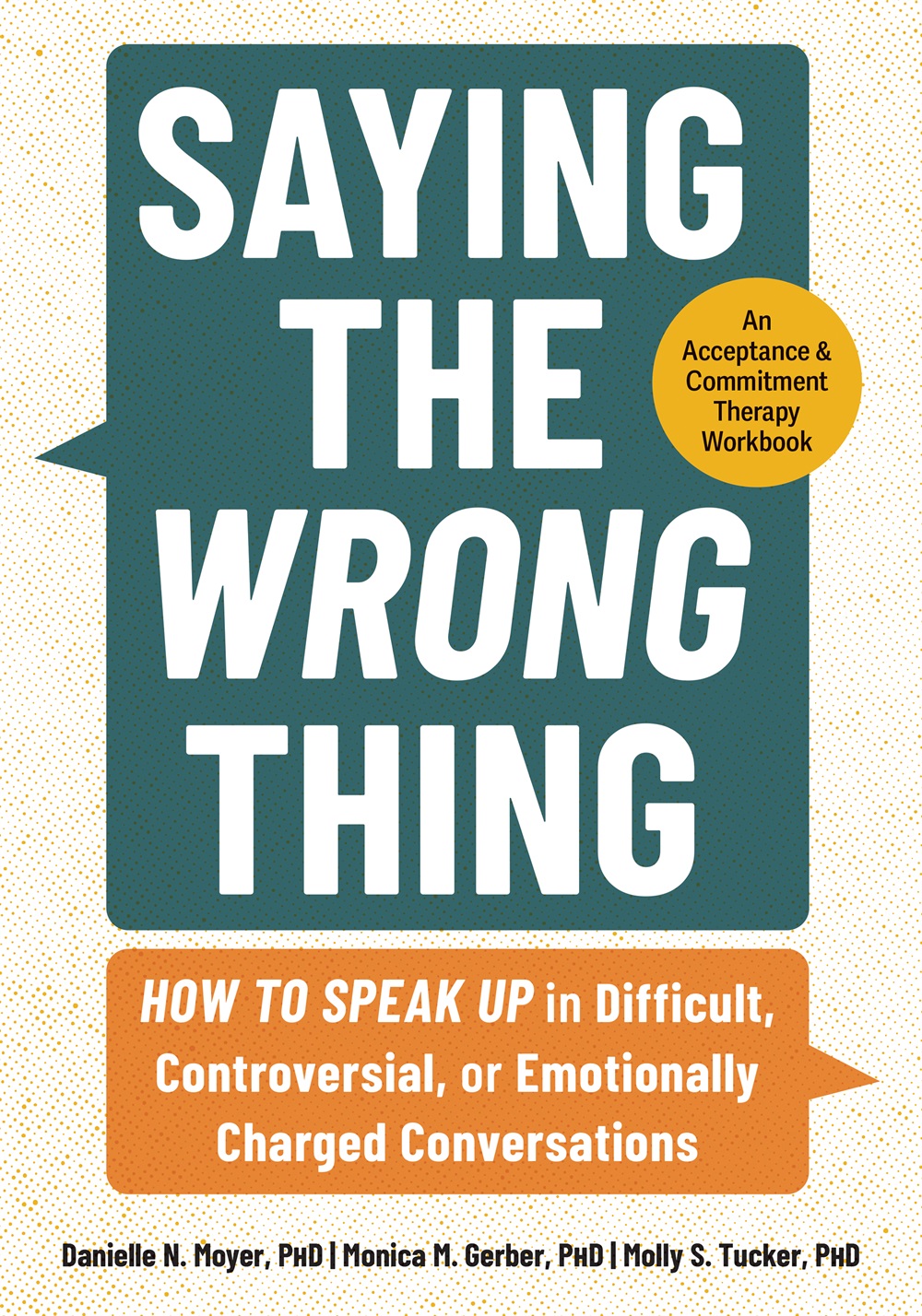
In Saying the Wrong Thing, you’ll learn a variety of skills to effectively engage in conversations that are important to you,even when they’re hard. Based on a revolutionary treatment approach known as acceptance and commitment therapy (ACT), this book provides a road map for working through your own discomfort and navigating difficult conversations before, after, and even as they occur.


