Five lifestyle factors that can help clients make progress faster


What does your foundation look like?
Have you felt stuck day after day—using whatever therapeutic modalities you have in your toolbox—with little improvement in outcomes? Have you paid attention to your client’s other health problems?
Obesity, insomnia, diabetes, chronic pain…these are all related to mental health. And if you don’t address these issues as well, you might be missing critical opportunities to help your clients make healthy changes that would allow them to feel better, faster.
What if I told you there are five essential factors for a healthy lifestyle?
These factors are everywhere in research literature and have proven to improve emotional stability, cognitive function, and resilience. Yet many of us fail to recognize and address them in therapy with our clients.
So, what are these five healthy factors? I discuss them in my new book, Mind-Brain-Gene, and remember them using the mnemonic SEEDS:
S: Social – Form and maintain social connects. Make time to connect with friends, join groups, or visit family.
E: Exercise – Sweat regularly. Get out for a walk, run, bike ride -- whatever you enjoy! Bottom line: Get your heart going for at least 30 minutes a day.
E: Education – Learn new things. Take classes and read books. Learning new things builds new connections in the brain and gives us more cognitive reserves to work with.
D: Diet – Eat well. Move away from fatty foods and carbs. Eating a lot of simple carbohydrates (especially sugar) makes your brain more rigid and difficult to rewire.
S: Sleep – Get 6 or more hours of good sleep every night, and practice good sleep hygiene. Limit your screen time before bed, invest in blackout curtains, and consider getting the TV out of your room.
If you plant and cultivate these seeds, your clients will be far less depressed, far less anxious, experience more cognitive vibrancy, and delay dementia symptoms.
So, how do you help your clients plant these SEEDS on a regular basis? Let me show you! Download this FREE e-book, which includes worksheets you can use with your clients.
Happy planting!
Yours,
John Arden

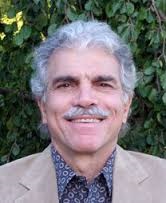
John Arden, PhD, served as Kaiser Permanente’s Northern California Regional Director of Training where he developed one of the largest mental health training programs in the United States. In this capacity, he oversaw more than 150 interns and postdoctoral psychology residents in 24 medical centers. Prior to this, he served as Chief Psychologist for KP.
Dr. Arden believes that the evolution of psychotherapy in the 21st Century demands integration. Instead of choosing from the blizzard of modalities and schools of the past, therapists must move toward finding common denominators among them. Similarly, today’s psychotherapy necessitates the integration of the mind and body, not the past practice of compartmentalization of mental health and physical health. John’s study of neuropsychology has inspired him to integrate neuroscience and psychotherapy, synthesizing the biological and psychological into a new vision for psychotherapy: Brain-Based Therapy. His work incorporates what is currently known about the brain and its capacities, including neuroplasticity and neurogenesis, with psychotherapy research, mindfulness, nutritional neuroscience and social intelligence. He conducts seminars on Brain-Based Therapy throughout the United States and the world.
John is the author of 15 books including his newest book, Mind-Brain-Gene (W. W. Norton & Company, 2019). John is lead author along with Lloyd Linford of the books Brain-Based Therapy with Adults (Wiley, 2008) and Brain-Based Therapy with Children and Adolescents (Wiley, 2008). His first book, Consciousness, Dreams, and Self (Psychosocial Pr, 1996), was awarded the 1997 Outstanding Academic Book Award by Choice, a publication of the American Library Association. An international panel of jurists nominated his second book, Science, Theology, and Consciousness (Praeger, 1998), for the CTS award funded by the Templeton Foundation. His book America’s Meltdowns: Creating the Lowest Common Denominator Society (Praeger, 2003) explored the degradation of the fabric of American society.
Speaker Disclosures:
Financial: John Arden receives compensation as a national speaker. He receives royalties as a published author. He receives a speaking honorarium, book royalties, and recording royalties from PESI, Inc. He has no relevant financial relationships with ineligible organizations.
Non-financial: John Arden has no relevant non-financial relationships.


