Connection & Co-Regulation: Using Self-Awareness to Model Self-Regulation

Psychotherapy that focuses solely on skill building as a means of developing self-regulation is often limited because this “one-person” approach to therapy is not as transferable to the relational world we live in. With an interpersonal focus, we can observe the complexity of two minds and two bodies in a moment-by-moment exchange. Here, we must go beyond the verbal narrative to attend to the nonverbal communications of both the therapist and client by paying attention to the ways that our body language, facial expressions, and tone of voice inform our relational experiences.
When we, as therapists, attune to our own body during session, we can sense subtle changes in our own somatic experience that might provide insight into the experience of the client. For example, you might notice a subtle tightening in your chest and, as a result, place your hand over your heart and take a deep breath. By developing this embodied awareness, you model your own self-regulation. This can then become a nonverbal invitation for the client to breathe more deeply, or you might use this information to encourage them to sense their body and breath. Your capacity to regulate your own nervous system not only helps with the client’s ability to regulate their body and mind, but it also provides a foundation for self-care.
The process of developing this somatic awareness in session allows therapists to apply polyvagal theory to therapy. Here, we facilitate co-regulation as an interactive process that activates the social engagement systems of both the therapist and client. Although it is common for clients with complex (C-PTSD) to alternate between hyper-aroused and hypo-aroused states, by engaging in co-regulation, we can help them feel safe and connected even in the midst of a wide range of difficult emotions and body sensations.
The goal of regulating emotions is not to make feelings go away. Rather, the aim is to help clients build their capacity to ride the waves of big emotions and sensations. Initially, clients work through overwhelming emotions and somatic experiences with the knowledge that we are willing to join them in these difficult moments. In time, this process helps them learn that temporary experiences of contraction can resolve into a natural expansion of positive emotions, such as relief, gratitude, empowerment, and joy. Ultimately, this process helps clients trust their own capacity to handle their feelings.
This healing practice from The Complex PTSD Treatment Manual offers relational interventions to bring co-regulation into therapy. This practice begins by inviting you to focus on your own breath and body sensations to understand what you are bringing into the therapy room. This self-awareness then serves as the foundation for rest of the practice, which invites you to notice cues about your client’s nervous system state, to share your observations with them, and to explore changes in eye contact or spatial positioning to facilitate greater regulation in relationship.
Click here to download the Explore Co-Regulation exercise from The Complex PTSD Treatment Manual.
You can find more information on how to conduct successful therapy with clients who have experienced prolonged exposure to traumatic events in The Complex PTSD Treatment Manual: An Integrative, Mind-Body Approach to Trauma Recovery.
*This is an adapted excerpt from The Complex PTSD Treatment Manual by Arielle Schwartz, PhD. Copyright © 2021, Arielle Schwartz. PESI Publishing.
Learn more about treating complex trauma in Dr. Arielle Schwartz’s other blog posts: Somatic Psychology in the Treatment of Complex PTSD and Attending to Dissociative Symptoms with Parts Work Therapy.
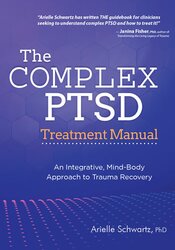
In The Complex PTSD Treatment Manual, clinicians will find the road map they need to conduct successful therapy with clients who have experienced traumatic events.


Arielle Schwartz, PhD, CCTP-II, E-RYT, EMDR-C, is a licensed clinical psychologist, certified complex trauma professional, EMDR Consultant, and Kripalu yoga teacher. She is an internationally sought-out speaker, leading voice in the field of trauma recovery, and the author of eight books including The Complex PTSD Workbook, EMDR Therapy and Somatic Psychology, The Post-Traumatic Growth Guidebook, and Applied Polyvagal Theory in Yoga.
As the founder of the Center for Resilience Informed Therapy, her work is rooted in the positive psychology movement, which is focused on enhancing resources and fostering growth. She offers an integrative, mind-body approach to therapy that includes relational therapy, somatic psychology, EMDR therapy, parts work therapy, and therapeutic yoga for trauma. Praised by Dr. Stephen Porges, Arielle specializes in applying his polyvagal theory, which focuses on addressing imbalances within the autonomic nervous system that underlie most mental and physical health conditions. Her work can be found at the Shift Network, Sounds True, Psychotherapy Networker, Embody Lab, Art of Living, Omega Institute, and more.
Speaker Disclosures:
Financial: Dr. Arielle Schwartz maintains a private practice and is a trainer with Advanced EMDR Therapy Trainings. She receives royalties as a published author and receives compensation as an international presenter and a yoga instructor. Dr. Schwartz is a paid consultant for Evergreen Certifications. She receives speaking honorarium, recording, and book royalties from PESI, Inc. She has no relevant financial relationships with ineligible organizations.
Non-financial: Dr. Arielle Schwartz is a member of the American Psychological Association and the Yoga Alliance.


