Assessing the Timing of Trauma Treatment and SUDs Treatment


Here are key considerations for determining when to begin trauma treatment:
1. Stabilization of Substance Use:
One of the first steps in treating SUDs is achieving stabilization or a reduction in substance use. Treating trauma before stabilization may hinder the individual’s ability to manage the emotional distress that can arise during trauma work. Therefore, it is important to ensure the person is in an appropriate stage of recovery where their substance use is either under control or actively being addressed.2. Assessment of Readiness:
Trauma treatment should begin when the client is psychologically ready to face traumatic memories and emotions. This readiness is often assessed through clinical interviews, and therapists should ensure that the client has adequate coping skills to manage distressing emotions. If the client is struggling with active substance use or unstable mental health symptoms, the therapist may need to focus first on stabilization and symptom management.3.Integrated Treatment Approach:
For clients with both SUDs and trauma histories, an integrated approach that addresses both issues simultaneously or in a staggered manner can be beneficial. Many evidence-based treatments, such as Trauma-Informed Care (TIC) or Cognitive Behavioral Therapy for Substance Use and Trauma (CBT-SUD/Trauma), are designed to address both the trauma and the substance use without requiring a strict sequence of treatment.4.Phased Treatment:
Some therapists use a phased approach:- Phase 1: Focus on stabilization and safety. This includes addressing immediate needs like substance use reduction, building coping skills, and establishing a therapeutic relationship.
- Phase 2: If the client is stable enough, trauma processing can begin, focusing on integrating trauma treatment in a controlled, step-by-step manner to ensure the client doesn't become overwhelmed.
- Phase 3: Once trauma has been processed, relapse prevention and life skills training can help clients maintain progress.
5.Trauma-Informed Care:
While specific trauma treatments (such as EMDR, trauma-focused CBT, etc.) may begin after stabilization, therapists should always practice trauma-informed care. This means being mindful of how trauma may influence a person’s behavior, responses, and treatment progress throughout the process, even if trauma processing is not the immediate focus.6.Concurrent Treatment for Co-Occurring Disorders:
If a client is also dealing with mental health issues such as depression or anxiety along with SUDs and trauma, addressing all of these factors concurrently is crucial for holistic treatment. If substance use is the primary driver of the client’s distress, treatment may focus more on the SUD initially before moving into trauma processing.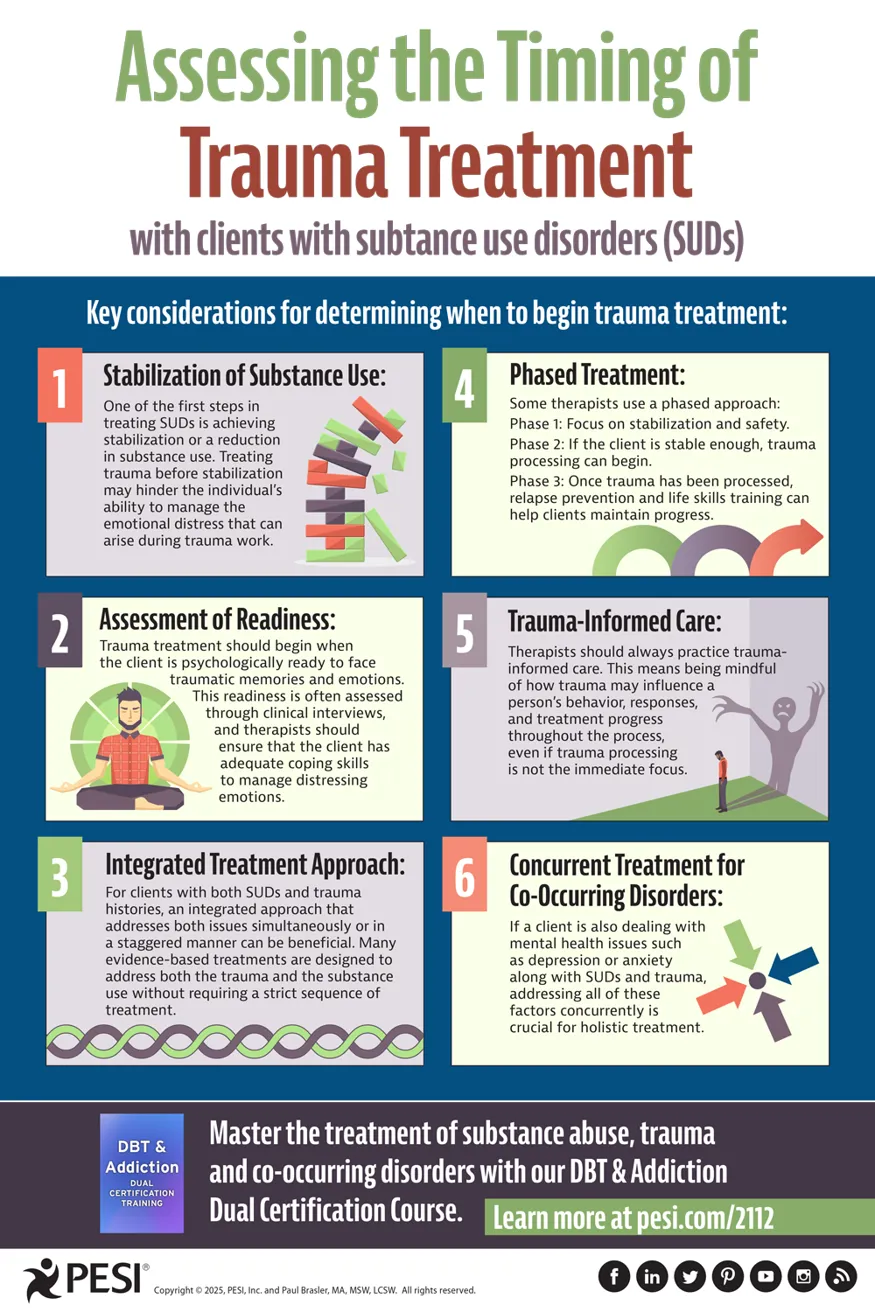

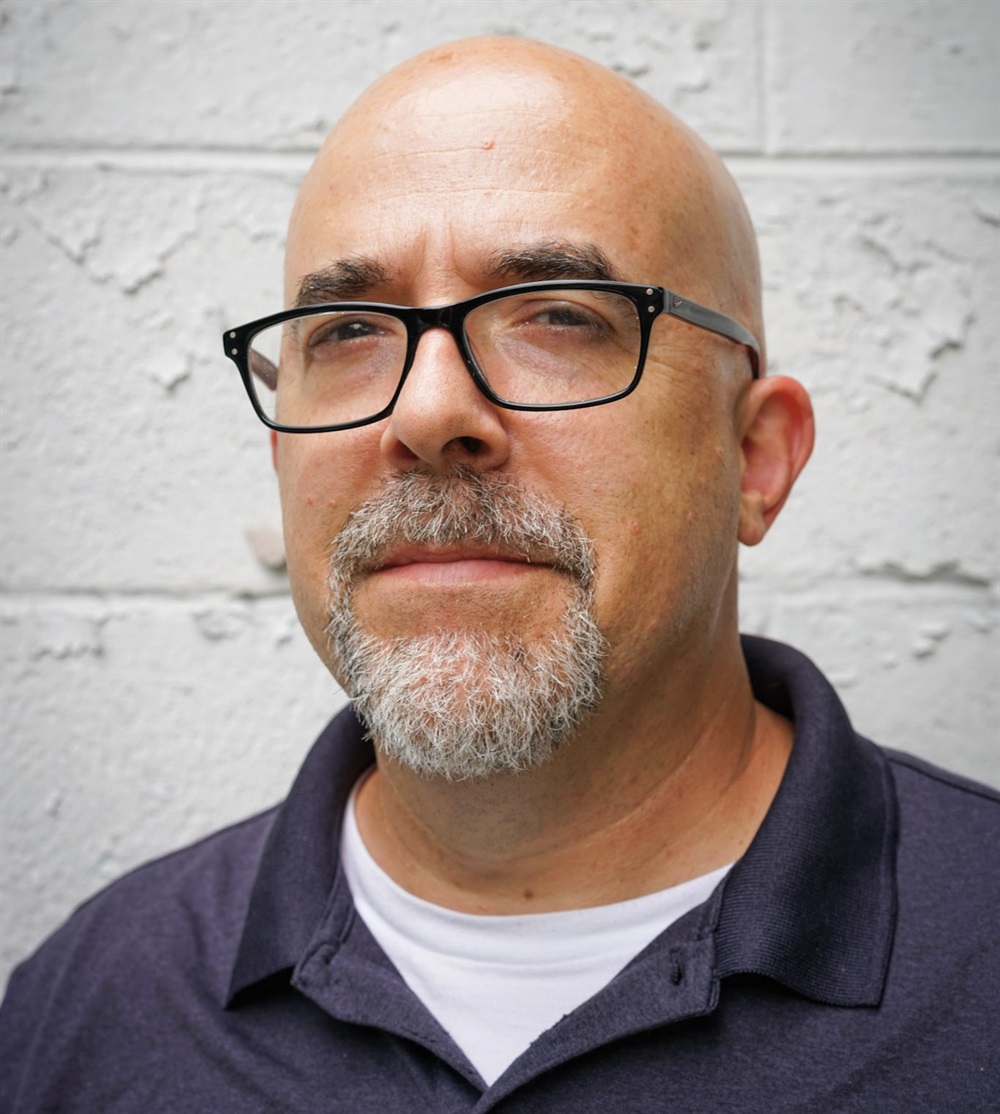
Paul Brasler, LCSW, CAIMHP, became a licensed clinical social worker in 2002. Paul is the coordinator for the Chesterfield County (Virginia) Employee Behavioral Health Program, through which he and his team provide clinical services to first responders and human services personnel. He has extensive experience working with people in crisis and people living with substance use disorders, including adolescent residential treatment, community mental health settings, hospital emergency departments, juvenile drug court, and private practice.
Paul has been a national presenter (through PESI) since 2016, and he has presented classes across the country on mental health emergencies, high-risk clients, resiliency, and a certification course for clinicians working with people with substance use disorders. He has written three books: The Clinician’s Guide to Suicide Management, PESI Publishing, 2025; The Clinician’s Guide to Substance Use Disorder, PESI Publishing, 2022; and High-Risk Clients, PESI Publishing, 2019. Paul lives in Richmond, Virginia, with his beautiful wife, three sons, cowardly dog, and two dwarf rabbits who are quietly plotting to destroy the world.
Speaker Disclosures:
Financial: Paul Brasler maintains a private practice and has an employment relationship with Chesterfield County. He receives a speaking honorarium, recording, and book royalties from Psychotherapy Networker and PESI, Inc. He has no relevant financial relationships with ineligible organizations.
Non-financial: Paul Brasler has no relevant non-financial relationships.


