5 Signs a Coping Skill Has Become Harmful for Your Clients

We often encourage clients to develop coping skills as a way to manage distress, regulate emotions, and build resilience. Yet, what happens when the very strategies that once offered relief begin to entrench suffering? Clients rarely come to treatment declaring that a coping mechanism has become a problem. More often, these behaviors emerge on the periphery of the presenting concern, hidden behind shame or rationalization. Your task is to recognize when a skill has shifted from helpful to harmful and guide clients toward healthier flexibility.
The Subtle Shift from Coping to Avoidance
A hallmark of maladaptive coping is experiential avoidance. Clients may use food, shopping, scrolling, pornography, or even excessive exercise not just to find pleasure, but to escape unwanted internal states. What begins as stress relief becomes a conditioned loop: anxious thought → avoidance behavior → temporary relief → guilt/shame → renewed urge. Over time, the avoidance cycle narrows clients’ capacity to tolerate discomfort, pulling them further from their values and relationships.
You can listen for signs of this shift even when it’s not the presenting issue. A client working on anxiety might offhandedly mention late-night online shopping. A client processing grief might describe drinking to “take the edge off.” These disclosures often sound casual, but they may be windows into coping strategies that are quietly escalating.
5 Markers That a Coping Skill Has Become Maladaptive
- Loss of Control: The client reports that the behavior happens automatically or feels difficult to resist, even when intentions are to cut back.
- Functional Impairment: The coping behavior begins interfering with daily roles—missed work, conflict with partners, neglected health, or financial stress.
- Compulsivity and Impulsivity: Clients describe feeling “pulled” into the behavior or engaging without pause, echoing the stuckness often reported with addictions.
- Shame and Secrecy: Guilt, hiding, or minimizing behavior often accompany maladaptive coping, signaling that the client is aware the strategy is misaligned with their values.
- Short-Term Relief, Long-Term Harm: The strategy works briefly but perpetuates distress over time, leaving the client feeling more disconnected and hopeless.
How to Identify What’s Beneath the Behavior
It’s not enough to label a behavior maladaptive; you must explore its function. Many clients use these coping patterns to soothe boredom, loneliness, or unprocessed trauma. By framing the behavior as a strategy that once “worked” but now no longer serves them, therapists can reduce shame and open space for new skills.
Here, Acceptance and Commitment Therapy (ACT) offers useful tools. ACT invites clients to examine how coping behaviors move them closer to (or further from) their deeply held values. This reframing transforms the conversation from one of pathology (“this is bad”) to one of choice (“what matters most, and how can we act in alignment with it?”).
Integrating This Work When It’s Not the Presenting Issue
Often, maladaptive coping is discovered in the margins of session material. A client may not seek treatment for food, technology, or shopping, but if these behaviors surface, they deserve attention. Integrating brief assessment questions such as how the behavior impacts functioning, whether shame is present, and whether it aligns with values can help you determine whether to bring it more fully into treatment.
You don’t need to pathologize every coping strategy. But when a skill begins to erode quality of life rather than enhance it, it has crossed the threshold into maladaptive. By catching these shifts early, therapists can support clients in expanding their psychological flexibility, developing healthier strategies, and reclaiming a sense of agency.
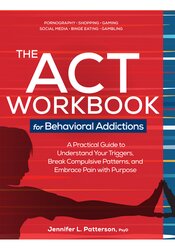
In The ACT Workbook for Behavioral Addictions, you’ll find the tools you need to understand the “why” behind these behaviors, break unhealthy patterns, and put an end to the cycle that always ends with shame and regret. Written from the lens of acceptance and commitment therapy (ACT), this book provides a shame-free approach that therapists use to help people get “unstuck” in their lives.


Jennifer Patterson, Psy.D., LCPC, has a mission to offer evidence-based psychotherapy to help others live full and abundant lives. She is the founder of JPI Psychological Solutions in Mokena, Illinois and specializes in treating obsessive compulsive behaviors, anxiety and depression. At JPI she uses ACT and other third-wave models to assist clients with increasing quality of life.
Dr. Patterson is an ACT trainer and has led over 500 ACT workshops across the US and internationally. She has served as vice-president of the Chicago Chapter for the Association for Contextual Behavioral Sciences. Dr. Patterson was a featured psychologist on The Learning Channel (TLC) and former co-author for Psychology Today’s blog “When More Isn’t Enough.” Dr. Patterson received both her master’s and doctoral degrees from the Illinois School of Professional Psychology. She is a formally trained ACT clinician and is very skilled in mindful-based therapies and empirically-supported treatments.
Speaker Disclosures:
Financial: Dr. Jennifer Patterson maintains a private practice and receives royalties as a published author. She receives a speaking honorarium, recording royalties, and a consulting fee from PESI, Inc. She has no relevant financial relationships with ineligible organizations.
Non-financial: Dr. Jennifer Patterson is a member of the Illinois Psychological Association, the American Psychological Association, and the Association for Contextual Behavioral Science.


