Written Exposure Therapy for PTSD


But what if you could quickly and consistently reduce trauma symptomology...without requiring clients to verbalize the details?
Written Exposure Therapy (WET) is an evidence-based brief PTSD treatment approach that produces clinically significant reductions in PTSD symptoms in as few as five treatment sessions by having clients write about the trauma. It’s efficient, effective, associated with low treatment dropout rates, and has been found to be equally effective as more time intensive therapies – all without requiring clients to verbalize the details of their traumas again and again.
This is not a new treatment. It’s a modification of exposure-based treatments to be more efficient and tolerable for the client.
In this brief video, Dr. Denise Sloan and Dr. Brian Marx, developers of the Written Exposure Therapy protocol and authors of Written Exposure Therapy for PTSD: A Brief Treatment Approach for Mental Health Professionals, provide an overview of what the first session of this protocol looks like.

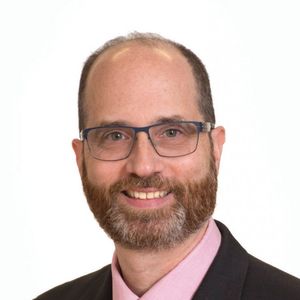
Brian P. Marx, Ph.D., is deputy director, Behavioral Science Division, National Center for PTSD and a professor of psychiatry, Boston University School of Medicine. He is an expert in the assessment and treatment of PTSD. With Dr. Denise Sloan, he is the co-developer of Written Exposure Therapy (WET) and has spent the last 20 years conducting a systematic line of research which supports the development and efficacy of this treatment. Dr. Marx has published over 200 scientific articles and has received external funding for his work from numerous organizations including the United States Department of Veterans Affairs, United States Department of Defense, and the Centers for Disease Control and Prevention. Dr. Marx is on the editorial board of several professional journals. He is a previous winner of the Award for Outstanding Contributions to the Science of Trauma Psychology from Division 56 of the American Psychological Association. Dr. Marx obtained his doctorate in clinical psychology from the University of Mississippi.
Financial: Dr. Brian Marx has employment relationships with Boston University and the National Center for PTSD. He receives royalties as a published author. Dr. Marx receives grants from the Congressionally Directed Medical Research Program, the Department of Veterans Affairs, and the U.S. Department of Defense Medical Research. He receives a speaking honorarium and recording royalties with PESI, Inc. He has no relevant financial relationships with ineligible organizations.
Non-financial: Dr. Brian Marx is a member of the Association for Behavioral and Cognitive Therapies, the International Society for Traumatic Stress Studies, the Anxiety and Depression Association for America and the American Psychological Association. Dr. Marx is an Ad hoc reviewer and editor for several peer review journals, for a complete list contact PESI, Inc.

Denise M. Sloan, Ph.D., serves as the associate director, Behavioral Science Division, National Center for PTSD and a professor of psychiatry, Boston University School of Medicine. She is an expert on psychosocial interventions for traumatic stress disorders and has a specific interest in efficient treatment approaches for PTSD. Dr. Sloan conducted a series of studies that lead to the development of Written Exposure Therapy and has conducted multiple large-scale treatment studies examining the effectiveness of this treatment. She has published over 100 scientific articles and has received funding for her work from several organizations, including the Department of Veterans Affairs, National Institute for Mental Health, Department of Defense. Dr. Sloan is editor of Behavior Therapy and editor elect of Journal of Traumatic Stress and a consulting editor for six scientific journals. Dr. Sloan has over 25 years’ experience treating individuals with PTSD, and she has extensive experience training mental health providers in the delivery of trauma-focused treatments. Dr. Sloan obtained her doctorate in clinical psychology from Case Western Reserve University in 1998.
Financial: Dr. Denise Sloan has employment relationships with Boston University School of Medicine and the VA National Center for PTSD, Behavioral Science Division. She receives grants from the National Institute of Mental Health, the Federal Emergency Management Agency, the National Institute of Child Health and Human Development, the Department of Defense, the Department of Veterans Affairs, the NIMH, and the CSR&D. Dr. Sloan receives royalties as a published author. She receives a speaking honorarium and recording royalties from PESI, Inc. She has no relevant financial relationships with ineligible organizations.
Non-financial: Dr. Denise Sloan is a fellow of the American Psychological Association, and the Association for Cognitive and Behavioral Therapies. She is a member of the International Society for Trauma and Stress Studies. She serves on research committees for the VA Boston Healthcare System and the Department of Veteran Affairs. Dr. Sloan serves on several editorial boards and is an ad hoc reviewer for several peer journals, for a complete list contact PESI, Inc.


