Why We Must Think of Children—and our Nervous System—as Trees


Through my work with these children, I got a glimpse into their perplexing and misunderstood world. I knew there had to be a better approach to treating children who have trouble self-regulating, staying focused, managing their senses, and the other challenges they experience.
That’s why I developed the integrated strategy of Self-Regulation and Mindfulness. And today, I want to share some of my favorite strategies with you.
The power of neuroscience
Before getting into tips and lessons learned, it is important to understand the functions of the nervous system—especially when working with children.
It can be helpful to think of children—and our nervous system—as trees.
We do not view trees as stagnant. We do not look at them as lacking potential. We know trees are transformative. Their growth is sometimes unpredictable. While we only see the external parts of the trunk and branches, there is a strong connection made between the tree and its foundation through the many roots that have developed over time.
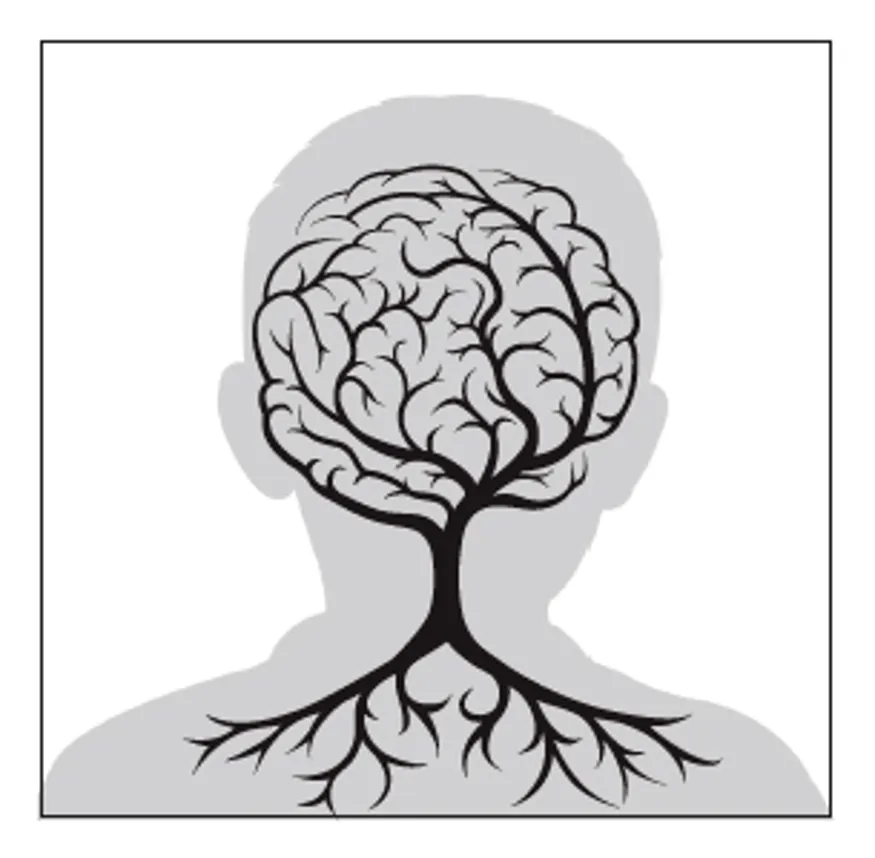
This concept can be correlated to our nervous system: Like a tree, our nervous system is not static. Like roots, new connections are made and strengthened based on our relationship with the surrounding environment. Change and growth is always possible. Our nerves are like roots that can grow and make new pathways.
A tree also illustrates the subsystems as a working unit, processing the information in the environment. If too little stimulation is presented, the sensory receptors will not react and will neglect to send the message. In such situations, information is not relayed to the brain. Under-water a tree, and the tree will not flourish.
A person deprived of the necessary sensory stimulation, desired by their body, may lack appropriate interaction and engagement with others. Their maladaptive behavior may be an attempt to acquire what is deficient.
The opposite occurs in the presence of too much stimulation—our sensory systems may become over-aroused. A tree receiving too much water wilts and lacks vigor.
A person receiving too much stimulation may also lack appropriate participation with others and their environment. Instead, their attention is focused on attempting to block out or avoid overstimulation.
For humans, input to our bodies must be “just right.”
Teach children about themselves
This concept is vital for children to understand.
Children must understand why they feel and react in a specific way. They must also know how their brain and nervous system grows.
We must be creative with this information and provide attractive tools and activities to engage children and their caregivers.
Just as the various trees and plants in our environment each require different levels of input to flourish, we, too, vary in our needs. What each person needs is highly unique and dependent on the individual.
In the below activity, you will learn how to teach children about their sensory system and its connection to brain development.
Tree activity
YOU WILL NEED:
- Paper
- Crayons, pencils, or paint
DIRECTIONS:
- Read the following pre-activity discussion points to the child. You can be creative and add to or revise the questions. You should be aware of the age and developmental level of the child.
- Have the child draw their tree (using the printout if desired).
- Use the post-activity discussion to guide the closing conversation.
Mid-Level: Pre-Activity Discussion Points
• Have the child reflect on a tree’s appearance. Ask them the following:
- How tall is a tree when it is first planted?
- How tall does it grow?
- How wide do the roots spread beneath the ground?
- How does the tree grow? Does it eat food or drink water?
• Discuss how the tree grows using both water and sunlight.
• Share how we are similar to trees, in that we need food and water and also outside sensory stimulation. Provide examples of touch, sound, light, smell, movement, and taste.
• Share how trees have roots and we have nerves. Our nerves connect our brain to the world around us. However, there must be a balance. Sometimes, our surroundings don’t allow for what our body wants. Too much or too little of anything can be a problem. Provide an example of how too much wind could cause stress on a tree, and similarly for us, needing too much movement could lead us to feel stress when asked to sit still. Or if we do not like certain sounds around us, we feel pain and fear and may want to hide.
• Lastly, have them draw their tree. Be sure they draw the roots, trunk, and branches. If they were a tree, how would their tree look? For example, have them draw a short or tall tree, one with lots of leaves or bare branches, etc.
Mid-Level: Post-Activity Discussion Points
• Why did the child choose to draw their tree in such a way? Start a discussion about what you see. Have them explain how they often feel the way they felt drawing the tree during certain situations (i.e., at school, on the playground, in new places.)
Higher-Level: Pre-Activity Discussion Points
• Perform the pre-activity items and drawing described previously.
• Have the child draw the environment in which they would like to plant their tree; for example, would it be around other trees, in a quiet forest, or in a park with children climbing and jumping off?
Higher-Level: Post-Activity Discussion Points
• Have the child share why their tree and environment looks the way it does.
• Talk about why a tree cannot have too much water or sunlight or too little. Then discuss the negative impacts of too much or too little arousal when it is time to learn or listen. Reflect on being “in the middle” when it comes to arousal.
Looking for additional activities? Check out these FREE worksheets, featuring a few of my favorite strategies.

This course is valued at $385, but you can enroll for $199.99 today, as a thank you for reading my blog!

Varleisha D. Lyons (formerly Gibbs), PhD, OTD, OTR/L, ASDCS, is an occupational therapist and author with over 20 years of experience working with children and adolescents diagnosed with Autism Spectrum Disorder, sensory processing disorders and neurological disorders. She developed and founded Delaware’s first occupational therapy program and became the first black indigenous American woman to serve as the Scientific Programs Officer at the American Occupational Therapy Foundation.
Varleisha continues to lecture and provides training on sensory processing strategies and self-regulation to practitioners, parents, and teachers throughout the country and internationally. As co-author of Raising Kids with Sensory Processing Disorders, she has provided families with strategies to understand and care for their children. Dr. Lyons is the developer of the Self-Regulation and Mindfulness program and author of the best-selling book, Self-Regulation and Mindfulness: Exercises and Worksheets for Sensory Processing Disorder, ADHD, and Autism Spectrum Disorder (PESI Publishing & Media). She is the co-author of Trauma Treatment in ACTION: Over 85 Activities to Move Clients Toward Healing, Growth and Improved Functioning (PESI Publishing & Media). Her areas of expertise include neuroanatomy, self-regulation strategies across the lifespan, health inequities, and trauma responsive approaches.
Disclaimer: The views, thoughts, and opinions expressed in this presentation belong solely to the author, and not necessarily to the author's employer, organization, committee or other group or individual. Varleisha D. Lyons PhD, OTR/L is employed by the American Occupational Therapy Association (AOTA). This work is independent of her role and not affiliated with AOTA, Inc.
Speaker Disclosures:
Financial: Dr. Varleisha Lyons has employment relationships with the American Occupational Therapy Association and VDTG, Inc. She receives royalties as a published author. Dr. Lyons receives a speaking honorarium, recording and book royalties from PESI, Inc. She has no relevant financial relationships with ineligible organizations.
Non-financial: Dr. Varleisha Lyons is a member of the American Occupational Therapy Association and the National Black Occupational Therapy Caucus. She serves on the advisory board of George Washington University Programs in Occupational Therapy and is a board member of the National Association for Hearing and Speech Action.


