The Vocabulary of Reading

Consider all that can get in the way as we need to see, hear, write, comprehend and speak in order to "learn to read."
A lot of parents that have children struggling to read wonder, "why is this so hard for my child?"
No one can ever prepare a parent for the confusion that comes when their child appears to learn in a different way from other children. And sometimes, we forget that parents of our students may also be struggling to understand how to help their child.
One way to help engage parents in their child's educational journey is to make sure they understand the everyday lingo we use in our offices. Words such as phonemes, graphemes, and phonics may be a part of our daily vocabulary, but for many parents these words are foreign.
To help parents understand the components of reading, here's a worksheet you can provide them. It defines common words in speech language pathology and can help them feel more at ease when talking about their child's progress.
Download the worksheet: The Vocabulary of Reading
This blog was contributed by PESI speaker Lynne Kenney, PsyD, a mom, pediatric psychologist, international educator and co-author with Wendy Young of BLOOM: 50 Things to Say, Think and Do with Anxious, Angry and Over-the-Top Kids. Lynne integrates neuroscience, nutrition, exercise and music research to enhance brain function and learning in children. For more “Think it Out” “Walk it Out” and “Play it Out” ideas visit www.lynnekenney.com.
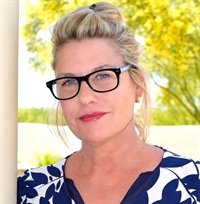
Dr. Lynne Kenney is the nation’s leading pediatric psychologist in the development of classroom cognitive-physical activity programs for students grades K-8. She develops curriculum, programming, and activities to improve children’s cognition through coordinative cognitive-motor movement, executive function skill building strategies, and social-emotional learning. Her current educational program is CogniMoves®, a classroom cognitive-motor movement program, co-developed with Benjamin S. Bunney, MD, Former Chairman Department of Psychiatry at Yale University. CogniMoves® is designed to strengthen executive function skills in K-3 students.
Dr. Kenney is a pediatric psychologist on the language & cognition team at Wellington-Alexander Center for the Treatment of Dyslexia, Scottsdale, Arizona. She has advanced fellowship training in forensic psychology and developmental pediatric psychology from Massachusetts General Hospital/Harvard Medical School and Harbor-UCLA/UCLA Medical School. As an international educator, researcher, and author, she is dedicated to improving the trajectory of children’s learning, particularly in high-need, under-resourced communities. Dr. Kenney’s books include Brain Primers, 2020 (Kuczala & Kenney); 70 Play Activities for Better thinking, Self-Regulation, Learning and Behavior (Kenney & Comizio, 2016); the Social-Emotional Literacy program, Bloom Your Room™; Musical Thinking™, and Bloom: 50 Things To Say, Think and Do with Anxious, Angry and Over-the-Top Kids (Kenney & Young, 2015). Her most recent endeavor is Cognitivities™, an original collection of portable mats that combine music, art, and movement developed with Fit and Fun Playscapes. Launched in 2024, this is the first Roll-Out Activities® mat of its kind, helping children with cognitive skills, executive function, and self-regulation in a calming and engaging way. In development, FlowMoves™ cognitive-motor movement cards for high-need communities and families to support co-regulation and self-regulation.
Since 1985, Dr. Kenney has worked as an educator in community services with national organizations including the Neurological Health Foundation, Head Start, Understood.org, HandsOn Phoenix, SparkPE, the First Nations in Canada, and Points of Light (Generation On). Dr. Kenney values working with Title I Schools.
Speaker Disclosures:
Financial: Dr. Lynne Kenney is the creator of CogniSuite & The Kinetic Classroom and the co-creator of 5n45. She is the co-owner of Move2Learn, LLC and has an employment relationship with Wellington-Alexander Center for the Treatment of Dyslexia and receives compensation as a consultant. Dr. Kenney receives royalties as a published author. She receives a speaking honorarium and recording royalties from PESI, Inc. She has no relevant financial relationships with ineligible organizations.
Non-financial: Dr. Lynne Kenney is Play Math Ambassador.
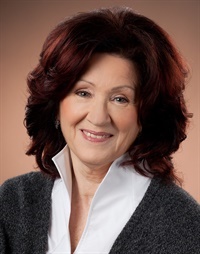
Speaker Disclosures:
Financial: Dr. Sue Johnson had employment relationships with University of British Columbia, Campbell & Fairweather Psychology Group, Alliant International, University Ottawa, Couple and Family Institute, and the International Center for Excellence in Emotionally Focused Therapy. She received royalties as a published author. Dr. Johnson received a speaking honorarium, recording royalties, and book royalties from PESI, Inc. She had no relevant financial relationships with ineligible organizations.
Non-financial: Dr. Sue Johnson served on the editorial board for the American Journal of Family Therapy (AJFT) and the journal Couple and Family Psychology: Research & Practice.


