The Complexity Choir
These days, before I define mental well-being in my lectures, I often ask for volunteers to sing in a "complexity choir." Experienced singers usually break the ice and come bounding up to the front of the room, while others, initially more reticent, slowly find their way to join in. Whether my audience is parents or teachers, therapists or scientists, I know that the best way to help them grasp the power of integration is through immersion in direct experience.
My first request is that the newly assembled choir members all sing the same note at the same time, simply humming along in unison. Someone comes up with a mid-range pitch and they quickly settle into a uniform sound. After about half a minute, I hold up my hand to stop them and then make another request. This time I ask them to cover their ears so they can't hear one another, and then, at my signal, launch individually into whatever song with whatever words they'd like to sing. The audience usually laughs when the singers begin, but they quickly get restive, so I hold up my hand again.
Finally, I ask the singers to choose a song most of them are likely to know and then to sing it together, harmonizing freely as the spirit moves them. This may be the ultimate pickup ensemble, but it's remarkable to hear what happens as a group of teachers or psychotherapists sail into "Oh! Susanna" or "Amazing Grace" or "Row-Row-Row Your Boat." (And it's fascinating to me that more than half the time, the group chooses "Amazing Grace"--which apparently is one of the most harmoniously balanced songs in the Western tradition.) Once the melody is established, individual voices begin to emerge, weaving their harmonies above and below, playing off one another, moving intuitively toward a crescendo before the final notes. Faces light up in choir and audience alike; we are all swept into the flow of the singers' energy and aliveness. At these times, people have said--and I've experienced this as well--there is a palpable sense of vitality that fills the room.
At that moment we are experiencing integration at its acoustic best. Each member of the choir has his or her unique voice, while at the same time they are linked together in a complex and harmonious whole. One is never quite certain where the choir will take the song, but the surprises simply highlight the pleasure of a familiar, shared melody. This balance between differentiated voices on the one hand and their linkage on the other is the embodiment of integration.
And what about the first two exercises? As you surely could predict, the single-note humming is unchanging, rigid—and after a while, dull and boring. The initial excitement and risk of volunteering gives way to the monotony of the task. The singers may be linked, but they cannot express their uniqueness, their individuality. When differentiation is blocked, integration cannot occur. Without the movement toward integration, the entire system moves away from complexity -- away from harmony--and into rigidity.
On the other hand, when the singers close their ears and sing whatever they want, what emerges is cacophony, a chaotic outpouring of sound that often creates a sense of anxiety and distress in the listeners. Now there is no linkage -- only differentiation. When integration is blocked in this way, we also move away from complexity, away from harmony. But this time we move toward chaos, not rigidity.
As the singers settle into their seats again, I sum up the point of the exercise: It is the middle way between chaos and rigidity--the flow of independent voices linked together in harmony--that maximizes both complexity and vitality. This is the essence of integration.
I've come to believe that integration is the key mechanism beneath both the absence of illness and the presence of well-being. Integration -- the linkage of differentiated elements of a system -- illuminates a direct pathway toward health. It's the way we avoid a life of dull, boring rigidity on the one hand, or explosive chaos on the other. We can learn to detect when integration is absent or insufficient and develop effective strategies to promote differentiation and then linkage. The key to this transformation is cultivating the capacity for mindsight.
 |
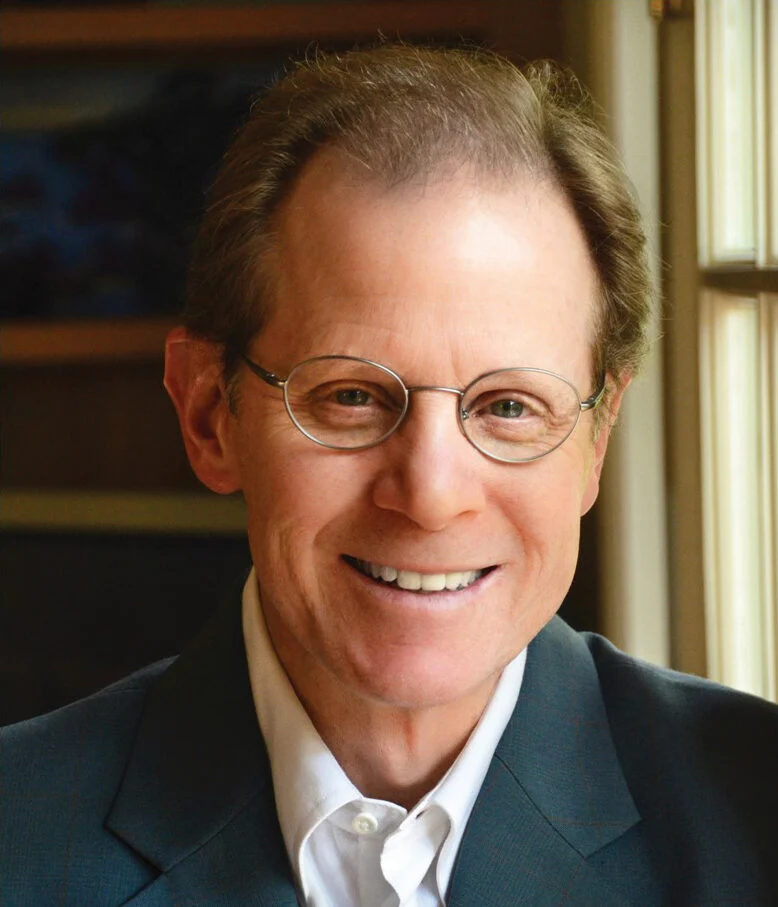
Dr. Dan Siegel is the founder and director of education of the Mindsight Institute and founding co-director of the Mindful Awareness Research Center at UCLA, where he was also co-principal investigator of the Center for Culture, Brain and Development and clinical professor of psychiatry at The School of Medicine.
An award-winning educator, Dan is the author of five New York Times bestsellers and over fifteen other books which have been translated into over forty languages. As the founding editor of the Norton Professional Series on Interpersonal Neurobiology (“IPNB”), Dan has overseen the publication of over one hundred books in the transdisciplinary IPNB frame which focuses on the mind and mental health.
A graduate of Harvard Medical School, Dan completed his postgraduate training at UCLA specializing in pediatrics, and adult, adolescent, and child psychiatry. He was trained in attachment research and narrative analysis through a National Institute of Mental Health research training fellowship focusing on how relationships shape our autobiographical ways of making sense of our lives and influence our development across the lifespan. Financial: Dr. Dan Siegel serves as the Medical Director at the Lifespan Learning Institute and is the Co-Founder and Director of Education at the Mindsight Institute. He is also the founding editor of the Norton Series on Interpersonal Neurobiology. Dr. Siegel receives royalties as a published author and serves as a scientific advisor for the Inner Development Goals initiative and as an advisor for the Center for Child Well-Being. Additionally, he receives honoraria and recording royalties from Psychotherapy Networker and PESI, Inc. Dr. Siegel has no relevant financial relationships with ineligible organizations.
Speaker Disclosures
Financial: Dr. Dan Siegel serves as the Medical Director at the Lifespan Learning Institute and is the Co-Founder and Director of Education at the Mindsight Institute. He is also the founding editor of the Norton Series on Interpersonal Neurobiology. Dr. Siegel receives royalties as a published author and serves as a scientific advisor for the Inner Development Goals initiative and as an advisor for the Center for Child Well-Being. Additionally, he receives honoraria and recording royalties from Psychotherapy Networker and PESI, Inc. Dr. Siegel has no relevant financial relationships with ineligible organizations.
Non-financial: Dr. Dan Siegel is an honorary member of the Austrian Federal Association for Mindfulness. He also serves on the Board of the Garrison Institute and as an advisory board member for both Gloo and Convergence.

Harriet Lerner, PhD is one of our nation's most respected voices on the psychology of women and marriage and family relationships. For three decades, she was a staff psychologist and psychotherapist at The Menninger Clinic in Topeka, Kansas, and a faculty member and supervisor in the Karl Menninger School of Psychiatry.
Currently in private practice in Lawrence, Kansas, she is the author of numerous scholarly articles and 11 books, including the New York Times best-seller, The Dance of Anger, Women in Therapy, The Dance of Connection, and The Dance of Fear. Lerner has been a guest on Oprah, CNN, NPR and numerous other media. She is also, with her sister, an award-winning children's book author, and she hosts a blog for Psychology Today and The Huffington Post. Lerner's new book is Marriage Rules: A Manual for the Married and The Coupled Up.
Lerner lectures and consults nationally, while her psychotherapy practice remains at the heart of her work.
Speaker Disclosures:
Financial: Harriet Lerner maintains a private practice and has an employment relationship with Imagine Magazine. She receives royalties as a published author. Harriet Lerner receives a speaking honorarium and book royalties from PESI, Inc. She has no relevant financial relationships with ineligible organizations.
Non-financial: Harriet Lerner has no relevant non-financial relationships.


