The 3 R's of Anxiety Management for Children

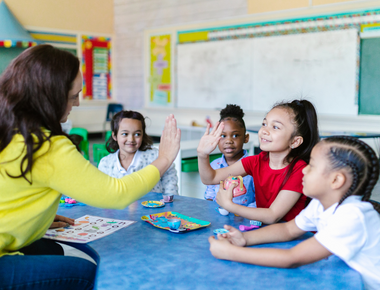
Anxiety expert Dr. Steve O’Brien shares the 3 R’s of Anxiety Management, including a handful of actionable skills and strategies to help students struggling with anxiety and help create a learning-conducive environment for all your students.
The 3 R's of Anxiety Management for Children
Recognize
It’s really important that teachers, clinicians and parents help recognize what anxiety is and what it isn’t. And before you get started, you might want to explain to kids how different areas of their brain are responsible for different things. For this specifically, you can tell them there is a part of their brain that is called the protector (the amygdala), but it can overprotect.For younger kids, you can use the analogy of a smoke detector. The smoke detector does a good job letting us know there’s no fire, but some people’s alarms go off even when there is no smoke from a fire. For older kids, you can talk about how brains have chemicals and while they are healthy chemicals, these chemicals can get a little too high. When they do, we start to feel yucky, get headaches, or have terrible thoughts.
You want young children to recognize that anxiety is a smoke alarm that’s going off when it doesn’t need to be – or that it’s a chemical, not factual, thing in your brain that’s very convincing. So, anxiety can feel scary, but it doesn’t have to be scary.
Relax
Another way to help children manage anxiety is by helping them relax the body and relax the mind. And just like children have different learning styles, they also have different relaxation styles. Some children relax better through breathing, which does help the brain relax, but this isn’t the case for all children. You can also help kids relax through smelling like essentials oils, by guiding them to touch their own hands, or by listening to music. Keep in mind that these mindfulness techniques might need to be adjusted to each child, depending on their style.Redirect
Now that you have helped children recognize anxiety and relax through mindfulness techniques, it’s time to redirect. This means taking the remaining anxiety and redirecting to something that’s either productive or distracting. For example, if a kid is worried about an upcoming test that they think they’re going to fail, they need to recognize that it’s their anxiety thinking they’re going to fail, relax with some techniques, and take that energy into a productive task like coming up with a study schedule for the next couple of weeks. Often, that will not be possible because their cause of anxiety is an irrational worry or they already have studied enough, so instead of redirect, you could also distract by going outside or playing a game.Keep in mind, however, that it is much more effective to talk about anxiety itself than whatever the kid is worried about. After all, you can’t reason with the cortex when the amygdala is on fire.
And if you want to learn more teacher-tested interventions that can help you support students in a calm classroom, join us on February 24, 2023, with Dr. O’Brien at PESI’s FREE One-Day Anxiety in the Classroom Certification Training.

Get the classroom skills and strategies to help students who struggle with anxiety and design a learning-conducive environment for all.
Join anxiety expert Dr. Steve O'Brien and learn easy teacher-tested interventions for supporting student achievement and creating a calm classroom.
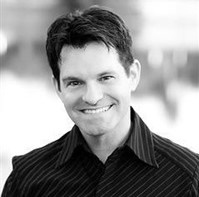
Steve O’Brien, PsyD, is a clinical psychologist with over 30 years of experience working with children, adolescents, young adults, and families in his Clearwater, Florida practice. He is a respected national consultant for mental health professionals seeking guidance on the treatment of anxiety and mood disorders, ADHD, Autism Spectrum Disorders, and adjustment challenges in divorced and blended families.
Since 2017, Dr. O’Brien has provided continuing education and professional training for mental health clinicians, focusing on evidence-based interventions for anxiety, depression, and neurodevelopmental disorders in youth. He is the author of The Essential Guide to Treating Childhood and Adolescent Anxiety, a clinical manual designed to enhance treatment outcomes.
His integrative-systems approach combines CBT, interpersonal techniques, and exposure/desensitization strategies, all tailored to the developmental needs of young clients and their families. Intensive parent consultation—emphasizing psychoeducation, communication skills, and behavior modification—is a cornerstone of his therapeutic work.
Dr. O’Brien has worked in numerous healthcare environments, including community mental health, psychiatric, inpatient/residential, substance abuse, and medical facilities. He also served as associate professor of child-adolescent studies at the Florida School of Professional Psychology. In addition to his clinical work, Dr. O’Brien is an app developer (Life@Home by Psychtouch.com) and a frequent guest on local news outlets for his expertise on childhood anxiety. Visit obrienpsychology.com for more information.
Speaker Disclosures:
Financial: Dr. Steven O'Brien maintains a private practice. He receives a speaking honorarium, recording and book royalties from Psychotherapy Networker and PESI, Inc. He has no relevant financial relationships with ineligible organizations.
Non-financial: Dr. Steven O’Brien is a member of the American Psychological Association and the Florida Psychological Association.


