Sensory-Friendly Theatre: Making the big screen accessible to all
In the quiet, intimate moments of the show, the child, who is autistic, made sounds that brought shushes from surrounding audience members.
Kelvin Moon Loh, a member of The King and I ensemble, was quick to notice and react on social media, drafting a powerful message that theatre is created for all people. He wrote: "For her to bring her child to the theater is brave. You don't know what her life is like. Perhaps, they have great days where he can sit still and not make much noise because this is a rare occurrence. Perhaps she chooses to no longer live in fear, and refuses to compromise the experience of her child. Maybe she scouted the aisle seat for a very popular show in case such an episode would occur. She paid the same price to see the show as you did for her family. Her plan, as was yours, was to have an enjoyable afternoon at the theatre and slowly her worst fears came true."
“For children with Autism, the experience can be overwhelming due to the intense sensory input. Combine loud sounds with a dark room where you cannot visually navigate your space and the experience may rise to the level of terrifying,” says Tara Delaney, MS, OTR/L.
The CDC estimates that about 1 in 68 children has been identified with autism spectrum disorder, and the rate continues to increase every year. But as more children and families in the United States are facing a diagnosis of Autism, something magical is happening; our communities are recognizing the increasing population of those with sensory disorders, and the conversation about the importance of sensory-friendly environments is growing from a gentle hum to a catchy power ballad belted out by the masses.
Take, for example, Micon Cinemas, a movie theatre in Eau Claire, Wisconsin. They’ve partnered with local radio station WAXX 104.5 to offer sensory-friendly movies for families.
During the show, the lights are turned up and the volume is turned down. Children are free to stand, sit, or roam about the theatre; whatever makes them feel comfortable.
“A kid went up to the screen and touched the screen because they were curious,” says WAXX 104.5 DJ and event organizer Cora Quinn. “We’ve also had children sit on the floor, because that’s what is comfortable for them.”
In addition to offering matinee prices and discount concessions to families that attend, sensory-processing disorder resources, such as local equine therapy group Trinity Equestrian Center, have also been invited to display information in the lobby to help connect families with valuable community resources.
Theatre owner Connie Olson said having a sensory-friendly showing was something Micon Cinemas had always wanted to do. “We’ve worked hard to make sure the experience of seeing a movie in the theater is available to everyone; this includes having audio-description and assistive listening devices available for our patrons. Having a sensory-friendly showing just made sense to us.”
Mim Ochsenbein, MSW, OTR/L, works with many clients struggling with Autism, and notes that our society is not set up for individuals with sensory sensitivities, especially children. “Children with autism are faced with many limitations in our culture. When you think of the typical childhood experiences – amusement parks, birthday parties, summer camp, and going to movies with family and friends – we don’t consider that these experiences are just not possible for our kids with ASD or SPD. The fact that this community recognized the needs of their ASD community and was able to create an event that is safe and normal for both the kids and caregivers is extraordinary. I hope that this is start of a wonderful movement to create sensory friendly events for children and their families where everyone can have fun and feel safe in the experience.”
Thankfully, sensory-friendly showings are becoming more prevalent. In 2011, the Theatre Development Fund launched the Autism Theatre Initiative making Broadway shows accessible to those on the autism spectrum, as well as their families.
And it’s not just Broadway taking notice. Blue Man Group recently announced that they will host a set of sensory-friendly shows in five major U.S. cities over the next year.
For those in small communities looking to make a difference, Micon Cinemas says it’s easy for theatres to offer a showing of a film that’s sensory friendly, and they hope that theaters across the nation will begin accommodating families that are struggling to find social activities that work for them. “The key is to find people like Cora Quinn and Alex Edwards from WAXX 104.5 who can help get the word out to the community,” said Connie.
If you’re ready for a community that includes every person, join PESI, Cross Country Education, Psychotherapy Networker, and the chorus of supportive voices for Light it Up Blue for Autism Awareness. Together, we can bring positive changes to our communities, both large and small.
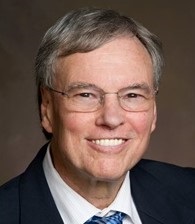
David A. Crenshaw, PhD, ABPP, RPT-S™, is Clinical Director of the Children’s Home of Poughkeepsie. He is Past-President of the New York Association for Play Therapy, a Board-Certified Clinical Psychologist; a Fellow of the American Psychological Association, Division of Child and Adolescent Psychology, and a Registered Play Therapy Supervisor. Dr. Crenshaw has taught graduate courses in play therapy at Columbia University and Johns Hopkins University. He was honored with the Excellence in Psychology Award in 2009, and a Lifetime Achievement Award in 2012 by the Hudson Valley Psychological Association. In 2018, he was awarded a Lifetime Achievement Award by the NY Association for Play and in 2021 was awarded a Lifetime Achievement Award by the NY Association for Play Therapy. The author/editor/co-editor of 17 books, numerous book chapters, and journal articles on child aggression, play therapy and child trauma, his latest book co-edited with Cathy Malchiodi is What to Do When Children Clam-Up in Psychotherapy and a book co-written with Eliana Gil titled Termination Challenges in Child Psychotherapy.
Financial: David Crenshaw is the founder and director of Rhinebeck Child and Family Center LLC. He receives royalties as a published author. David Crenshaw receives a speaking honorarium and recording royalties from Psychotherapy Networker and PESI, Inc. He has no relevant financial relationships with ineligible organizations.
Non-financial: David Crenshaw is a member of the American Psychological Association, the Association for Play Therapy, and the New York Association for Play Therapy, Los Angeles County Psychological Association, and the California Association of Marriage and Family Therapists.


