Looking on the Bright Side: Using Optimism to Create Happiness


Some days are clunkers. They just feel no good. That’s normal, but the best part is that you can always start over with a brand new day. But a person who can see the positives within a negative situation is called an optimist. Of course, some people are more optimistic than others, but with some practice, kids can actually see the good in situations, even when they’re facing challenges.
Optimism is choosing to focus on the positive parts of any situation. Challenging moments will inevitably happen. Things will not go our way and there is nothing we can do about it. But in general, when something goes wrong, optimistic people choose to ask: What good can come from this? Can I learn something here? What is my next best step?
For example, imagine that you planned a day at the beach, but when you wake up, it is raining outside. A negative person might say something like, “The whole day has been ruined!” On the other hand, an optimist might say, “We will have to reschedule our beach day, but now I can finally wear my new rain boots and splash in the puddles!” They are focusing on what feels good (positive) and choosing not to focus on the challenging (negative) part of the experience or situation.
It will take some practice to get into an optimistic mindset. But you don’t have to wait for something bad to happen to practice your positive thinking! By simply considering the good things around you, it is easier to feel happy in the moment. And if it’s been a very difficult day and it seems like nothing has gone right, you can still be thankful for the little things, like: “I woke up today,” “my dog loves me,” or “the weekend is only two days away!”
Optimistic people (both adults and children) are happier people. Science shows that optimistic people tend to be healthier and report feeling happier too. But choosing to be optimistic, and seeing the best in any situation that might come up, is totally up to how you see it!
Therapists and parents can help their clients and children practice seeing the bright side with these two free worksheets from my new workbook: The Happiness Workbook for Kids: 24 Fun Activities to Help Kids Focus, Make Smart Choices, and Bounce Back from Challenges.
Optimism is choosing to focus on the positive parts of any situation. Challenging moments will inevitably happen. Things will not go our way and there is nothing we can do about it. But in general, when something goes wrong, optimistic people choose to ask: What good can come from this? Can I learn something here? What is my next best step?
For example, imagine that you planned a day at the beach, but when you wake up, it is raining outside. A negative person might say something like, “The whole day has been ruined!” On the other hand, an optimist might say, “We will have to reschedule our beach day, but now I can finally wear my new rain boots and splash in the puddles!” They are focusing on what feels good (positive) and choosing not to focus on the challenging (negative) part of the experience or situation.
It will take some practice to get into an optimistic mindset. But you don’t have to wait for something bad to happen to practice your positive thinking! By simply considering the good things around you, it is easier to feel happy in the moment. And if it’s been a very difficult day and it seems like nothing has gone right, you can still be thankful for the little things, like: “I woke up today,” “my dog loves me,” or “the weekend is only two days away!”
Optimistic people (both adults and children) are happier people. Science shows that optimistic people tend to be healthier and report feeling happier too. But choosing to be optimistic, and seeing the best in any situation that might come up, is totally up to how you see it!
Therapists and parents can help their clients and children practice seeing the bright side with these two free worksheets from my new workbook: The Happiness Workbook for Kids: 24 Fun Activities to Help Kids Focus, Make Smart Choices, and Bounce Back from Challenges.
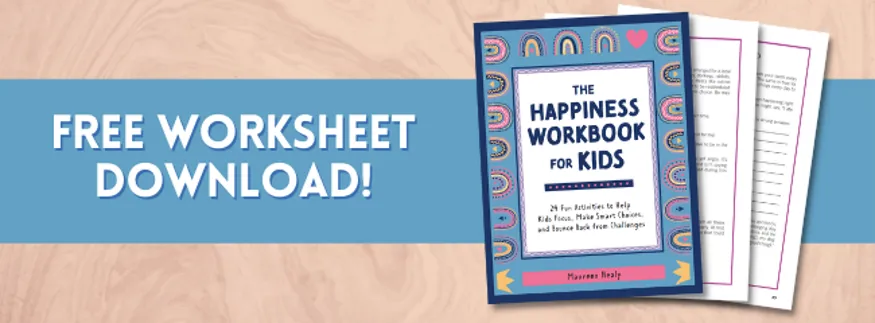
Teach Children to Harness the Power of Happiness!

In this insightful yet easy-to-read workbook, Maureen Healy teaches kids how to become happier despite the everyday obstacles, frustrations, and big emotions that often challenge their ability to make good decisions. With the tools inside, children will learn how to constructively express their emotions, bounce back from challenges, and move toward happier life experiences.

Maureen Healy
Maureen Healy is an author and leader in the field of children's emotional health and education. She has worked with parents and children across the globe, from the Bronx to the base of the Himalayas (where she lived for a time!). Maureen's last book, The Emotionally Healthy Child, has a preface from the Dalai Lama and is sold worldwide. Learn more about Maureen's work and books at www.growinghappykids.com.
You May Also Be Interested In These Related Blog Posts


