Initiation & Activation: 2 Exercises to Help Kids Focus


Initiation and activation are the skills needed to get started on a task. Whether it’s getting started with a routine task, such as unpacking a backpack, or a more difficult task, such as beginning a book report, some students struggle and may give the appearance of being lazy, unmotivated, or resistant. It may appear as if they are trying to procrastinate starting the activity. However, when we dig a little deeper, we may find that these students have difficulty getting started because they simply don’t know how or where to begin.
To do their best work, these students must figure out what the activity will entail, what should be expected of them, and how much time they will have to complete it. Remember that students with ADHD also have a much harder time activating their brain when they are not intrinsically interested or motivated by the task at hand. Prepare them both emotionally and physically—the upfront investment will drastically lessen the teacher’s time for redirection or any additional fallout.
In addition, transitions can be particularly challenging for students with ADHD and executive functioning challenges. When we ask students to transition from one activity to another, we are actually asking them to do three separate (and often individually challenging) steps: (1) stop the activity, (2) move to the next activity, and (3) start the new activity. Transitions can be supported more fully when we break the movement into three parts and address each step separately.
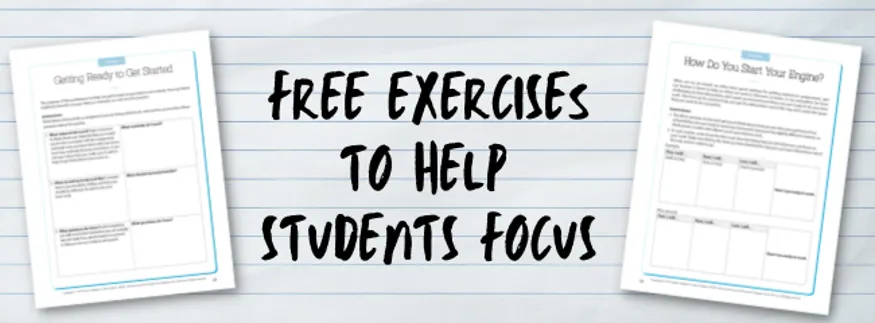
A transition of space, such as going from school to home, can also bring extra challenges. There are often more external factors that can distract or pull attention away from the task at hand. It can be beneficial to build a routine in all aspects of a student’s life, including homework time. Some students just do better when they know what to expect—regardless of whether or not they are diagnosed with ADHD. Preparation, guidance, and connection are the keys to easing transitions. Guide students in developing successful routines with free exercises from my book: ADHD, Executive Function & Behavioral Challenges in the Classroom.

ADHD and executive function expert Cindy Goldrich and Special Education teacher Carly Goldrich combined efforts to create this powerful resource to help teachers and professionals understand and connect with students. These practical tools and worksheets are designed to help students become resourceful, accountable, optimistic, and perseverant.
Included for easy reproduction are resources and worksheets to address issues related to:
- Practical, non-distracting movement
- Improving task initiation, planning, and time-management
- Strengthening emotional regulation, cognitive flexibility, and frustration tolerance
- Teaching effective communication and collaboration skills
- Managing stress and anxiety in school and at home
- Creating a growth mindset temperament and improving perseverance
- Using goal-setting techniques to improve performance and confidence

Cindy Goldrich, EdM, is a leading expert in ADHD, executive function, and behavioral management. As a mental health professional and globally recognized speaker and trainer, Cindy works with educators, mental health professionals, and allied professionals to provide evidence-based strategies for supporting children, teens, and parents in managing ADHD and executive function challenges.
Through her company, PTS Coaching, Cindy offers professional training, including the ADHD Parent Coach Academy and ADHD Teacher Trainer Academy, equipping professionals worldwide to coach parents and train educators in fostering student success. She also provides direct coaching for parents, helping them implement effective strategies to support their children’s growth and success.
Cindy is the author of 8 Keys to Parenting Children with ADHD and co-author of ADHD, Executive Function & Behavioral Challenges in the Classroom. She has trained thousands of professionals in research-based, practical interventions that improve learning, motivation, and behavior across educational and clinical settings. Her work bridges the gap between research and real-world application, empowering professionals and families to create structured, supportive environments where children with ADHD can thrive.
Speaker Disclosures:
Financial: Cindy Goldrich maintains a private coaching practice and receives royalties as a published author. She receives a speaking honorarium, recording, and book royalties from PESI, Inc. She has no relevant financial relationships with ineligible organizations.
Non-financial: Cindy Goldrich is a contributing author to The ADHD Awareness Book Project: 365 Ways to Succeed with ADHD. She is the Co-Founder of the Long Island ADHD Professional Consortium.


