Helping Kids Face Obstacles Head-On


Obstacles for children come in many sizes and forms, from being unable to find their math book before leaving for school to learning how to ride a bike. And even a small obstacle can feel big when a kid is frustrated, upset, or overwhelmed. This can happen because children’s brains (and adults’ too!) shift into fight-or-flight mode whenever they encounter an obstacle. It might also happen when kids are already stressed, and this new obstacle feels like just one more thing that is hard to handle. It could also be that they haven’t had a lot of experience overcoming obstacles on their own, so they don’t have the confidence they need to take control of the situation.
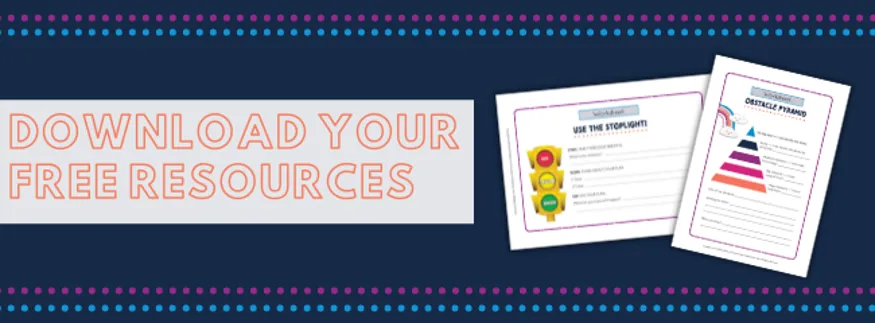
The good news is that most obstacles aren’t as big as your child might think they are in the heat of the moment. When they are able to calm down and think logically, they can usually find a way to overcome the obstacle. Therefore, the first step to encourage your child to slow down and consider the situation. They can do this by imagining that there’s a stoplight in their mind: They take three deep breaths so they can identify the problem (STOP), create some ideas to solve the problem (SLOW), and consider what they expect from their solution (GO!). This act of reflection can help them make positive decisions.
The next step is to help your child evaluate how big this obstacle actually is—and to then consider how to best work through it. For example, if they are facing a larger problem, such as bullying or unwanted peer pressure, they may need to ask a trusted adult for help. But if they are facing a smaller bump in the road, like figuring out how to build a sturdy block tower that doesn’t fall down, they might be able to use coping skills to handle it on their own. By writing down a few simple coping strategies and identifying some trusted adults your child can ask for help, they’ll be better equipped to handle future obstacles that come their way.
Check out these two (completely free!) interventions to help your child evaluate and overcome their obstacles in a healthy way. Kids will face challenges in life—there’s no avoiding it. But dealing with these problems in a constructive way adds to their repertoire of coping skills, creating more confident and less stressed-out kids!
You can find more of these fun, effective activities for children in my new book, The Stress-Buster Workbook for Kids: 75 Evidence-Based Strategies to Help Kids Regulate Their Emotions, Build Coping Skills, and Tap into Positive Thinking.

Designed to offer a myriad of stress-busting solutions – as every kid is different and needs different tools that work for them – this book is an ideal resource for parents, teachers, therapists, and any other professional working with kids ages 4-11. Being a kid isn’t always easy, but with these tried-and-true strategies, they’ll learn how to conquer their biggest obstacles and realize that they can do hard things.

Katie Hurley, DSW, LCSW, is a child and adolescent psychotherapist, parenting educator, public speaker, and writer. She is the founder of “Girls Can!” empowerment groups for girls between ages 5-11.
Dr. Hurley is the senior clinical advisor of The Jed Foundation (JED), a nonprofit dedicated to youth and young adult mental health and suicide prevention.
Dr. Hurley is the author of the award-winning No More Mean Girls: The Secret to Raising Strong, Confident, and Compassionate Girls, The Depression Workbook for Teens: Tools to Improve Your Mood, Build Self-Esteem, and Stay Motivated, and The Happy Kid Handbook: How to Raise Joyful Children in a Stressful World.
Dr. Hurley covers mental health, child and adolescent development, and parenting for The Washington Post, PBS Parents, CNN and NBC, among other places.
Dr. Hurley practices psychotherapy in the South Bay area of Los Angeles and earned her BA in psychology and women’s studies from Boston College, her MSW from the University of Pennsylvania, and her Doctor of Social Work from Simmons University. She splits her time between Los Angeles, California and coastal Connecticut with her husband and two children.
Speaker Disclosures:
Financial: Dr. Katie Hurley maintains a private practice and receives compensation as a consultant, public speaker, and journalist. She receives royalties as a published author. Dr. Hurley receives a speaking honorarium and book royalties from PESI, Inc. She has no relevant financial relationships with ineligible organizations.
Non-financial: Dr. Katie Hurley has no relevant non-financial relationships.


