Helping Kids Face Fear and Anxiety Head-On

Raise your hand if you have ever felt anxious. *All hands raise.*
Now, raise your hand if you have ever seen your child deal with anxious thoughts and feelings. *All hands raise.*
No surprise, feeling anxious is an incredibly common experience. But confusingly, it is also unbelievably isolating. You and your children may feel you are the only ones with anxiety and fears, braving anxiety island all by your lonesome.
Most everybody experiences anxiety at some point in their life—there’s both good and bad news to this. The bad news is, of course, that anxiety can be very uncomfortable and challenging to work through. But now, the good news! Because there are so many people who experience these feelings, focused research on the topic has yielded a great deal of information about anxiety, including ways to manage the symptoms.
While our gut instinct with anxiety and fear is to turn away from the trigger, studies show that reacting in that way can actually make anxiety worse. When we hide from our fears and worries, we temporarily feel safe, which is nice in the short term, but in the long term, it actually reinforces the danger of our fear, making it feel that much scarier. When we do the opposite—facing our fears with intention and planning—we learn that we can handle and tolerate the anxiety. We can even engage in coping techniques to decrease the discomfort as it happens! The more we do this, and the more we encourage our children to do this, the smaller the fears and anxieties become and the more capable we feel!
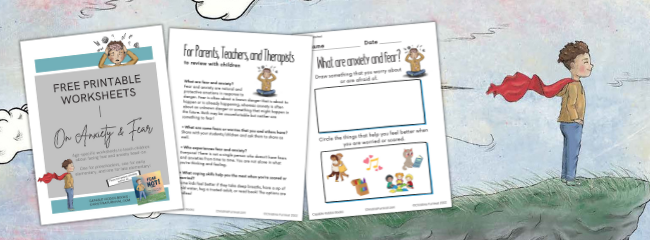
Help educate your children about anxiety, empowering them with awareness while opening the conversation to help normalize their experience with these age-specific worksheets! You and your kids can bravely face your fears and anxieties!
Now, raise your hand if you have ever seen your child deal with anxious thoughts and feelings. *All hands raise.*
No surprise, feeling anxious is an incredibly common experience. But confusingly, it is also unbelievably isolating. You and your children may feel you are the only ones with anxiety and fears, braving anxiety island all by your lonesome.
Most everybody experiences anxiety at some point in their life—there’s both good and bad news to this. The bad news is, of course, that anxiety can be very uncomfortable and challenging to work through. But now, the good news! Because there are so many people who experience these feelings, focused research on the topic has yielded a great deal of information about anxiety, including ways to manage the symptoms.
While our gut instinct with anxiety and fear is to turn away from the trigger, studies show that reacting in that way can actually make anxiety worse. When we hide from our fears and worries, we temporarily feel safe, which is nice in the short term, but in the long term, it actually reinforces the danger of our fear, making it feel that much scarier. When we do the opposite—facing our fears with intention and planning—we learn that we can handle and tolerate the anxiety. We can even engage in coping techniques to decrease the discomfort as it happens! The more we do this, and the more we encourage our children to do this, the smaller the fears and anxieties become and the more capable we feel!
Help educate your children about anxiety, empowering them with awareness while opening the conversation to help normalize their experience with these age-specific worksheets! You and your kids can bravely face your fears and anxieties!
Discover the Capable Kiddos Book Series

How can I help my child overcome their fear and anxiety? What skills can I teach my child to cope with scary “what if” thoughts? How can I help them grow more confident when their worries seem so big?
Christina Furnival, a licensed mental health therapist and mom, answers these questions in this empowering and uplifting rhyming story about a young boy who successfully faces his anxiety and fear head-on. In Fear Not!, children will learn a practical three-step lesson to manage their worries, regain their cool, and strip fear of its power once and for all.
By teaching children how to confront their fears and mindfully ride the wave of anxiety, this book equips them with the tools they need to deal with the inevitable stressors of life and feel confident no matter the challenge.
Christina Furnival, a licensed mental health therapist and mom, answers these questions in this empowering and uplifting rhyming story about a young boy who successfully faces his anxiety and fear head-on. In Fear Not!, children will learn a practical three-step lesson to manage their worries, regain their cool, and strip fear of its power once and for all.
By teaching children how to confront their fears and mindfully ride the wave of anxiety, this book equips them with the tools they need to deal with the inevitable stressors of life and feel confident no matter the challenge.
How can I help my child deal with a bully? What do I teach them about handling an on-again-off-again, not-so-friendly friend? My advice to “just be kind” isn’t helping, and my child is still hurting.
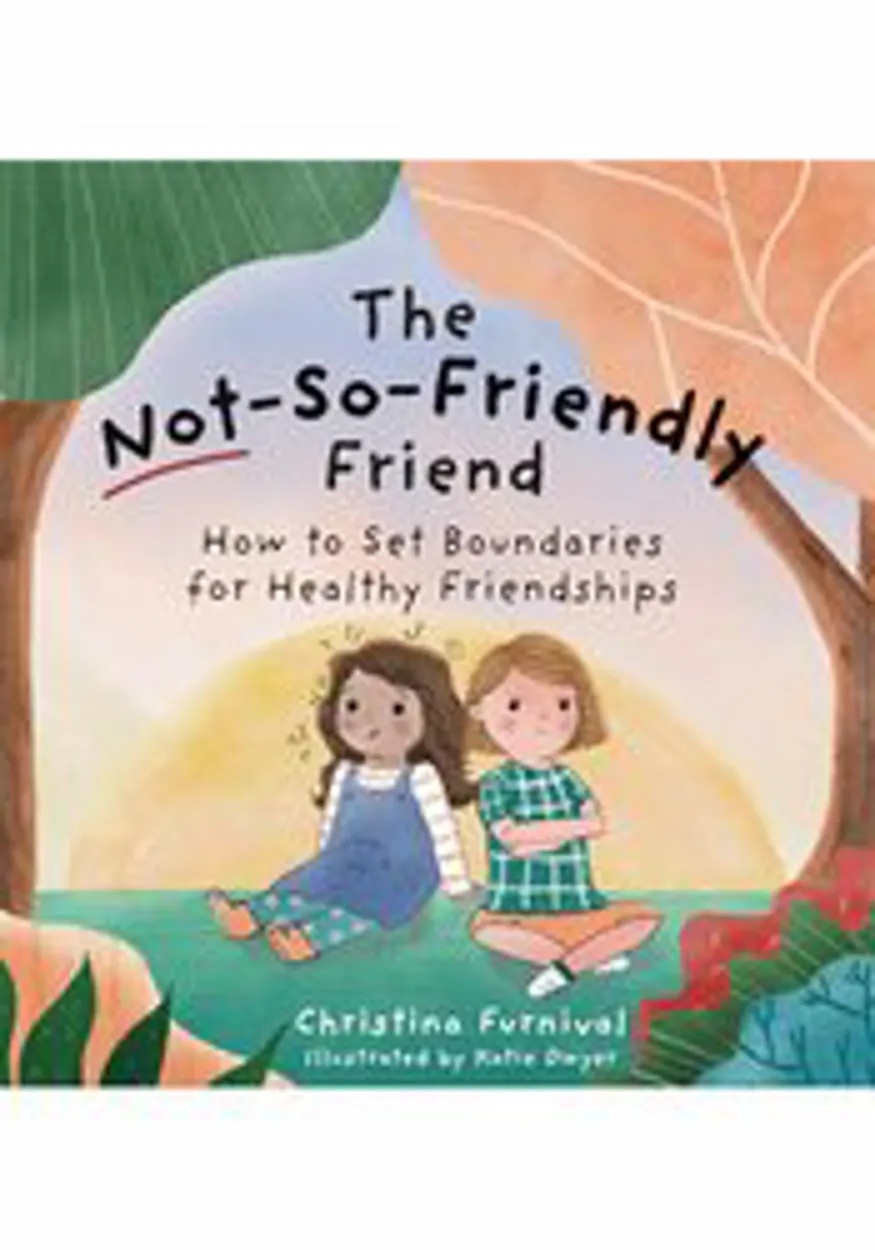
Christina Furnival, a licensed mental health therapist and mom, helps answer these questions in this charming and engaging rhyming story about a young child who successfully navigates the complexities of an unkind peer relationship.
In The Not-So-Friendly Friend, children will learn an easy and practical lesson about how to firmly and assertively – yet kindly – stand up for themselves in the face of a bully. By teaching children about the importance and value of setting boundaries for healthy friendships, this book provides children the tools they need to foster their social confidence and emotional well-being.
Christina Furnival, a licensed mental health therapist and mom, helps answer these questions in this charming and engaging rhyming story about a young child who successfully navigates the complexities of an unkind peer relationship.
In The Not-So-Friendly Friend, children will learn an easy and practical lesson about how to firmly and assertively – yet kindly – stand up for themselves in the face of a bully. By teaching children about the importance and value of setting boundaries for healthy friendships, this book provides children the tools they need to foster their social confidence and emotional well-being.
Topics:

Christina Furnival MS, LPCC
Financial: Christina Furnival is the creator of and writer for Motherhood blog. She receives book royalties from PESI, Inc. She has no relevant financial relationships with ineligible organizations.
Non-financial: Christina Furnival has no relevant non-financial relationships.
Christina Furnival, MS, LPCC, is a wife, mother of three, writer, author, and licensed mental health therapist. With over a decade of experience in the field, she is passionate about helping parents and children grow their skill sets, overcome challenges, and gain confidence to live happy, fulfilling lives. Her meaningful stories in the Capable Kiddos series serve as entertaining and enlightening resources to empower children and to make them feel capable of managing tough situations and their accompanying emotions. Visit her at ChristinaFurnival.com and on Instagram @CapableKiddosBooks.
Speaker Disclosures:
Financial: Christina Furnival is the creator of and writer for Motherhood blog. She receives book royalties from PESI, Inc. She has no relevant financial relationships with ineligible organizations.
Non-financial: Christina Furnival has no relevant non-financial relationships.
You May Also Be Interested In These Related Blog Posts


