C.C. Sabathia and You: Help your clients assess their drinking privately
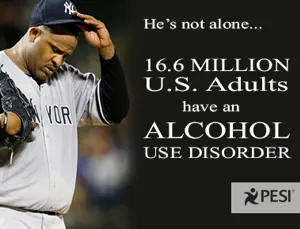
Sabathia seemed to have it all: $25 million salary (the 4th highest in baseball), endless raw talent, a philanthropic organization of his own, a lovely wife, and four beautiful children.
Often termed a “gentle giant”, the 6’7” Sabathia has had a very public stumble. As tough as the scrutiny of the masses may be, his internal struggle has probably been even more grueling.
People who know Sabathia are saying they didn’t realize he had a drinking problem. They had seen no signs. Are we also missing signs in the people we serve? How many of our clients (and family, friends, coworkers) also have a private struggle and could use our support?
Clearly this is an issue faced by millions of Americans in every walk of life. If we can open our eyes (and theirs) we have a chance to help people get the help they need before the consequences build to a dangerous level.
If you think your client may be facing a problem with alcohol you may want to check out these resources. Both of these are online and can be taken privately and used to assess the likelihood of an alcohol problem:
- National Council on Alcoholism and Drug Dependence: Alcohol Abuse Self Test
- Check Your Drinking Survey
Even when it means missing the post-season.
Martha Teater, MA, LMFT, LCAS, LPC, brings expertise, experience, and insights drawn from a career as a respected clinician, international trainer, and author. A prolific writer, she has published over 175 articles in newspapers and magazines, including Psychotherapy Networker and Family Therapy Magazine. Check out a preview of Martha's article: Shedding Light on the DSM-5®: The View from the Trenches.
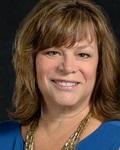
Martha Teater, MA, LMFT, LCAS, LPC, is a Diplomate with the Academy for Cognitive Therapy and is a practicing cognitive-behavioral therapist. She has maintained a private practice since 1990 and has worked in primary care settings, free clinics, and medication-assisted treatment programs. Martha is a Red Cross disaster mental health manager and has been on many national disaster deployments where she provides support to traumatized people. She is also involved with the Red Cross Service to the Armed Forces to develop programs to support military and veteran families.
She has provided trainings in the United States and internationally on topics such as evidence-based treatments for trauma, DSM-5®, compassion fatigue, and behavioral treatment of chronic pain. A prolific writer, Martha has published over 175 articles in newspapers and magazines, including Psychotherapy Networker and Family Therapy Magazine. Martha is the co-author (with John Ludgate) of Overcoming Compassion Fatigue: A Practical Resilience Workbook (PESI, 2014) and (with Don Teater) Treating Chronic Pain: Pill-Free Approaches to Move People from Hurt to Hope (PESI, 2017).
Speaker Disclosures:
Financial: Martha Teater maintains a private practice and receives compensation as a consultant. She receives a speaking honorarium, recording, and book royalties from Psychotherapy Networker and PESI, Inc. She has no relevant financial relationships with ineligible organizations.
Non-financial: Martha Teater is a member of the Academy of Cognitive Therapy and the American Association for Marriage & Family Therapy. She is a peer reviewer for Substance Abuse and Mental Health Services Admiration and a reviewer for the National Board for Certified Counselors.


