Behavioral Stress Tolerance Plan: A worksheet for therapists and clients
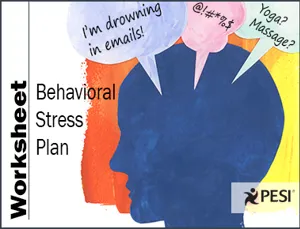
Needless to say, I am stressed and tired. I’m not alone. One-third of Americans are living with extreme stress and nearly half of Americans believe that their stress has increased over the past five years (APA).
The 10 most common daily stressors include:
- Difficulty focusing at work
- Problematic interactions with a coworker
- Poor communication
- Over-populated “to-do” list
- Lack of time for self-care
- Not able to stay on a time table
- Financial concerns
- Maintaining a daily schedule
- Poor sleep
If, like me, you are a therapist with a full caseload, and concerns over billing, office management, session management, and high risk clients, you’re probably feeling some strong levels of stress.
An excellent way to manage both your stress and your client’s is to incorporate a Behavioral Stress Tolerance Plan.
A Behavioral Stress Tolerance Plan is different from most emotional management plans out there for several reasons.
First, it starts with maintenance, which helps the person filling it out identify areas of wellness and how to maintain them. Secondly, it walks you through early warning signs, exacerbation of these signs and your response to slow or stop stress there. Lastly, it identifies community, personal, and professional (i.e., you the therapist) areas of support while also incorporating clear identifiers of success and healing.
Download the Worksheet:
Behavioral Stress Tolerance Plan
I have found this Behavioral Stress Tolerance Plan to be helpful not only for myself, but also for my clients. The plan is useful regardless of their educational level, background, or emotional inhibition. Here's a sample worksheet filled out with your client.
If you’re ready to have greater control over that creeping STRESS, give the worksheet a try. And if you’re looking for me, you’ll find me at Starbucks grabbing a Dark Roast coffee because it’s a “treatment that works” for me.
Daniel J. Fox, Ph.D. has been treating and specializing in the treatment and assessment of individuals with personality disorders for the last 14 years in the state and federal prison system, universities, and in private practice. He is a licensed psychologist in the state of Texas and has published several articles on personality, ethics, and neurofeedback. He is the author of The Clinician’s Guide to Diagnosis and Treatment of Personality Disorders. His specialty areas include personality disorders, ethics, and neurofeedback.

Daniel J. Fox, PhD, is a licensed psychologist in Texas, international speaker, and multiple-award winning author. He has been specializing in the treatment and assessment of individuals with personality disorders for over 20 years in the state and federal prison system, universities, and in private practice. His specialty areas include personality disorders, ethics, burnout prevention, and emotional intelligence. He has published several articles and books in these areas and is the author of the award-winning Narcissistic Personality Disorder Toolbox, The Clinician's Guide to Diagnosis and Treatment of Personality Disorders, the award-winning Antisocial, Borderline, Narcissistic and Histrionic Workbook: Treatment strategies for Cluster B Personality Disorders, The Borderline Personality Disorder Workbook, and Complex Borderline Personality Disorder.
Dr. Fox has been teaching and supervising students for over 20 years at various universities across the United States, some of which include West Virginia University, Texas A&M University, University of Houston, Sam Houston State University, and Florida State University. He works in the federal prison system, is an adjunct assistant professor at the University of Houston and maintains a private practice that specializes in the assessment and treatment of individuals with complex psychopathology and personality disorders. Dr. Fox has given numerous workshops and seminars on ethics and personality disorders, personality disorders and crime, treatment solutions for working with clients along the antisocial, borderline, narcissistic, and histrionic personality spectrum, emotional intelligence, managing mental health within the prison system, and others. Dr. Fox maintains a website of various treatment interventions focused on working with and attenuating the symptomatology related to individuals along with the antisocial, borderline, narcissistic, and histrionic personality spectrum (www.drdfox.com).
Speaker Disclosures:
Financial: Dr. Daniel Fox maintains a private practice and has an employment relationship with the University of Houston. He receives royalties as a published author. Dr. Daniel Fox receives a speaking honorarium, recording and book royalties from PESI, Inc. He has no relevant financial relationships with ineligible organizations.
Non-financial: Dr. Daniel Fox is an Editor/Reviewer with Prentice Hall and Worth Publishers.


