Trauma-Informed Stabilization Treatment (TIST) Training
Some of your most committed clients are also your most stuck. They want to heal, yet self-harm, suicidal thoughts, addictive behavior, or relentless shame keep pulling therapy off course. Trauma-Informed Stabilization Treatment (TIST) offers a compassionate, parts-informed way forward. Learn the model directly from its developer, Janina Fisher, PhD, and earn CE as you build skills you can use in your next session.

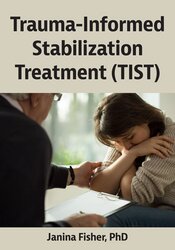

Trauma-Informed Stabilization Treatment (TIST) Bestselling Online Courses
What Is Trauma-Informed Stabilization Treatment?
TIST is a parts-informed approach to complex trauma developed by Dr. Janina Fisher. Rather than centering the story of what happened, it focuses on what trauma left behind: the overwhelming emotions, self-hatred, and urges that make ordinary life feel unsafe.
The model rests on a reframe that changes the whole tone of treatment. Those intense reactions aren't proof that a client is broken or resistant. They're communications from fragmented, disowned parts of the self that learned to survive in an unsafe world. When clients get curious about those parts instead of fighting them, and begin offering them the safety and care they never received, symptoms that once seemed fixed start to soften.
TIST draws on Internal Family Systems (IFS), Sensorimotor Psychotherapy, and mindfulness-based therapies, and it's grounded in the structural dissociation model and the neurobiology of trauma. Dr. Fisher first developed it in a community hospital setting to help clients whose self-destructive symptoms and repeated hospitalizations hadn't responded to traditional care.
Stabilization First: Why TIST Reaches Your Most Challenging Clients
Many trauma therapies assume a client is steady enough to revisit painful memories. But when someone is cutting, restricting, drinking, or thinking about suicide, memory work can feel out of reach, and pushing ahead can make things worse.
TIST puts stabilization at the center. It treats unsafe behavior as the work of protector parts trying to manage unbearable feelings, not as an obstacle standing between you and the "real" therapy. Instead of battling the behavior, you and your client learn what the part is protecting against, help it settle, and build enough internal safety for healing to take hold. That's why clinicians turn to TIST for clients living with self-harm and suicidality, substance use, eating disorders, chronic shame, dissociation, and the patterns often labeled borderline personality disorder.
Skills You'll Build in TIST Training
Recognizing trauma-related parts. Learn to spot the thoughts, feelings, and body responses that signal a part has been activated, and help clients tell the difference between a part and a passing emotion.
Unblending. Teach clients to notice when they're flooded by a part, then create enough distance to observe it rather than be overtaken by it. This mindful dual awareness becomes the foundation for regulation.
Working with protector parts. Reframe self-harm, addiction, and suicidal urges as protective strategies, so you can lower the intensity without shaming the part that's trying to help.
Building internal attachment. Guide clients to offer their younger, wounded parts the warmth and protection they missed. As those parts finally feel safe, the past begins to feel like the past.
TIST and IFS: How They Fit Together
Clinicians often ask how TIST compares with IFS. Both understand the mind as a system of parts, and both help clients relate to those parts with compassion. TIST adds structural dissociation theory, a deeper focus on the body and nervous system, and a clear priority on stabilizing clients whose symptoms make safety the first goal. Many therapists draw on both, and PESI's trainings featuring Janina Fisher alongside Frank Anderson, MD, show you how the two approaches complement each other in session.
Trauma-Informed Stabilization Treatment (TIST) Learners Also Develop Skills In
Let's Stay in Touch
Get exclusive discounts, new training announcements & more!