Why I Tell Clinicians the "RP" in ERP Is the Part That Actually Does the Work

When I train clinicians on treating pediatric OCD, I notice most people's attention goes straight to the "E." Designing a clever exposure, building a fear ladder, getting a kid to touch a doorknob or say a scary word out loud, it feels like the exciting part, the part that looks like therapy is happening. But after twenty years of treating OCD, I can tell you the piece that actually determines whether treatment works isn't the exposure. It's the response prevention.
Exposure without response prevention isn't ERP. It's just anxiety with extra steps, and it can quietly make a child's OCD worse instead of better. I learned this the hard way, and I want to walk you through exactly how, because I think the mistake I made is one that's easy to make even when you know what you're doing.
The Case That Changed How I Practice
Early in my career, I worked with a girl who avoided vomiting. She wouldn't think about it, wouldn't talk about it, stayed away from anything that might trigger a gag. I diagnosed it as a phobia. Simple enough, I thought. So I built a straightforward exposure plan: watch a video of someone vomiting.
During the exposure, she reached over and grabbed a Kleenex, and she spent the entire session quietly spitting into it. I noticed, but at first I didn't understand what I was seeing. Then it clicked. She wasn't just uncomfortable. She was ritualizing. Spitting was her way of preventing herself from actually vomiting, a covert compulsion running the whole time I thought I was doing solid exposure work.
Here's the part that still bothers me a little. That session didn't treat her OCD. It reinforced it. She faced her fear while performing her ritual the entire time, which taught her brain exactly the opposite of what ERP is supposed to teach: my ritual keeps me safe.
I share this story deliberately with clinicians because it shows how you can have a strong grasp of exposure hierarchies and still undercut the whole treatment if you miss the compulsion hiding in plain sight. I had the training. I had the plan. I missed the ritual anyway.
Compulsions Aren't Always Something You Can See
This is where response prevention gets genuinely hard to implement well. Overt compulsions, hand washing, checking locks, asking for reassurance out loud, are relatively easy to spot and block. Covert or mental compulsions are not.
Kids and teens can be mentally praying, silently repeating a phrase, replaying a memory, or mentally reviewing "did I really touch that" while sitting perfectly still and looking calm. From where you're sitting, it can look like they're tolerating the exposure beautifully. Internally, they may be feeding the exact same loop that keeps OCD alive.
So a thorough assessment has to go beyond "do you wash your hands a lot" and get at the harder to observe stuff: mental checking, silent counting, internally negotiating with the thought, or subtle avoidance within an exposure, like averting the eyes, tensing certain muscles, or holding the breath. If you aren't asking your client what's happening inside their head during exposure, you may be missing the very thing that needs to be blocked.
What This Looks Like in My Practice
Response prevention isn't a single technique so much as a standing rule I hold throughout treatment: don't feed the dog. I use this metaphor with nearly every family I work with. OCD behaves like a nuisance dog begging at the table during dinner. Give it one bite and it comes back tomorrow wanting more. The only way to get it to stop begging for good is to stop feeding it altogether, even when it whines, barks, and escalates.
In session, that means holding a hard line on reassurance, staying alert to rituals hiding inside an exposure, and resisting the urge to calm a client down mid-exposure. I'm direct about this with my clients: I am not trying to lower anxiety during exposure. I'm trying to teach the nervous system that discomfort is tolerable, not that it needs to be managed away. I also work with families to set clear guardrails outside of session, so everyone knows exactly what "not feeding the dog" looks like day to day.
Why This Matters for Your Clients' Outcomes
I emphasize this in training because response prevention is where treatment quietly succeeds or fails. A client can complete dozens of well-designed exposures and still not improve if compulsions, especially mental ones, are running underneath the surface the whole time.
Here's the underlying mechanism I want you to hold onto. Obsessions and compulsions have a functional relationship. You cannot control obsessions directly, but compulsions can be controlled, and blocking them is what eventually brings the distress and frequency of the obsessions down over time. Get the response prevention wrong, and you can do all the exposure work in the world without ever interrupting that loop.
So as you build assessment and treatment plans, I want you carrying around one ongoing question: what is this child doing, visibly or invisibly, to make the anxiety go away or to prevent the feared outcome? Whatever the answer is, that's the compulsion. And whatever the compulsion is, that's what has to stop for the exposure to actually count as ERP.
In this fast-moving, high-impact 3-hour training by sought-after presenter Dr. Ashley Smith, you’ll learn how to confidently identify, assess, and treat OCD in children and teens – including the sneaky subtypes and taboo thoughts most clinicians overlook.

This ALL-NEW certificate training gives you what you need to be a life-changing presence when teens need it most. You'll join Dr. Susan Dea Kane-Ronning, Dr. Charles Jacob, Dr. Sophie Cassel, PLUS 3 other leading experts in teen therapy.

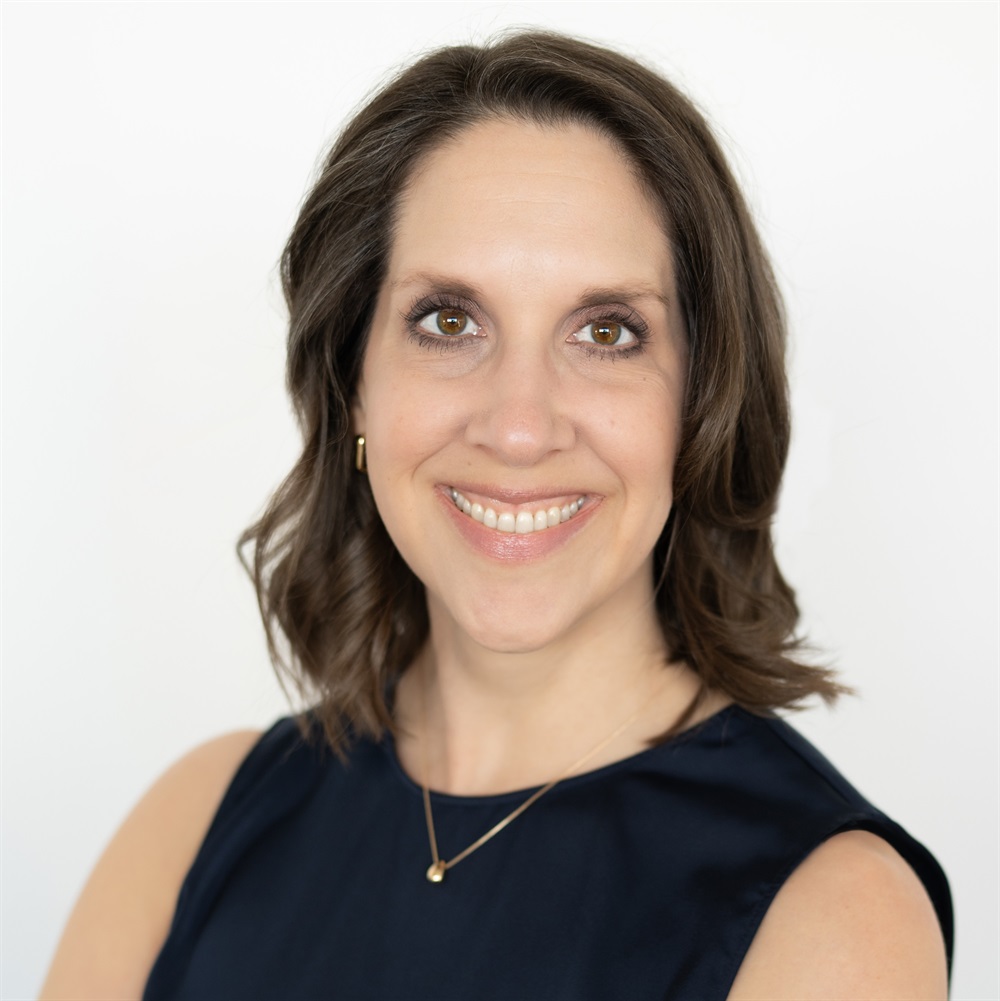
Dr. Ashley Smith is a licensed clinical psychologist and recognized expert in anxiety and related disorders. She has worked in children’s hospitals, an anxiety specialty clinic, and private practice, providing evidence-based treatment for anxiety and OCD.
An adjunct faculty member at Kansas City University, Dr. Ashley has extensive experience training and supervising mental health professionals. She has authored peer-reviewed articles, book chapters, and two books, including Childhood Anxiety Disorders. A long-time member of the Anxiety and Depression Association of America, she was honored with their Special Recognition Award in 2023.
She regularly presents workshops and trainings at local and national levels, focusing on the practical application of cognitive behavioral therapy, positive psychology, and applied neuroscience to improve clinical outcomes. She is also the co-founder of Peak Mind. The Center for Psychological Strength, an organization dedicated to making psychological tools more widely accessible.
Speaker Disclosures:
Financial: Ashley Smith is the co-founder of Peak Mind, has an employment relationship with Kansas City University, and maintains a private practice. She receives royalties as a published author. Ashley Smith receives a speaking honorarium and recording royalties from PESI, Inc. She has no relevant financial relationships with ineligible organizations.
Non-financial: Ashley Smith is a member of the Anxiety Disorders Association of America and sits on the board of directors for Disabled But Not Really.


