The Body as Ally: A Clinician's Guide to Embodied Healing in Eating Disorder

Embodied healing begins in the therapeutic relationship between a client and their body, and clinicians play a meaningful role in holding space for that process. At its foundation, this work is relational: it calls for mutual respect and safety, not only between therapist and client, but between the client and their own physical self. One of the most important things we can communicate to clients early in treatment is that there is no need to rush.
For many clients presenting with eating disorders, the body has long been a site of mistreatment, punishment, or avoidance. Trust, once broken, must be rebuilt incrementally. Clinicians can normalize this pacing by offering clients the embodying self-statement: I can move at the speed of trust. Framing recovery as a relational process, one that unfolds at the pace of earned safety, can reduce the pressure clients often place on themselves to "fix" the body quickly.
Listening as a Clinical Foundation
A core skill to develop with clients is the capacity to listen to the body. In the early stages of treatment, this is rarely straightforward. Eating disorder cognitions generate significant "noise," making it difficult for clients to distinguish their body's authentic signals from the disorder's distortions. As clinicians, our work involves helping clients quiet that noise gradually, by validating what the body communicates rather than reinforcing avoidance or suppression of sensation.
As clients begin to feel seen and heard in their relationship with their body, clinicians often observe a corresponding shift: the eating disorder voice becomes quieter. This is not coincidental. The body, like any relationship, responds to consistent, nonjudgmental attention. Support clients in practicing the embodying self-statement: Befriending my body means letting go of judgment and control and being and working with what is.
Tolerating Intensity: A Skills-Based Approach
Depending on a client's history, including trauma, duration of illness, or prior experiences of bodily harm, physical sensations and needs may feel overwhelming, unpredictable, or frightening. Clinicians should not minimize this reality. Befriending the body requires genuine skill development, built through practice, commitment, and courage.
Treatment involves two parallel tracks:
- Learning to be with the hard stuff. Clients need support tolerating sensations and feelings that feel unmanageable, and learning that presence with discomfort does not require resolution of it. Not everything is fixable, and a body-based therapeutic relationship can help clients build capacity to sit with that.
- Partnering with the body on what is workable. Alongside distress tolerance, clients can also learn to collaborate with their body around sensations, feelings, memories, and experiences that are, in fact, manageable and amenable to change.
Clinical Framework: The Three Intelligences
A central concept in this work is the body's three intelligences (Cook-Cottone, 2020; Seale, 2023): the mind, the heart, and the felt-sense. Understanding this framework equips clinicians to assess where a client's access to embodied wisdom has been most disrupted.
Mind intelligence is the dimension most clients are familiar with: the cognitive, analytical, thinking self. This is often where eating disorder treatment has historically focused.
Heart intelligence is the feeling and meaning-making dimension. It reflects what and who matters to the client, connecting them to values, relationships, and purpose.
Felt-sense intelligence (sometimes referred to as gut intelligence) appraises the client's state of physiological activation and their moment-to-moment experience of safety and security. This dimension is most directly tied to the nervous system.
Eating disorders tend to hijack the mind, suppress the heart, and silence the felt-sense. Effective embodied treatment works to restore access to all three. These intelligences are supported neurophysiologically when clients nourish their bodies and turn inward for guidance (Cook-Cottone, 2020).
Later in treatment, clinicians can introduce neurosomatic processing, an embodied approach to engaging all three intelligences while supporting clients in living meaningful and authentic lives. In the early phases of treatment, however, the emphasis belongs on foundational practices that help the client's nervous system establish a sense of safety in reconnection.
Clinical Application: Supporting Clients in Creating a Practice Space
One of the earliest practical interventions in this model is guiding clients to create a dedicated space for embodied practice. This serves multiple therapeutic functions: it externalizes the client's commitment to recovery, communicates to the body that its needs matter, and provides a predictable container for the discomfort that comes with reconnection.
When introducing this with clients, clinicians may walk through the following structure:
- Identifying a private, safe location. The space should allow for a sense of visual clarity and security, ideally with a secure entrance to prevent unexpected interruptions. Privacy is essential to lowering the threat response that can accompany body-based work.
- Scheduling protected time. Clients benefit from blocking 30 to 60 minutes without interruption. Consistent time slots, whether morning, evening, or lunch, help reinforce the practice as a non-negotiable component of self-care.
- Gathering materials that support regulation. Useful items may include a cushion or chair, yoga mat, small pillow and blanket, and a journal. Sensory tools such as a singing bowl, candles, or soft lighting can support nervous system regulation. A device for music and headphones or a speaker round out the setup.
- Personalizing the space. Encourage clients to include objects that ground them or hold positive associative meaning, such as a gift from a safe person, a stone or crystal, or another meaningful anchor object. Personalization communicates that this space belongs to them and to their body.
- Creating a portable practice kit. For clients without consistent access to a private space, a "practice box" of supplies can be gathered and brought wherever they are. The flexibility of this adaptation allows the practice to travel with the client's needs.
You can frame the creation of this space as the first concrete act of attending to the body's needs. It is also a way of honoring the recovery process itself. Before beginning any formal embodied practice, this preparatory step signals to your clients and their nervous systems that something different is being asked of and offered to the body.
Embodied treatment asks your clients to do something that may feel counterintuitive after years of disconnection, control, or harm: to turn toward the body with curiosity and care. Our role is to model the relational stance that makes this possible. By moving at the pace of trust, centering safety, and introducing accessible practices grounded in the three intelligences, clinicians can help clients begin to build the most fundamental relationship in recovery: the one they have with themselves.
To celebrate the release of The Disordered Eating Recovery Workbook, I’m thrilled to offer you the introduction and first full chapter of the workbook, which includes more exercises like this one you can use in-session right away.
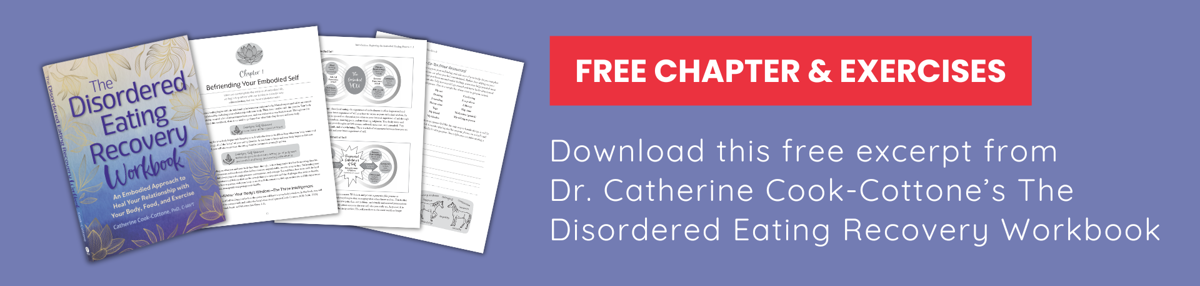
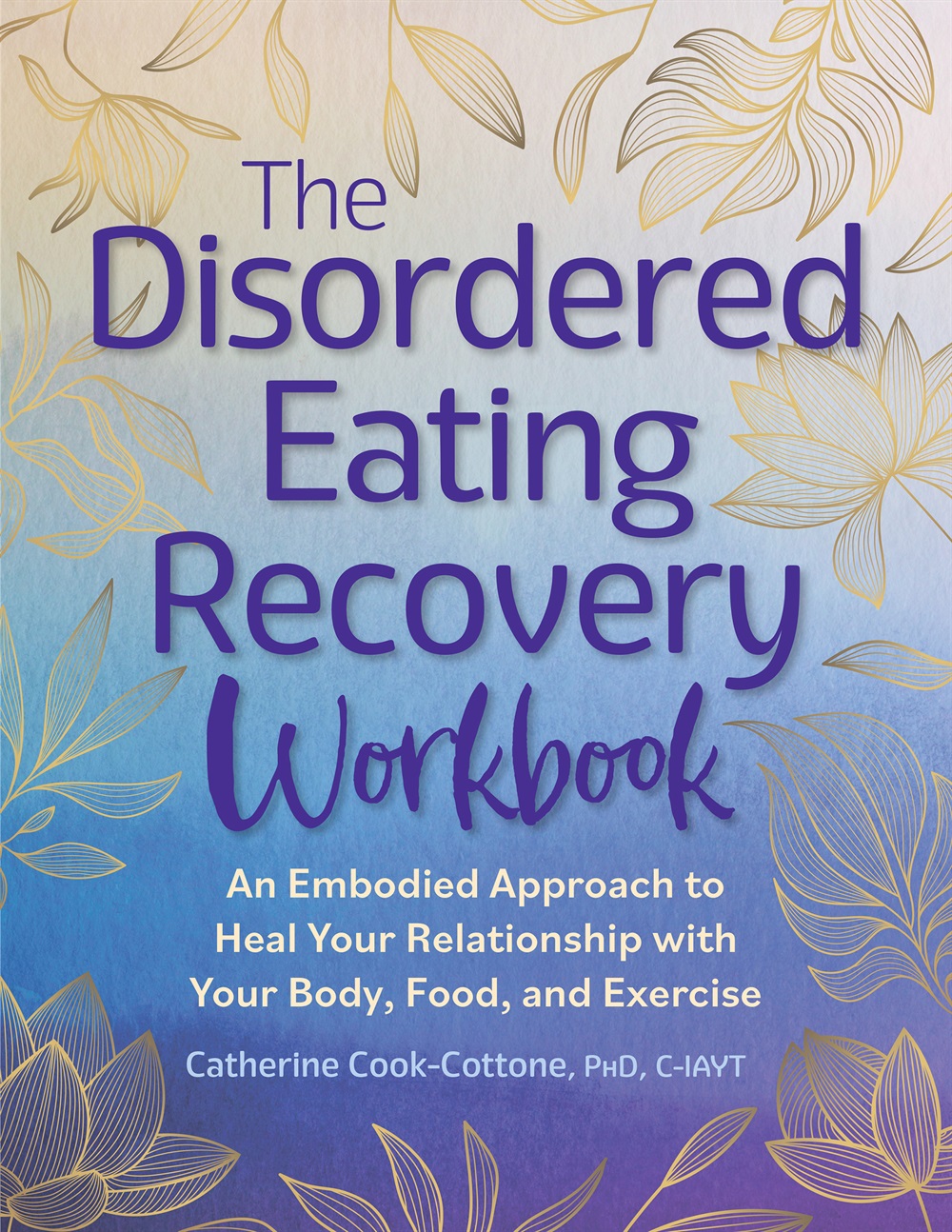
Written by expert eating disorder and embodiment therapist Catherine Cook-Cottone, for eating disorder survivors and therapists alike, The Disordered Eating Recovery Workbook is filled with over 100 healing practices to help readers learn to listen to, trust, and befriend their body.

Apply CBT, ACT & more to clients with eating disorders and a history of trauma. Plus, earn Certified Trauma Treatment Professional certification for free!


Catherine Cook-Cottone, PhD, C-IAYT, is a licensed psychologist in Colorado and New York, yoga therapist, and professor at University at Buffalo, SUNY. Dr. Cook-Cottone is a trauma therapist, trained in EMDR, and teaches courses in psychopathology, mindful therapy, advanced counseling techniques, and counseling with children and adolescents. She has written/edited 15 books and published over 100 research articles and chapters on mindful self-care, yoga, embodiment, self-regulation, eating disorders, and trauma. Dr. Cook-Cottone is co-founder of Yogis in Service and has researched and consulted with the Africa Yoga Project, Give Back Yoga Foundation, and the United Nations Foundation to develop and deliver trauma-informed, mindfulness-based resilience training for yoga teachers and humanitarian workers in North America, Africa, and the Middle East. In 2018, she was awarded the American Psychological Association’s Citizen Psychologist Presidential Citation.
Speaker Disclosures:
Financial: Catherine Cook-Cottone has an employment relationship with University of Buffalo and receives compensation as a consultant. She is the Co-editor in Chief of Eating Disorders and receives royalties as a published author. Catherine Cook-Cottone receives a speaking honorarium and book royalties from PESI, Inc. She has no relevant financial relationships with ineligible organizations.
Non-financial: Catherine Cook-Cottone is a member of the American Psychological Association, the International Association of Yoga Therapists, the National Association of School Psychologists, the Western New York Yoga Association, Yoga Alliance, the National Eating Disorders Association, and the Academy for Eating Disorders. She serves as Editor-in-Chief of Eating Disorders: The Journal of Treatment & Prevention and is a member of the editorial boards of Body Image and the International Journal of Complementary and Alternative Medicine.


