Understanding the Mental Health Effects of Medical Trauma

A patient survives a heart attack. Another delivers her twins via emergency cesarean section. A third spends three weeks in the ICU on a ventilator. By most measures, these are medical success stories: people who made it out. But making it out of a medical crisis and healing from it are not the same thing. For many patients, the physical ordeal is only the beginning of a longer, quieter struggle that unfolds long after discharge.
As clinicians, we are trained to recognize PTSD in combat veterans, survivors of assault, and victims of disasters. We are less practiced at identifying it in the patient who avoids her OB-GYN, the man who hasn't refilled his cardiac medications because he can't bring himself to call the cardiologist's office, or the ICU survivor who wakes every night certain he is suffocating. Medical trauma, along with the serious mental health consequences that follow, remains one of the most underidentified and underaddressed forms of trauma in clinical practice.
Our upcoming book, Medical Trauma, is designed to change that. In it, we explore how the healthcare system itself can be a site of trauma, and what that means for the millions of patients who leave medical encounters not just physically altered, but psychologically wounded. Here, we share some of what we've learned about the mental health effects of medical trauma, with particular attention to medical PTSD (mPTSD), a condition that is both more common and more consequential than most clinicians realize.
What Makes Medical Trauma Different
Medical trauma is not simply "being stressed about illness." It develops when a medical event, or the care received during that event, overwhelms a person's capacity to cope, leaving lasting psychological harm. The causes are broader than many clinicians expect. Yes, life-threatening diagnoses and emergency surgeries can be traumatic. But so can perceived medical negligence, dismissive or invalidating care, loss of bodily autonomy, and the compounding experience of being a marginalized patient in a system not designed to believe you.
What distinguishes medical trauma from other trauma types is that it often occurs within a system the patient was forced to trust, and may need to return to. Unlike a car accident, medical trauma may require ongoing engagement with the very people and places associated with the wound.
Medical PTSD: A Closer Look
Medical PTSD (mPTSD) develops following a traumatic medical event and shares the core symptom clusters of PTSD: intrusive symptoms, avoidance, negative cognitions and mood, and hyperarousal, all filtered through the specific lens of the healthcare experience.
Thought intrusions in mPTSD often take the form of flashbacks triggered by sensory cues embedded in medical environments: the sound of a monitor beeping, the smell of antiseptic, the sight of scrubs. Patients may experience vivid nightmares about procedures or hospitalizations that feel as real as the original event.
Experiential avoidance is perhaps the most clinically consequential symptom. Patients with mPTSD frequently avoid the very care they need, skipping follow-up appointments, ignoring messages from their patient portal, and refusing diagnostic tests. To the outside observer, this looks like non-compliance. To the trauma-informed clinician, it looks like a nervous system doing exactly what it was designed to do.
Negative cognitions and mood in mPTSD often center on deep distrust of the medical system, feelings of shame about healthcare decisions, guilt, hopelessness, and emotional numbness. Patients may feel detached from their own bodies, a particularly destabilizing experience for those who must continue to monitor and manage chronic conditions.
Hyperarousal can manifest as an exaggerated startle response to physical sensations, panic attacks in medical settings or when discussing medical care, sleep disturbance, and difficulty concentrating, all of which compound the challenges of living with and managing ongoing health concerns.
Taken together, these symptoms don't just cause distress in the moment. They shape how patients relate to their own bodies, their care teams, and the healthcare system at large. And they are far more prevalent than most clinicians expect.
The Prevalence Problem
mPTSD is more common than our diagnostic patterns suggest. Estimates indicate that 20-30% of ICU patients meet criteria for mPTSD. PTSD prevalence following cardiac events ranges from 12-16%, and from 20-25% following stroke. Among cancer patients, while only 5-10% meet full diagnostic criteria, rates climb to approximately 30% when subclinical symptoms such as hypervigilance and avoidance are included. The COVID-19 pandemic brought this into stark relief: in one study of hospitalized COVID-19 patients in China, 96.2% of 714 participants showed significant PTSD symptoms.
Children and adolescents are not spared. Young people who have had critical illness hospitalizations face mPTSD rates of 20-30%, a statistic that should prompt pediatric-informed screening in any clinician working with families navigating serious illness.
Because medical trauma is broadly considered a disenfranchised form of trauma, one that lacks social recognition and often goes unnamed, these numbers are almost certainly undercounts.
It is also worth naming what these statistics mean in reverse: if 20-30% of people who experience critical medical events develop mPTSD, 70-80% do not. Resilience is real, and understanding what supports it is just as clinically important as understanding pathology.
Beyond mPTSD: The Broader Mental Health Landscape
mPTSD does not exist in isolation. Medical trauma also elevates risk for depression, generalized anxiety disorder, and risky substance use, conditions that can emerge independently or in combination with mPTSD. Post-intensive care syndrome (PICS) deserves particular attention: a cluster of physical, cognitive, and mental health problems that affect ICU survivors and their families, often persisting for months or years after discharge.
For clinicians, this means expanding our intake assessments to include medical history, not just as context, but as potential trauma history. A patient who checks off a prior ICU stay, a traumatic birth, a cancer diagnosis, or a medical error deserves the same trauma-focused curiosity we bring to any other trauma exposure.
What Clinicians Can Do
Recognizing mPTSD begins with asking different questions. Rather than "Do you have any medical conditions?" consider adding: "Have you ever had a medical experience that still troubles you?" or "Are there medical settings, procedures, or conversations that you find yourself avoiding?" The answers may open doors that standard intake forms keep closed.
Trauma-informed care for medical trauma also means validating what the healthcare system frequently does not: that being harmed in a place designed to help is disorienting in a way that compounds the wound, and that distrust of medicine after a bad medical experience is a rational, adaptive response, not a personality flaw or a compliance problem.
Finally, it means recognizing that our clients may be sitting across from us managing not just the psychological aftermath of illness, but ongoing medical realities that require them to continue engaging with the system that hurt them. Holding that complexity is not simple. But it is essential.
A Free Resource for Your Practice
If your clients are navigating medical trauma, having a structured tool to help them identify symptoms and begin to articulate their experience can be a meaningful first step in treatment.
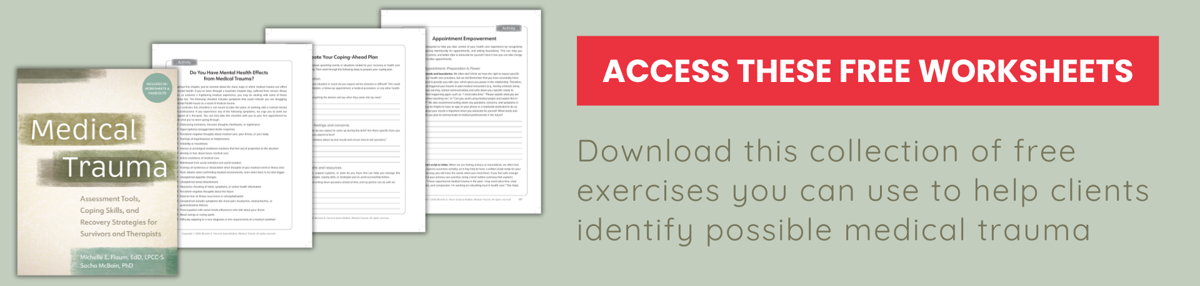
Download our free Medical Trauma Symptom Reflection worksheet, a clinical resource drawn from our upcoming book, Medical Trauma, designed to help clients identify the mental health effects of their medical experiences and reflect on how those symptoms are showing up in their daily lives.
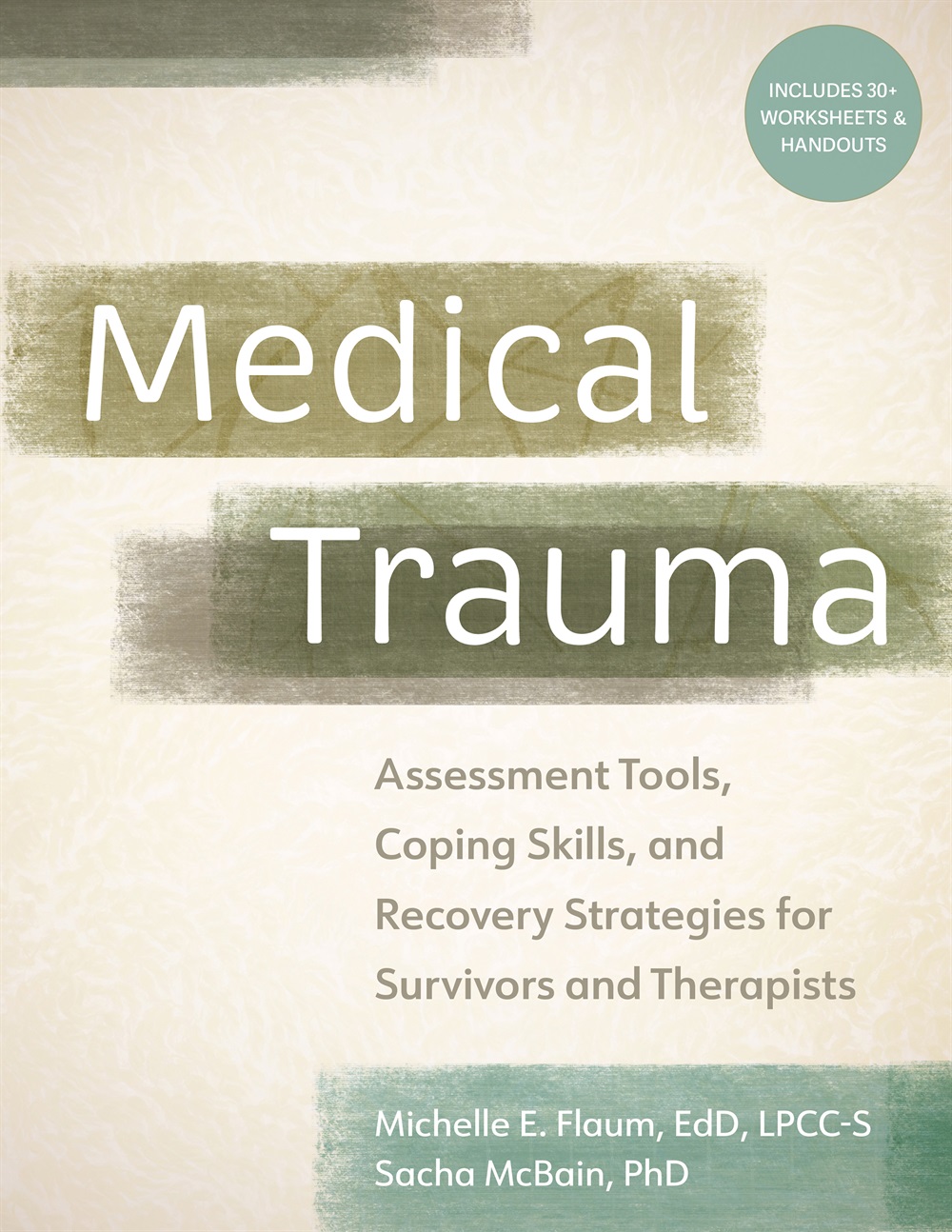
Written by expert clinicians and researchers on the topic of medical trauma, this book offers a clear roadmap to recovery for survivors and caregivers alike.

Watch medical trauma expert Dr. Sacha McBain for this training that will help you understand the interconnectedness of the mind and body.
Join leading expert in medical trauma, Michelle Flaum, EdD, LPCC-S, DCMHS, for this dynamic training in which she’ll walk you step-by-step through what you need to know to confidently comprehensively assess your clients for medical trauma and related symptoms and impacts, engage narrative techniques and other interventions to help clients make meaning of their experiences, and so much more.

Michelle Flaum, EdD, LPCC-s, DCMHS, is author of the first book dedicated solely to the topic of medical trauma, Managing the Psychological Impact of Medical Trauma: A Guide for Mental Health and Health Care Professionals and founder of the Certificate in Medical Trauma-Informed Care at Xavier University, which is the first training program of its kind worldwide. A Fellow of the American Mental Health Counselors Association, and Dual-Diplomate, Clinical Mental Health Counseling Specialist in Trauma Counseling and Integrated Behavioral Health Care Counseling, Dr. Flaum has worked with the California Maternal Quality Care Collaborative/Stanford University and The Council on Patient Safety in Women’s Healthcare to develop assessment tools to help clinicians provide improved quality of care for patients who experience medical trauma. She is a strong advocate for integrating mental health professionals into treatment teams to enhance the patient experience and improve patient care, and her assessment tools and protocols are used throughout the world. She is the medical trauma specialist and executive board member for Live the Pain, an international organization of professionals based in Tel Aviv, Israel working to bring innovative solutions to the management of pain. Additionally, Dr. Flaum has been featured throughout the media, including NPR’s All Things Considered, Doctor Radio on SiriusXM, Health Professional Radio, Refinery29, Social Work Today, Psychotherapy Networker, Counseling Today, Healthcentral.com, The Conversation and Elle Magazine.
Speaker Disclosures:
Financial: Michelle Flaum maintains a private practice and has an employment relationship with Xavier University. She receives royalties as a published author. Michelle Flaum receives a speaking honorarium and recording royalties from PESI, Inc. She has no relevant financial relationship with ineligible organizations.
Non-financial: Michelle Flaum is the Co-Founder and Vice President of Ohio Association of Counselors in Private Practice. She serves on the editorial review board for the Nursing for Women's Health. She is a member of the American Counseling Association, the American Mental Health Counselors Association, the International Society for Traumatic Stress Studies, and the Ohio Counseling Association.
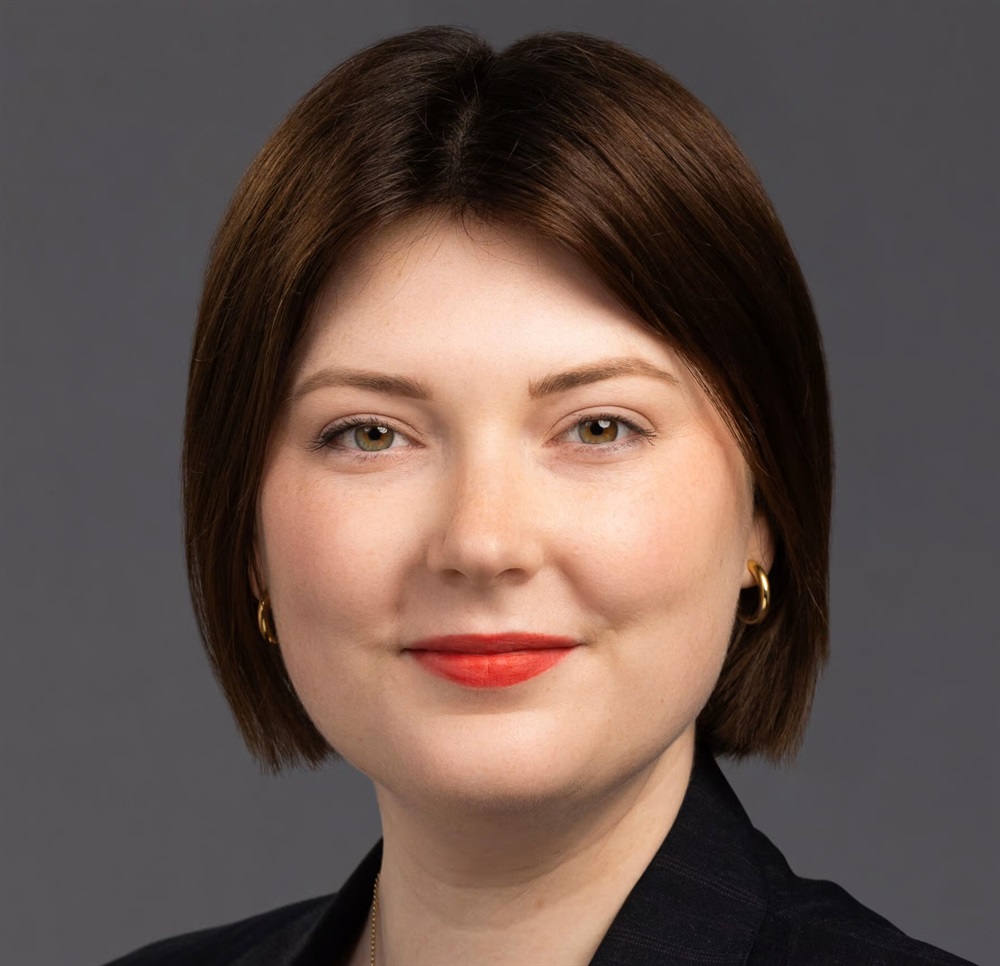
Sacha McBain, PhD is a clinical psychologist and associate professor at Rush University System for Health in Chicago, IL. A national leader in medical traumatic stress, Dr. McBain has published peer-reviewed research on the conceptualization and treatment of medical trauma, led national clinical trainings, and helped shape best practices for mental health screening and intervention after traumatic injury. She has worked alongside interdisciplinary partners to develop trauma-informed care approaches and is passionate about bringing psychological intervention to critical care and surgical settings. Through her research, education, and clinical practice, she pushes for better care systems for patients and families impacted by medical trauma. Dr. McBain contributed to the American College of Surgeons Mental Health and Substance Use Disorder Best Practice Guidelines Work Group and is an active member of the International Society for Traumatic Stress Studies.
Speaker Disclosures:
Financial: Dr. Sacha McBain has an employment relationship with Rush University Medical Center.. She receives a grant from NIH/NIDA. Dr. McBain receives a speaking honorarium and recording royalties from PESI, Inc. She has no relevant financial relationships with ineligible organizations.
Non-financial: Dr. Sacha McBain is a member of the International Society for Traumatic Stress Studies.


