Clinical Tools for Treating Anxiety That Actually Help Your Clients Feel Progress

Anxious clients need more than reassurance. They need clinical tools and healing practices they can rely on between sessions, tools that make them feel safe, supported, and able to see real progress over time. These are the tools I return to most often in my own practice, and I want to walk you through them here.
We will cover a brief clinical assessment, self-monitoring tools, nervous system regulation techniques, breathwork, somatic movement, and a few apps worth recommending to clients in 2026.
Start With the GAD-7 as a Baseline
The Generalized Anxiety Disorder 7-item scale is a self-report questionnaire that assesses symptom severity over the past two weeks. It consists of seven items asking clients how often they have experienced certain symptoms. Keep a stack of copies on hand so one is always ready when you need it.
One approach I recommend: administer it during the first session, then again a few weeks later, and again after that. This gives you concrete data over time. Every client's trajectory looks different, but tracking that shift is valuable for both of you.
Self-Monitoring Tools Build Awareness
An anxiety diary or journal helps clients track their anxiety levels and triggers in real time. Mood tracking apps support this well. Thought records, thought logs, brain dumps, and behavior action plans all help clients notice what they are actually doing when anxiety surfaces.
Gratitude journaling belongs in this toolkit too. A simple daily practice of writing five things a client is grateful for, morning or night, builds a habit that supports overall regulation.
I also give clients a breathwork tracking worksheet where they rate their anxiety before and after a regulation practice, along with the feeling words that come up before and after. They will not always feel calm immediately afterward, and that is expected. What matters most is consistency of practice.
Teach Meditation Without Making It Intimidating
Many clients assume meditation means sitting in silence for an hour, and that assumption alone can keep them from trying it. Meditation can look very different depending on the person. It might be a walking practice, or a five minute guided audio. The goal is helping each client find a version that fits them, even if it starts at ninety seconds.
When I give clients a meditation schedule, I avoid instructing them to practice every day. That framing adds pressure and can leave a perfectionistic client feeling like they failed. Instead, I ask them to try it at least twice before our next session. Low pressure builds consistency over time.
The repetition itself is what helps the brain form new neural pathways and teaches the body that it is safe, even when it is receiving signals of danger from the brain.
Use a Simple Anxiety Rating Scale to Build Conscious Awareness
The SUDS scale is a solid option, and I have also developed my own version over the years that clients tend to find more accessible. Conscious awareness matters clinically because it brings attention to the thoughts, feelings, and sensations that often get buried during periods of anxiety. The more clients understand what situations and environments trigger them, the more control they gain over the duration of that activation.
I recommend pairing a rating scale with one additional tool at a time, not several at once. If a client is practicing meditation twice in a given week, have them rate their anxiety using the scale during that same practice. Keeping the assignment focused improves follow-through.
Nervous System Regulation Techniques Worth Teaching First
Progressive muscle relaxation is one of the most effective and discreet tools available, since it can be practiced without anyone else noticing. I relied on it heavily during my own experience with an anxiety disorder, tensing and releasing my fists under a conference table during long meetings that triggered a sense of being trapped.
The sequence: tense the face, then release. Tense the shoulders up toward the ears, then release. Clench fists and arms, then release. Tense chest and stomach, then release. Pull shoulder blades back, then release. Tense the legs and curl the toes, then release. Finish by tensing and releasing the entire body at once.
Yoga, guided imagery, breathwork, tapping, and time in nature round out a well-rounded regulation toolkit. These techniques are most effective when practiced consistently inside a client's window of tolerance, not only pulled out during acute distress. Regular practice while regulated is what teaches the nervous system that safety is possible, and that thoughts can be observed rather than automatically believed.
One image I find useful with clients is standing outside a pond full of fish. The thoughts are the fish, some small, some large, some that appear to lunge toward the surface. But the observer stands outside the water. The fish cannot reach them. Thoughts, similarly, cannot cause direct harm.
Breathwork Activates the Parasympathetic Nervous System
Deep, slow breathing signals the body to shift out of a fight or flight response and into a rest and digest state. It helps lower cortisol and improves oxygen flow to a brain that has been operating on shallow, rapid breathing.
Belly breathing is the foundation. Have clients lie down, place a book on their stomach, and watch it rise and fall with each breath. Rectangular breathing, inhaling for four counts and exhaling for six, is another reliable technique. A phone reminder a few times a day prompting a single belly breath can help build the habit outside of session.
Somatic Movement and Grounding Bring the Body Back Online
Yoga increases parasympathetic activity and supports overall regulation of the autonomic nervous system. Somatic movement, which combines body awareness with mindful movement, is particularly valuable for trauma survivors and has been shown to reduce physiological symptoms of anxiety.
The five senses grounding exercise remains a reliable tool, particularly for clients experiencing panic disorder. Ask clients to describe, rather than simply name, what they see, hear, feel, smell, and taste. Description slows the nervous system further than identification alone.
Apps Worth Recommending to Anxious Clients
Insight Timer offers guided imagery and meditation tracks for nearly any presentation, from middle of the night anxiety to anticipatory anxiety around test results. Calm and Headspace are strong alternatives as well. For CBT practice between sessions, Moodfit, Thought Diary, Sanvello, and Happify each offer meaningful support depending on a client's specific needs.
This Is Just the Surface
These are tools I use regularly in my own practice, and they represent only a portion of what is possible when building a complete support plan for anxious clients. Many of the worksheets referenced here, including the GAD-7, the between-session tracking sheets, and the anxiety rating scale, come directly from my book, The Anxiety Healer's Guide for Clinicians. It includes the full library of reproducible tools alongside deeper somatic protocols and a complete clinical toolkit for treating anxiety disorders. It is the resource I wish I had access to earlier in my career, built to give you what you need to feel confident the next time an anxious client walks through your door.

Created by one of Instagram’s most followed therapists, @theanxietyhealer Alison Seponara, this comprehensive resource is filled with practical, concrete strategies you can use to help anxious clients create a unique toolkit that works specifically for their needs.

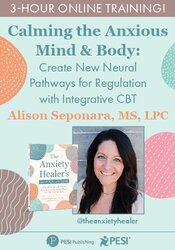
Discover cutting-edge treatment methods for anxiety disorders that combine cognitive behavioral therapy (CBT) with mindfulness-based positive psychology. Alison will also discuss an integrative therapy approach that addresses both mind and body, significantly enhancing overall client well-being and strength.

Alison Seponara, MS, LPC, is a licensed psychotherapist, anxiety educator, and the author of The Anxiety Healer’s Guide. With over 15 years of clinical experience, Alison specializes in helping clients manage anxiety, burnout, and trauma through a holistic and evidence-based lens. She is also the creator of The Anxiety Healer, an online community of over 570,000 followers, where she offers accessible tools for nervous system regulation, emotional recovery, and healing from high-functioning anxiety.
Alison brings a unique perspective to this training – not only as a licensed professional in private practice but also as someone who has personally navigated the emotional toll of solo work. She blends her clinical training in CBT, mindfulness, and nervous system healing with her lived experience of managing burnout, compassion fatigue, and professional isolation. Her work has been featured on major mental health platforms, and she is the co-host of The Anxiety Chicks podcast, which promotes candid conversations about anxiety and therapist wellness.
Alison’s teaching style is known for being grounded, compassionate, and actionable. She equips fellow clinicians with tangible, client-ready strategies while offering tools to care for themselves with the same depth they offer others.
Speaker Disclosures:
Financial: Alison Seponara maintains a private practice and serves as the CEO and Founder of The Anxiety Healer Health & Wellness. She also works as a consultant with Evergreen Counseling, LLC. In addition, she receives royalties as a published author and has collaborated with Vahdam. She is compensated through speaking honoraria, recordings, and book royalties from PESI, Inc. All relevant financial relationships with ineligible organizations have been mitigated.
Non-financial: Alison Seponara is a member of the American Counseling Association and the Philadelphia Behavior Therapy Association.


