
- Differentiate family estrangement from normative family conflict by patterns of intentional distancing, emotional cutoff, reduced contact, and disrupted family roles.
- Evaluate factors that impact the course of parent-adult child estrangement and the feasibility of future contact.
- Utilize motivational interviewing and attachment-informed strategies to explore ambivalence and support values-consistent decisions about relational change.
- Integrate evidence-informed emotion regulation and compassion-focused interventions to reduce shame, self-criticism, and defensive responding during discussions of relational injury.
- Develop structured interventions that facilitate responsibility-taking, effective apology, and values-consistent decisions about forgiveness and future contact.
- Develop ethically sound treatment plans that prioritize client autonomy and safety when renewed contact is contraindicated, unwanted, or unlikely.

It’s easy to inadvertently misstep when working with fractured families –
From unintentionally reinforcing division... to either rushing to or skipping over opportunities for repair... to making it just about boundaries.
The path forward is messy, whether reconnection is possible or not.
Because the measure of good clinical work is not whether the relationship is restored, but whether clients can grow into self-awareness and clarity.
Estrangement cannot be oversimplified. That’s why we’re bringing together multiple experts, including Joshua Coleman, PhD – developer of the new, evidence-informed Estrangement Reconciliation Therapy (ERT) – along with leading relationship specialists Nedra Glover Tawwab, MSW, LCSW, Kristina Scharp, PhD, and Lori Gottlieb, LCSW.
Together, their accumulated experience will illuminate a roadmap for your work with estrangement – from assessment and case formulation through intervention. You’ll learn:
- How to avoid or fix common mistakes therapists make in estrangement cases
- Practical interventions that steer clear of triangulation
- Tools for working with shame, defensiveness, and heightened distress
- Strategies to create growth and accountability, facilitate effective apology, and rebuild trust when repair is sought
- And much more!
Packed with decision trees, case studies, and tools and scripts for assessment and intervention –
This training will prepare you to treat one of the most emotionally complex and increasingly common problems facing today’s mental health professionals.
PLUS, when you upgrade your registration, you’ll receive your very own copy of Dr. Coleman’s highly anticipated new book, Estrangement Reconciliation Therapy: A New Model for Treating Family Conflict.
REGISTER FOR FREE TODAY!
★ FREE Virtual Training ★
Register
Today — No Cost!
Can’t attend live? Register anyway for 3-day free access to the training!
CE hours and book are available for an additional cost. Register for more information.
CE hours and book are available for an additional cost. Register for more information.
By registering, you agree to our Terms of Use, Privacy Notice, and if applicable, our Event Terms.
FREE Virtual Training
Family Estrangement Workshop
Clinical Strategies for Cutoffs, No Contact, and Broken Connection
Featuring Joshua Coleman, PhD
With special guests Nedra Glover Tawwab, MSW, LCSW / Kristina Scharp, PhD / Lori
Gottlieb, LCSW
Thursday, January 7, 2027 • 9am–5pm CT
Value Price of training: $249.99
Can’t attend live? Register anyway for 3-day free access to the training!
CE hours and book are available for an additional cost. Register for more information.
CE hours and book are available for an additional cost. Register for more information.
In this powerful FREE workshop, Dr. Joshua Coleman will guide you through what you need to know to navigate family estrangements.
Whether you’re working with parents, adult children, couples, siblings, or grandparents –
You’ll get a roadmap to integrate multiple evidence-based approaches that meet the clinical complexity of the situation.
PLUS Dr. Coleman will be joined by special guests with whom he’ll have in-depth conversations about estrangement and psychotherapy:

Nedra Glover Tawwab, MSW, LCSW – sought-after
relationship expert and New York Times bestselling author of Set Boundaries,
Find Peace; Drama Free; and The Balancing Act

Kristina Scharp, PhD – esteemed researcher and
theory developer with over 100 publications including The Routledge Handbook of
Communication and Resilience

Lori Gottlieb, LCSW – acclaimed psychotherapist
and New York Times bestselling author of Maybe You Should Talk to Someone,
writer of the New York Times’ “Ask the Therapist” advice column,
co-host of “Dear Therapists” podcast and formerly author of The
Atlantic’s “Dear Therapist” advice column
FREE Virtual Training
Family Estrangement Workshop
Clinical Strategies for Cutoffs, No Contact, and Broken Connection
Featuring Joshua Coleman, PhD
With special guests Nedra Glover Tawwab, MSW, LCSW / Kristina Scharp, PhD / Lori
Gottlieb, LCSW
Thursday, January 7, 2027 • 9am–5pm CT
Value Price of training: $249.99
Can’t attend live? Register anyway for 3-day free access to the training!
CE hours and book are available for an additional cost. Register for more information.
CE hours and book are available for an additional cost. Register for more information.

Here’s a Peek at What You’ll Learn!
Part 1: The New Landscape of Family Estrangement
- Cultural and generational influences
- Current prevalence and research
- Impact of estrangement on mental health (and of mental health on estrangement)
- Alienation and loyalty conflicts versus estrangement
- High-conflict families
- Why traditional treatment models often fall short
- Clinical myths and misconceptions
Part 2: Estrangement Reconciliation Therapy (ERT)
- Management of therapist neutrality and bias
- Identify pathways into estrangement
- Clinical decision trees to assess estrangement “type” and intervention plan
- Build therapeutic alliance without triangulation
- Establish realistic treatment goals
- How to determine readiness for reconnection
- Motivational interviewing to explore ambivalence
- Increase clarity regarding relational values
- Working with guilt and shame
- Tools to decrease defensiveness
- Identification of triggers and cognitive reappraisal
- Increase perspective-taking
- Narrative reconstruction to develop a more complex/useful story about what happened
- Attachment-informed tools to help clients identify and process vulnerable emotions
- Grounding and paced breathing to regulate emotion
- Distress tolerance and delay of impulsive responses
- Mindfulness and self-compassion strategies
- Coaching meaningful accountability
- Tools to facilitate effective apologies and rebuild trust when repair is sought
- Conducting reconciliation sessions, managing setbacks, and preventing re-estrangement
- Tools for working toward acceptance when reconnection isn’t possible
Part 3: Conversations with Experts & Case Examples
- Common mistakes about estrangement
- Factors that make reconnection more or less likely
- What meaningful progress can look like even when reconnection doesn’t happen
- Estrangement following remarriage
- Estrangement related to childhood emotional neglect with conflicting abuse narratives
- When estrangement is recommended by the adult child’s therapist
Part 4: Advanced Applications and Clinical Considerations
- Who is the client? Individual versus conjoint treatment
- Sibling and grandparent estrangement
- Problems with premature reconciliation
- Distinguishing discomfort from danger
- When trauma histories and abuse allegations are present
- Situations with ongoing violence, credible threats, and coercive control
- Severe untreated addiction or psychiatric instability
- Repeated serious boundary violations
- Clinical contraindications and risks
- Ethical considerations – autonomy and informed consent
- Confidentiality and dual relationships
- Strengths and limitations of the research
- Future directions in estrangement treatment
There will be a 15-minute break in the morning and in the afternoon at the speaker’s discretion. Lunch is from 12:00–1:00 PM CT.
FREE Virtual Training
Family Estrangement Workshop
Clinical Strategies for Cutoffs, No Contact, and Broken Connection
Featuring Joshua Coleman, PhD
With special guests Nedra Glover Tawwab, MSW, LCSW / Kristina Scharp, PhD / Lori
Gottlieb, LCSW
Thursday, January 7, 2027 • 9am–5pm CT
Value Price of training: $249.99
Can’t attend live? Register anyway for 3-day free access to the training!
CE hours and book are available for an additional cost. Register for more information.
CE hours and book are available for an additional cost. Register for more information.
About Your Presenter
“Dr. Coleman is focused on a dilemma that has plagued therapists for
decades. His unique perspective on parent-adult child estrangement was very helpful.”
“Wonderful presentation from an expert in the field and
practice!”
“This was one of the most interesting and well-presented continuing
education courses I’ve ever participated in. Very informative and made fascinating connections
to cultural/generational shifts. Practical, no-nonsense recommendations for helping families manage
painful estrangement...would highly recommend to other clinicians!”

Joshua Coleman, PhD is a psychologist in private practice, a Senior Fellow with the Council on Contemporary Families, and one of the world’s leading experts on family estrangement. He is the author of five books, including The Rules of Estrangement: Why Adult Children Cut Ties and How to Heal the Conflict, which The New York Times named “One of the five books most recommended by researchers on estrangement.” His forthcoming book, Estrangement Reconciliation Therapy: A New Model for Treating Family Conflict (Nov 2026) is the first comprehensive clinical guide to treating family estrangement for mental health professionals.
Dr. Coleman has published numerous peer-reviewed articles and chapters on estrangement, is a frequent contributor to The Atlantic and The Washington Post, and has provided trainings for the American Psychological Association, Stanford University, Weill Cornell Department of Psychiatry, the University of California, Irvine Department of Psychiatry, and other leading academic institutions. A frequent guest on the Today show, NPR, and NYU Doctor’s Psychiatry Radio, he has also written for TIME, The Scientific American, The Wall Street Journal, The Behavioral Scientist, Psychology Today, AEON, and The San Francisco Chronicle among others. He has appeared on Oprah, Sesame Street, Good Morning America, 20/20, Dr. Phil, PBS Life Part 2, CNN, The New Yorker, TIME, and numerous national television and radio programs. He has also appeared on podcasts for Mel Robbins, Maria Shriver, Yasha Mounk, CNN with Audie Cornish, The Atlantic and The Economist. For more information, visit www.drjoshuacoleman.com.
Special Guests
Nedra Glover Tawwab, MSW, LCSW is a licensed therapist and the author of Set Boundaries, Find Peace: A Guide to Reclaiming Yourself, an instant New York Times best seller translated into over 35 languages worldwide. In addition, she has authored seven other books, including Drama Free: A Guide to Managing Unhealthy Family Relationships and, most recently, The Balancing Act: Creating Healthy Dependence and Connection Without Losing Yourself. A sought-after relationship expert, she has practiced relationship therapy for almost 20 years. With more than 2.5 million followers across her social media platforms, Tawwab has appeared as an expert on Red Table Talk, The Breakfast Club, Good Morning America, and CBS Mornings, to name a few. Her work has been highlighted in The New York Times, The Guardian, and Vice, and has appeared on numerous podcasts, including The School of Greatness, We Can Do Hard Things, and 10% Happier. She lives in Charlotte, North Carolina.
Kristina Scharp, PhD is a Professor of Communication at Rutgers University, a Director of the Family Communication and Relationships Lab, and Fellow of the International Association of Relationship Research. She is also the Principal Consultant at Scharp Consulting LLC. With over 120 scholarly journal articles and book chapters across her career, Dr. Scharp is one of the original and leading voices in the study of parent-child estrangement. For more than a decade, she has focused on understanding how adult children, parents, immediate family members, and grandparents navigate their changing identities, manage related stigma, uncertainty, and disclosure, as well as enact communication strategies to move forward. Her primary goal is translating her academic experience to helping real people make sense of and cope with all forms of family disconnection and distancing. Toward that end, she regularly engages with media outlets such as The New York Times, Wall Street Journal, and NPR.
Lori Gottlieb, LCSW, is a psychotherapist and New York Times
bestselling author of Maybe You Should Talk to Someone, which has sold over one million
copies and is currently being adapted as a television series. In addition to her clinical
practice, she writes The Atlantic’s weekly “Dear Therapists” advice
column and is co-host of the popular “Dear Therapists” podcast produced by Katie
Couric. She contributes regularly to The New York Times and many other publications,
and her recent TED Talk was one of the Top 10 Most Watched of the Year.
A member of
the Advisory Council for Bring Change to Mind, she is a sought-after expert in media, such as
The Today Show, Good Morning America, CBS This Morning, CNN and NPR’s
“Fresh Air.” Learn more at LoriGottlieb.com or by following her on Twitter
@LoriGottlieb1 and
Instagram @lorigottlieb_author.
FREE Virtual Training
Family Estrangement Workshop
Clinical Strategies for Cutoffs, No Contact, and Broken Connection
Featuring Joshua Coleman, PhD
With special guests Nedra Glover Tawwab, MSW, LCSW / Kristina Scharp, PhD / Lori
Gottlieb, LCSW
Thursday, January 7, 2027 • 9am–5pm CT
Value Price of training: $249.99
Can’t attend live? Register anyway for 3-day free access to the training!
CE hours and book are available for an additional cost. Register for more information.
CE hours and book are available for an additional cost. Register for more information.
About the Book
Estrangement Reconciliation Therapy: A New Model
for Treating Family Conflict
A $36.99 value, included with your CE upgrade purchase
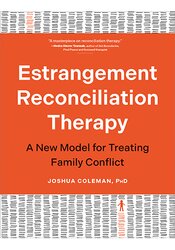
In Estrangement Reconciliation Therapy (ERT), psychologist and estrangement expert Dr. Joshua Coleman offers a structured, compassionate framework for clinicians to understand the emotional roots of family cutoff and help clients move beyond blame toward meaningful change.
Based on decades of clinical experience and research, ERT gets to the heart of the many pain points within estranged families, while recognizing and honoring that not everyone’s goals—rebuilding contact vs. maintaining distance—are the same.
Filled with clinical insight, case examples, therapeutic tools, and strategies, this practical guide will support you in helping clients:
- Set reasonable expectations and communicate constructively
- Recognize their role in shaping this relational dynamic
- Process their unresolved anger, grief, sadness, and confusion
- Navigate one-sided estrangements with dignity and respect
- Engage in their own emotional growth, self-care, and legacy building
Whether your client initiated the distance or wants to resolve it, this book provides critical structure and support for navigating the delicate emotional climate of adult estrangement.
Frequently Asked Questions
No catch. Over the last few years, thanks to the generosity of our expert speakers and the support of therapists like you, we’ve had the amazing opportunity to provide professional training to more therapists than ever. This event is our way of supporting you and your clients.
If you work with clients who have cut off family members – whether a parent, child, sibling, or grandparent – this training will give you immediately applicable tools. It’s designed for:
- Psychologists
- Social Workers
- Counselors
- Marriage and Family Therapists
- Psychiatrists
- Addiction Counselors
- Case Managers
- Psychotherapists
Just register above with your name and email, then click the CE upgrade button on the next page. Your CE package includes the book, Estrangement Reconciliation Therapy: A New Model for Treating Family Conflict, a $36.99 value.
To earn CE credit, you must attend or watch the training in its entirety and complete the quiz.
Yes! Anyone who registers will get 3 days of free access to the archived recording once it is made available. To earn CE credit, you must upgrade your registration.
Visit our FAQ page at www.pesi.com/faq or contact us at www.pesi.com/info.
EVENT COUNTDOWN
0
Days
:
0
Hours
:
0
Minutes
:
0
Seconds
FREE Virtual Training
Family Estrangement Workshop
Clinical Strategies for Cutoffs, No Contact, and Broken Connection
Featuring Joshua Coleman, PhD
With special guests Nedra Glover Tawwab, MSW, LCSW / Kristina Scharp, PhD / Lori
Gottlieb, LCSW
Thursday, January 7, 2027 • 9am–5pm CT
Value Price of training: $249.99
Can’t attend live? Register anyway for 3-day free access to the training!
CE hours and book are available for an additional cost. Register for more information.
CE hours and book are available for an additional cost. Register for more information.
100%
Satisfaction Guarantee
Register for this intensive training course without risk. If you're not completely
satisfied, give us a call at 800-844-8260.We’re that confident you’ll find this learning experience to be all that’s promised and more than you expected.