How to Apply ERP in a Developmentally Sensitive Way
If you have ever sat across from a nine year old who is convinced that touching a doorknob will lead to someone's death, or a fourteen year old who will not hold a knife at the dinner table because of an intrusive thought about hurting a sibling, you already know something that most textbooks understate. Pediatric OCD is not a smaller version of adult OCD. It is its own clinical animal, and treating it well means adjusting exposure and response prevention (ERP) to where a child actually is developmentally, not where we wish they were.
I have spent over 25 years working with children and adolescents with OCD, much of it at the OCD Institute at McLean Hospital. What I want to offer clinicians here are a few of the adjustments that make ERP land with young people instead of landing on them.
Start by Understanding the Animal of the OCD
Before you build a single exposure, you need to understand what the compulsion is actually neutralizing. Two kids can have almost identical looking rituals and completely different targets underneath them. One child touches things a certain number of times because of contamination fears. Another does the exact same behavior because of a magical belief that skipping it will cause harm to a parent.
This matters enormously for ERP planning. If a child is stabbing motions of a compulsion around not harming a sibling, the goal of the exposure is not necessarily to have them act out the feared scenario. Often the real target is uncertainty itself. An exposure built around "I might hurt my sister and I don't know for certain that I won't" can be far more effective than one built around the literal feared act, because uncertainty, not the act, is what the OCD actually feeds on. Get this wrong and you can run a technically correct ERP protocol that never touches the disorder.
Meet Lower Insight Where It Lives
Adults with OCD often know their fears are irrational even while they cannot stop the compulsion. Kids frequently do not have that same insight, especially younger children. They may genuinely believe the ritual is preventing something bad. This is not resistance and it is not a lack of intelligence. It is where they are developmentally.
Practically, this means you may need to spend more time helping a child articulate what is happening before you ever start exposure work. Younger kids often cannot verbalize an obsession the way a teenager can, so what you observe first is the compulsion itself, sometimes disguised as anxiety, sometimes mistaken for autism spectrum traits or ADHD. Slow down here. A careful clinical interview and a tool like the Children's Yale-Brown Obsessive Compulsive Scale (CY-BOCS) will help you map the terrain before you ask a child to walk into it.
Externalize the Disorder So the Child Can Fight It
One of the most useful developmental tools I use with kids is externalization. I have them name the OCD. Call it the trickster, the bully, the monster in the closet, whatever fits the child's world. This is not just a cute technique. It gives a child a way to locate the enemy outside of themselves rather than experiencing every obsession as evidence of who they are.
This reframe does real clinical work. A child who believes "I am a bad person because I have this thought" is in a very different position than a child who believes "the trickster is trying to convince me I am a bad person." The second framework makes ERP feel less like self punishment and more like resistance training against something external.
Build Exposures That Match a Child's World
Adult ERP hierarchies and pediatric ones should not look the same. With younger kids I often build exposures around what is developmentally present in their day. For a child with contamination fears, that might mean touching a shared classroom object without washing immediately after. For perfectionism related OCD, it might mean turning in homework with a small, deliberate error, or wearing intentionally mismatched socks to school with no fixing allowed.
Notice that these exposures are concrete, observable, and tied to a child's actual environment rather than abstract cognitive exercises. Kids respond to what they can see and do. Save more abstract exposures, like scripted written exposures involving worst case scenarios, for adolescents who have the cognitive capacity to sit with them.
Resist the Urge to Reassure
This is the hardest part for most clinicians and nearly every parent. When a child asks "you don't think I'll actually hurt someone, right?" the instinct is to comfort them with a direct no. Do not do it. Reassurance is itself a compulsion, and it teaches a child's brain that certainty is available and necessary. The response prevention side of ERP means tolerating the discomfort of saying something like "maybe you will, maybe you won't, and we're going to sit with that" even though every part of you wants to soothe.
The same principle applies to parents, who are often accommodating without realizing it. Hiding knives, over sanitizing, answering the same reassurance seeking question for the twentieth time. None of this comes from bad parenting. It comes from love. But family accommodation quietly reinforces the disorder, and part of your job is to help caregivers understand that reducing accommodation is not withholding comfort. It is treatment.
Save Cognitive Work for After the Behavioral Piece
Cognitive restructuring has its place, but with OCD, and especially with kids, it works best after ERP has already begun to loosen the grip of the obsession. Trying to reason a child out of an obsessive thought before their physiological response has started to habituate rarely works, because the cognitive system has already been hijacked by anxiety. Once a child's nervous system starts to settle through exposure work, ideas like probability versus possibility, or noticing thinking distortions, become much easier to introduce and actually stick.
The Work Is Worth It
Kids with OCD are often some of the most empathic, conscientious young people you will meet. Their compulsions are frequently born out of a deep, almost crushing sense of responsibility for the wellbeing of others. Helping them see that their value system is intact, and that the OCD has simply hijacked it, is some of the most meaningful work a clinician can do.
This is a condensed look at a much deeper clinical picture. My full PESI training goes further into the neurobiology behind pediatric OCD, differential diagnosis between OCD and autism spectrum disorder, medication considerations for children and adolescents, and detailed case based ERP hierarchies across contamination, perfectionism, scrupulosity, and harm related presentations. If you want the complete framework for building ERP plans that actually fit the child in front of you, I would love for you to join me there.
Led by OCD expert, Dr. Roberto Olivardia, this training will equip you with evidence-based strategies to confidently implement CBT and ERP with young clients. Through case studies and hands-on techniques, you’ll learn how to tailor interventions for children and teens while supporting parents and families in the process.
Learn gold-standard treatments including Exposure Ritual Prevention, Habit Reversal Therapy & more, for OCD, Tics, Tourette's, ADHD and related conditions.
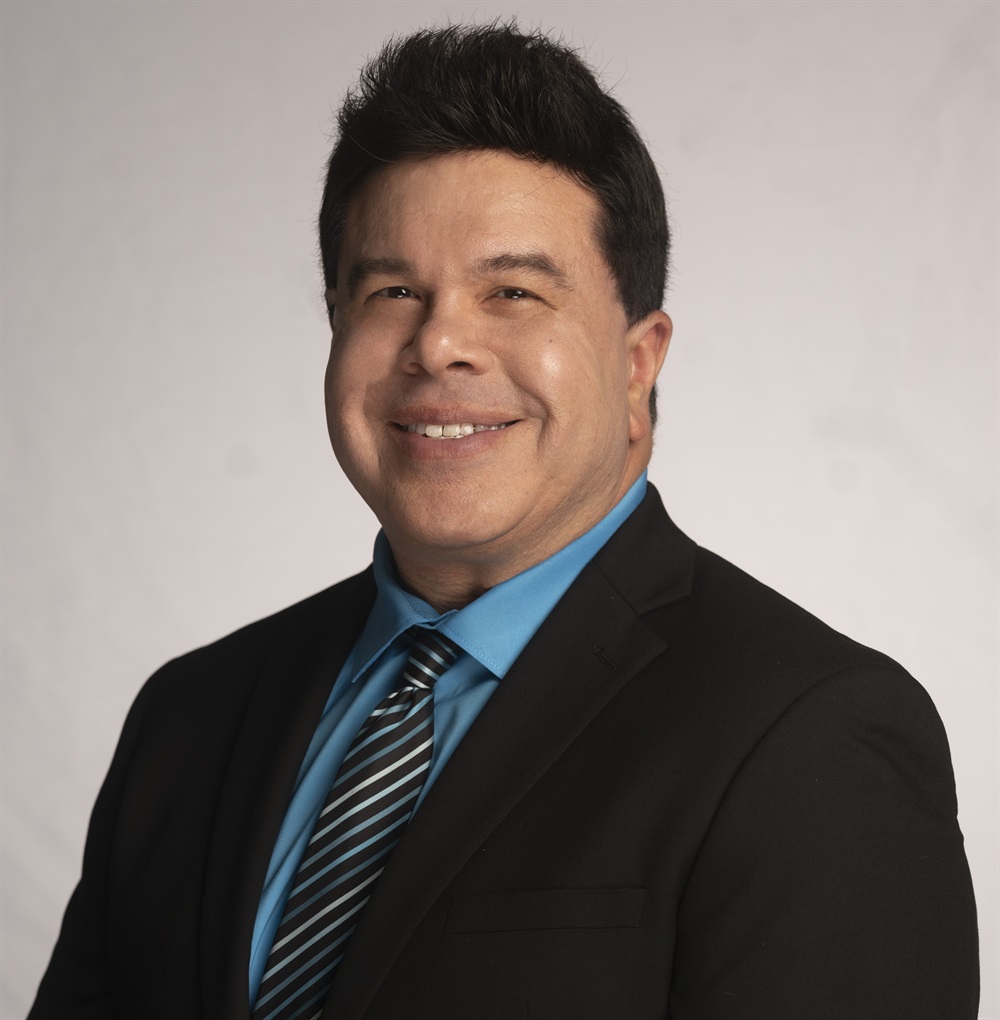
Dr. Roberto Olivardia is a clinical psychologist, lecturer in the department of psychiatry at Harvard Medical School and clinical associate at McLean Hospital. He maintains a private practice in Lexington, MA, where he specializes in the treatment of ADHD, executive functioning issues, and issues that face students with learning differences. He is a recognized expert in the treatment of body dysmorphic disorder (BDD), eating disorders and obsessive-compulsive disorder (OCD). He is on the Professional Advisory Boards for Children and Adults with ADHD (CHADD) and The Attention Deficit Disorder Association (ADDA), as well as sits on the Scientific Advisory Board for ADDitude and the Expert Network for Understood. He is co-author of The Adonis Complex, a book which details the various manifestations of body image problems in males. He has appeared in publications such as Time, GQ, and Rolling Stone, and has been featured on Good Morning America, Extra, CBS This Morning, CNN, and VH1. He has spoken on numerous radio and webinar shows and presents at many talks and conferences around the country. He conducts advocacy work for Decoding Dyslexia – Massachusetts and is a member of the American Association of Suicidology and International Dyslexia – Massachusetts and is a member of the American Association of Suicidology and International Dyslexia Association. He also has lived experience as someone with ADHD and learning differences and a parent of two teenagers with ADHD and Dyslexia.
Speaker Disclosures:
Financial: Dr. Roberto Olivardia maintains a private practice and has employment relationships with McLean Hospital, Within Health, and Women Insight, Inc. He receives royalties as a published author and is a consultant with the National Institute of Drug Abuse, Risk Factors for Anabolic-Androgenic Steroid Abuse. Dr. Olivardia receives a speaking honorarium and recording royalties from PESI, Inc. He has no relevant financial relationships with ineligible organizations.
Non-financial: Dr. Roberto Olivardia is a member of the Academy for Eating Disorders, the American Association of Suicidology, the American Psychological Association, the Attention Deficit Disorder Association, the Children and Adults with Attention Deficit Hyperactivity Disorder, the International Dyslexia Association, the International Obsessive-Compulsive Foundation, the Massachusetts Psychological Association, and the Multi-Service Eating Disorder Association.


