
 Live Webinar
Suicide Intervention
Skills Training

Even after years of schooling, clinical work, and supervision, treating suicidal clients can feel overwhelming — and to be honest, downright scary.
There isn't any room for error in cases like these, and you want to be sure you're doing the right things for your clients, including avoiding unnecessary hospitalization.
It's time to leave uncertainty by the wayside and let Paul Brasler, LCSW, CAIMHP, take the guesswork out of treating suicidality. Drawing on 20+ years of clinical experience, Paul shares a multi-modality approach that will give you the fortitude and tools you need to take on even the most challenging cases — in just one training session.
You'll get:
- The best treatment techniques from CBT, DBT, and CAMS
- Assurance in establishing safe practices and limiting liability
- Powerful screening and assessment tools that emphasize connection and setting
- Strategies for working with children, veterans, first responders, and more
Wherever you are in your journey as a clinician, you deserve to feel cool, calm, and confident when these tough cases land at your door.
This is your chance to set yourself apart from the status quo of suicidality treatment and give your clients your very best, even when they feel at their very worst.
Suicide Intervention Skills Training
Maximizing Preparedness and Best Practices for a Calm and Confident Response to Clients in CrisisTuesday, December 8, 2026 · 8:00 AM–4:00 PM Pacific
What You'll Learn
A comprehensive, evidence-based agenda — from foundational definitions to advanced clinical interventions.
- -Language and stigma of suicide
- -Myths of suicide
- -Theoretical basis of suicide
- -Establishing safe practices
- -Informed consent to treatment
- -Death of a patient by suicide
- -Clients who conceal suicidal ideation
- -Suicide risk factors
- -Protective factors
- -Warning signs
- -Ideation-to-action theories
- -Intent, planning, and methods
- -Means safety
- -Non-suicidal self-injury
- -Screening and assessment tools
- -Psychiatric hospitalization guidance
- -Why no-harm contracts fail
- -Safety planning
- -CAMS framework
- -Brief CBT for suicide prevention
- -Dialectical behavior therapy
- -Psychopharmacology of treatment
- -Children and adolescents
- -Military, veterans, and first responders
- -Older adults
- -Client's right to self-determination
- -Managing liability
- -Risks, limitations, and further research
- 1 Evaluate the myths, language, and stigma surrounding suicide to inform clinical treatment interventions.
- 2 Analyze risk and protective factors associated with suicide to enhance treatment outcomes.
- 3 Use screening and assessment tools to guide clinical decision-making.
- 4 Utilize collaborative safety planning and crisis interventions, including CAMS, to reduce suicidal behaviors.
- 5 Choose dialectical behavior therapy strategies to treat suicidality.
- 6 Examine ethical and legal considerations, including informed consent and a client's right to self-determination, to reduce liability in clinical care.
Straight From Your Peers
Clinicians across specialties — from new practitioners to those with 50 years of experience — walked away with new skills.
Paul Brasler is a highly skilled and knowledgeable presenter, very responsive to questions and thoughtful in his answers. The case studies he shared made the content even more relevant and meaningful.
This was a long day and he held my attention. His interactions and way of sharing information was great.
After 50 years of practice, a good deal of the material was informative.
I will be increasingly comfortable dealing with people in a crisis involving suicide.
The program helped me identify questions I wouldn't have ordinarily asked.
Paul made the content relevant and meaningful through his case studies and thoughtful responses to some very challenging questions.
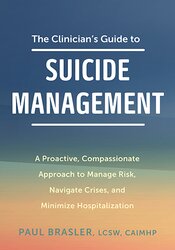
Respond to suicidality with clarity rather than panic.
The Clinician's Guide to Suicide Management moves beyond the traditional crisis response model to focus on risk management, therapeutic interventions, and alternatives to hospitalization. Filled with compelling client stories, ethical decision-making frameworks, and the latest evidence-based research, it's written for clinicians who want to do better than reflexively reaching for hospitalization.
Our job is to keep clients safe and serve as purveyors of hope. This book helps you do both.
Paul Brasler
Paul became a licensed clinical social worker in 2002. He is the coordinator for the Chesterfield County (Virginia) Employee Behavioral Health Program, providing clinical services to first responders and human services personnel.
His career spans adolescent residential treatment, community mental health, over a decade doing psychiatric crisis evaluations in an inner-city hospital emergency department, juvenile drug court, and private practice.
A national presenter through PESI since 2016, he has authored three books on suicide management, substance use disorder, and high-risk clients.
Information about Paul Brasler
Suicide Intervention Skills Training
Maximizing Preparedness and Best Practices for a Calm and Confident Response to Clients in CrisisTuesday, December 8, 2026 · 8:00 AM–4:00 PM Pacific
Frequently Asked Questions
The live webinar runs 8:00 AM to 4:00 PM Pacific on Tuesday, December 8, 2026, with built-in breaks throughout the day. The schedule includes a morning break of approximately 15 minutes, lunch from 11:50 AM to 1:00 PM, and an afternoon break of approximately 15 minutes. On-demand registrants can watch at their own pace, starting immediately.
The Clinician's Guide to Suicide Management will be shipped directly to you. You'll be asked for your shipping address during registration.
This program has been designed for Mental Health Counselors and is also appropriate for:
- Marriage and Family Therapists
- Clinical Social Workers
- Substance Use Treatment Providers
- Case Managers
- Psychologists
- Psychiatrists
- Pharmacists
- Medical Physicians
- Physician Assistants
- Nurse Practitioners
- Registered Nurses
- Probation/Parole Officers
- Police Officers
- Paramedics & First Responders
- Clergy & Chaplains
- Teachers & School Administrators
The live webinar on December 8 lets you attend in real time and includes a live Q&A with Paul. You can participate from any device with an internet connection. The on-demand option gives you instant access to the full training so you can watch on your own schedule. Live webinar registrants receive 90-day replay access afterward. On-demand registrants have unlimited access, with no expiration.
Train Together. Grow Together. Serve Better.
When your whole team speaks the same clinical language, everything changes — from how you triage crisis calls to how you debrief after a difficult case. Group training builds shared frameworks, reduces liability, and creates a culture of confident, consistent care.
Ready to register? Scroll up to choose your format.
Register for this training without risk.
If you're not completely satisfied, give us a contact us right away.
We're that confident you'll find this learning experience to be all that's promised and more than you expected.