
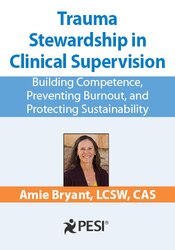
Trauma Stewardship in Clinical Supervision
Building Competence, Preventing Burnout, and Protecting Sustainability
- Speaker:
- Amie Bryant, LCSW, CAS
- Duration:
- Approx 6 Hours
- Copyright:
-
Feb 04, 2027
- Product Code:
- POS151156
- Media Type:
- Digital Seminar - Also available: Live Webinar

Description
- Recognize trauma exposure responses before they become burnout
- Build supervision around reflection and sustainability, not surveillance
- Address the organizational pressures that amplify trauma exposure
Every clinical supervisor knows the quiet weight of this work.
Watch a supervisee absorb someone else’s trauma session after session. Wonder if you’re doing enough to protect them. Often carrying that same unprocessed weight yourself.
Trauma-informed supervision asks you to do two things at once: build supervisees’ competence in trauma-informed care and protect their capacity to sustain it.
Without a clear framework for both, the risk isn’t just burnout. It’s compassion fatigue, moral distress, vicarious trauma, and clinicians quietly leaving the field.
Trauma-informed care is how we treat clients. Trauma-informed supervision is how we supervise. And trauma stewardship is why we supervise this way, to build resilience and sustainability in clinicians, not just technical skill. Led by Amie Bryant, LCSW, CAS, a CCE approved clinical supervisor, former counseling center director, and longtime graduate social work faculty member with over 20 years in mental health, you’ll learn to:
- Recognize trauma exposure responses and warning signs in your supervisees
- Structure supervision around reflection and sustainability
- Apply relational responses to common supervisee challenges
- Address organizational pressures on sustainable supervision
Leave with a trauma stewardship plan built for the long haul, for your supervisees and for yourself.
Purchase Today!
Credit
Speaker

Amie Bryant, LCSW, CAS Related seminars and products
Amie R. Bryant, LCSW, CAS (she/her) is a psychotherapist, clinical supervisor, and trainer with over 20 years of experience in mental health. She is the owner of Four Corners Counseling, LLC, and provides individual psychotherapy, clinical supervision & consultation, and professional training. Amie is a CCE approved clinical supervisor, EMDRIA approved consultant and certified EMDR therapist, and holds a certificate in advanced clinical supervision from Smith College School of Social Work. A former director and training coordinator at Fort Lewis College Counseling Center, and longtime adjunct faculty member with the University of Denver Graduate School of Social Work, she has completed over 100 hours of group leadership training through the Matrix Leadership Institute, and is known for her relational, culturally affirming, and use-of-self-centered approach to supervision. She currently serves as contracted faculty to MSU Denver’s Front Porch Initiative and as a consultant for Essence Oriented™ Therapeutics through True Success for All. A sought-after speaker, she regularly develops and facilitates basic and advanced supervision trainings.
Speaker Disclosures:
Financial: Amie Bryant has an employment relationship with Four Corners Counseling, LLC and Metropolitan State University, and serves as a consultant with True Success for All. She receives speaking honoraria from NASW Colorado, Adelphi University, and the Cognitive Behavior Institute. She also receives speaking honoraria and royalties from the Telehealth Certification Institute, Impact CE, and the Cognitive Behavior Institute, as well as speaking honoraria and recording royalties from PESI, Inc. She has no relevant financial relationships with ineligible organizations.
Non-financial: Amie Bryant is a member of the NASW and EMDRIA.
Additional Info
Access for Self-Study (Non-Interactive)Access never expires for this product.
For a more detailed outline that includes times or durations of time, if needed, please contact cepesi@pesi.com.
Questions?
Visit our FAQ page at www.pesi.com/faq or contact us at www.pesi.com/info
Objectives
- Differentiate between trauma informed care, trauma informed supervision, and supervision as trauma stewardship.
- Identify common trauma exposure responses and early warning signs.
- Apply trauma informed principles to develop trauma competent clinicians and ethical practice.
- Integrate knowledge of trauma informed care to support supervisee growth, development, and sustainability.
- Examine how organizational, cultural, and systemic factors influence clinician sustainability, and the supervisory role in responding ethically.
- Develop supervision strategies that promote trauma-informed care competencies while simultaneously addressing the well-being of both supervisee and supervisor.
Outline
Supervision as Trauma Stewardship: Why We Supervise This Way
- Cultivate sustainability and resilience in clinicians, not just technical competence
- Define trauma-informed care, trauma-informed supervision, and trauma stewardship
- Qualities of a trauma competent clinician & supervisor
- Why sustainability matters: The impact of burnout and vicarious trauma
- Frame the multiple roles of supervisors
- Factors that contribute to need for trauma informed supervision
- Techniques for mitigating risk factors through supervision
- Limitations of the research and potential risks
Principles of Trauma-Informed Supervision (TIS)
- Safety, trust, choice, collaboration, empowerment, cultural/historical/gender issues
- Integrate cultural humility and equity into supervision
- Use self, feedback, and reflection to enhance supervisee growth
- Models of trauma informed supervision
- Ethics in trauma informed supervision
Application of TIS: How to Apply the Principles
- Assess for trauma exposure responses; knowing the warning signs
- Structure supervision to include reflection, meaning making, and sustainability check-ins
- Apply principles of TIS to the supervisory process
- Practices for ongoing assessment of clinician well-being without surveillance
- Identify early intervention points before burnout or disengagement escalates
- Benefits of trauma-informed supervision: Retention, ethical practice, and professional identity development
Trauma Stewardship in Action: Experiential and Reflective Activities
- Develop a trauma stewardship plan
- Shift from burnout prevention to stewardship and sustainability
- Experiential practices addressing trauma exposure responses
- Nervous system awareness
- Completing the stress cycle
- Embodied stewardship strategies:
- Mindfulness
- Movement
- Rest
- Grounding in values
- Peer support
- Supervisor modeling of presence, boundaries, and appropriate self-disclosure
- Reflective questions to foster stewardship, meaning-making, and resilience
- Reflection and commitments to sustain the work long-term
- Supervise from a reflective, relational, and cultural approach
- Identify personal and organizational practices to sustain resilience
- Case vignettes:
- Demonstrate common supervisee challenges
- Relational, stewardship-oriented supervisory responses
Organizational Roles & Responsibilities in Sustainability
- Trauma exposure response; flaw of therapist? Or flaw of system?
- Address systemic issues; workplace culture, power, and ethical leadership
- Supervisor as buffer, translator, and advocate
- How productivity demands, documentation pressures, and risk management cultures amplify trauma exposure
- Ethical tensions between organizational expectations and trauma-informed values
- Supervisory strategies for:
- Addressing workload
- Boundaries
- Sustainability within organizational constraints
Target Audience
- Counselors
- Social Workers
- Psychologists
- Therapists
- Marriage & Family Therapists
- Behavioral Health Nurses
- Other Mental Health Professionals



Reviews
Satisfaction Guarantee
Your satisfaction is our goal and our guarantee. Concerns should be addressed to: PO Box 1000, Eau Claire, WI 54702-1000 or call 1-800-844-8260.
ADA Needs
We would be happy to accommodate your ADA needs; please call our Customer Service Department for more information at 1-800-844-8260.
PESI Mobile App
Access CE trainings on your phone or tablet through our free mobile app. Choose video or audio-only versions of online courses from the world’s best instructors, and complete your CE requirements anywhere, anytime, at your own pace.




Please wait ...