
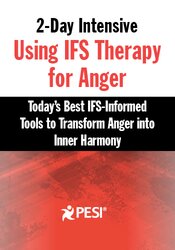
2-Day Intensive Using IFS Therapy for Anger
Today's Best IFS-Informed Tools to Transform Anger into Inner Harmony
- Speaker:
- Ted Riskin, LCSW
- Duration:
- Full Day
- Product Code:
- LWC150918
- Brochure Code:
- PWZ96323
- Media Type:
- Live Webinar - Also available: Digital Seminar

Description
- Get a clear understanding of anger as a boundary protecting part and how to welcome it safely
- Use IFS informed tools to unblend unburden, and befriend angry and self critical parts
- Get Interventions that help transform judgment into self compassion and inner harmony
- Build skills to recognize and work with your own parts that respond to client’s anger
When clients seeking therapy for anger management step into the therapy room, they carry stories of feeling judged, broken, and needing to be fixed.
And so many therapists accidentally reinforce this by trying to help clients calm their anger. To “fix” the symptom.
But here’s the thing. That approach doesn’t reach the deeper pain driving the anger …
… so the client stays trapped in the same painful patterns of reactivity, shame, and disconnection.
IFS therapy changes that.
Within the IFS model, anger is conceptualized not as a symptom to fix, but a protector forced into an extreme role when the system doesn’t feel safe …
… and gives you a non-pathologizing set of clinical tools to reach the parts of clients guarding that deeper pain and work with it – so it can let go of the protective role that keeps clients reacting to old wounds.
This 2-day training shows you how.
Join Ted Riskin, LCSW, who has over two decades of experience teaching clinicians how to work with polarized protector parts in the IFS model. With detailed instruction and examples, he’ll take you from the foundations of the IFS approach to how you can use IFS with clients with anger issues.
Join this training and walk away with:
- A clear grasp of how IFS frames anger as a boundary protector and how to welcome it safely without pathologizing it
- IFS informed tools to unblend, and befriend angry and self critical parts with confidence
- Interventions that transform judgment into self compassion and deep inner harmony
- How to spot and work with your own fearful or judgmental parts in response to client anger.
Register today!
This event is not endorsed by, sponsored by, or affiliated with the IFS Institute and does not qualify for IFS Institute credits or certification.
Credit
Speaker
Ted Riskin, LCSW Related seminars and products
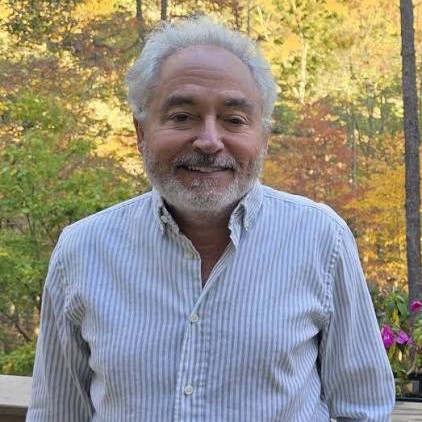
Ted Riskin, LCSW, is an experienced psychotherapist, educator, and advanced Internal Family Systems (IFS) practitioner specializing in anger, relational dynamics, and transpersonal approaches to healing. He holds Level 3 certification in Internal Family Systems and has extensive advanced training in Holotropic Breathwork, Core Energetics, hypnotherapy, breath therapy and EMDR.
Ted is the co-creator of a comprehensive IFS training program for clinicians, which he has been teaching since 2018, and he has been leading an IFS based Group KAP program since 2022. His teaching is known for integrating depth psychology, somatic awareness, and parts-based work to help practitioners confidently engage with complex protector systems and polarized internal dynamics.
Since 2004, Ted has served the faculty of The Institute of Core Energetics, where he continues to teach periodically, contributing over two decades of experience in experiential, body-oriented psychotherapy. Based near Asheville, North Carolina, he facilitates multiple ongoing process groups that blend IFS and Core Energetics and is also an active facilitator with the Asheville Movement Collective.
Speaker Disclosures:
Financial: Ted Riskin maintains a private practice and has employment relationships with Essentials of Internal Family Systems, GroupKAP, Institute of Core Energetics, Asheville Movement Collective and receives compensation as a trainer. He receives a speaking honorarium from PESI, Inc. He has no relevant financial relationships with ineligible organizations.
Non-financial: Ted Riskin has no relevant non-financial relationships.
Additional Info
Access Period for Live WebcastYou will have access for 90 days after the program for review. For live CE credit, you must watch the live webcast in its entirety at its scheduled time and complete the CE quiz and evaluation within one week. Please note that this requirement may vary by credit type. Please see detailed credit information for specific requirements for each credit type.
Webcast Schedule
Please note: There will be a 70-minute lunch and two 15-minute breaks; one in the morning and one in the afternoon. Lunch and break times will be announced by the speaker and at their discretion. A more detailed schedule is available upon request.
Questions?
Visit our FAQ page at www.pesi.com/faq or contact us at www.pesi.com/info
Please Note
This product is not endorsed by, sponsored by, or affiliated with the IFS Institute and does not qualify for IFS Institute credits or certification.
Objectives
- Identify how anger potentiates emotional development from child to adult.
- Define the “smoke alarm” theory of anger and other emotions.
- Examine common childhood situations that lead to suppression of anger.
- Examine the sensation and energy of anger in the body.
- Identify the consequences of suppressed anger.
- Analyze the four IFS parts that cluster around anger.
- Define Martin Buber’s two basic ways of relating.
- Determine the role of anger in recovering from a narcissistic family.
- Define the Inner Critic as a part burdened with moral beliefs.
- Differentiate judgment from assessment.
- Distinguish potential benefits from negative consequences of the Inner Critic.
- Determine positive cultural uses of shame.
Outline
Foundations of the Internal Family System Therapy Model
- Brief history of IFS therapy development
- Understanding the concept of internal multiplicity
- Core logic as the IFS therapy model
- Restoring self-leadership as the main goal in IFS therapy
Core Components of the IFS Therapy
- Self as the client’s internal leader
- Protectors: managers and firefighters
- Exiles and the IFS therapy approach to wounded parts
- Origin and impact of personal and legacy burdens
- IFS therapy as a tool for memory reconsolidation
The Function and Formation of Anger
- Anger as a boundary-protecting part
- Anger as a driver of individuation and differentiation
- Constructive vs. destructive anger patterns
- How early learning shapes threat detection and anger responses
Clinical Presentations of Anger in IFS Work
- Inhibited, somatic, and displaced anger
- Introjects and the internalized anger system
- Identifying the anger cluster
- Creating conditions for welcoming anger safely
Relational Frames and the Sense of Self in IFS
- Meeting clients and their parts in therapy
- Anger as energy that restores boundaries and relational integrity
- Clinical interventions for unblending, meeting, and befriending protectors
- The developmental role of wants and desires in the therapeutic process
Anger, Authenticity, and Adaptive Strategies
- Implications of Martin Buber’s model for IFS work
- Consequences of narcissistic caregivers
- Fawning as an attachment-driven survival strategy
- The essential role of anger in reclaiming self-agency
Understanding Polarity Dynamics in IFS
- Polarity as a natural principal in parts interactions in therapy
- Intuiting the “missing side” of polarized pairs
- How protectors create polarization through their strategies
- Most common polarizations
Working with Polarized Systems in the IFS Model
- External polarizations and internal reenactments in relationships
- Dissociation as an extreme form of polarization
- Clinical interventions for de-escalating polarized protectors
- Accessing self-leadership and restoring flexible parts collaboration
Understanding the Critic Role in the System
- Connection between the inner critic, outer critic, and anger
- Judgment vs. assessment
- Most common core fears driving critical behavior
- Enrolling anger to unblend from critics
Helping the Critic Relax and Organize
- Supporting the inner critic through “future parts”
- Using boundary-protecting parts to soothe the critic’s vigilance
- Reframing shame as supporting cultural cohesion
- Clinical interventions for working with critic parts
- Risk and limitations of research
Closing
- Case examples
- Q&A
Target Audience
- Counselors
- Social Workers
- Psychologists
- Psychotherapists
- Therapists
- Marriage & Family Therapists
- Addiction Counselors
- Case Managers
- Mental Health Coaches



Reviews
Satisfaction Guarantee
Your satisfaction is our goal and our guarantee. Concerns should be addressed to: PO Box 1000, Eau Claire, WI 54702-1000 or call 1-800-844-8260.
ADA Needs
We would be happy to accommodate your ADA needs; please call our Customer Service Department for more information at 1-800-844-8260.
PESI Mobile App
Access CE trainings on your phone or tablet through our free mobile app. Choose video or audio-only versions of online courses from the world’s best instructors, and complete your CE requirements anywhere, anytime, at your own pace.




Please wait ...