
We made progress on trauma in session today — but are they going to relapse tonight?
Did we go too fast? Should we have gotten more time in recovery before we touched this?
This is the kind of uncertainty that will have you questioning your interventions, avoiding your notes, and worrying until you see your client again.
And because trauma and addictions are so intertwined, you can simultaneously hold the opposite fear: that you've waited too long to address the trauma that's fueling the addiction.
That your client hasn't yet reclaimed control from the tight grip of addiction because you misjudged their readiness to work on trauma.
Every choice you make feels high stakes.
Help them stop using, and everything the addiction was keeping at bay comes roaring back.
Help them with trauma, and the increased access to pain drives them back into avoidance.
So what do you treat first?
The answer isn't trauma or addiction. It's learning to treat the connection between them.
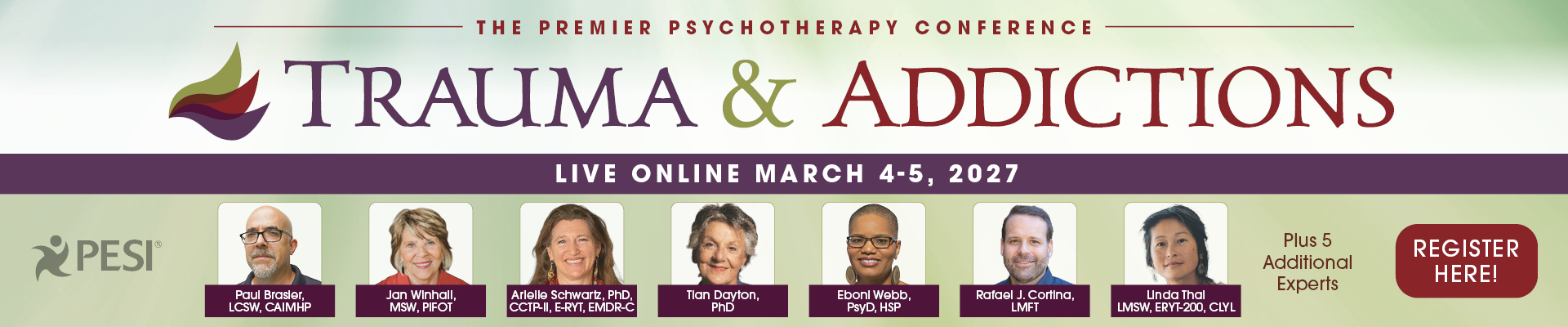
At the 2027 Trauma & Addictions Conference, every session, every speaker, every clinical tool is focused on one intersection: trauma and addictions — and what actually moves the needle in the treatment room.
And when you join us, you'll get cutting-edge tools from DBT, CBT, MCT, IHRP, somatic therapies and more —
All from experts in the field who are doing this work, not just talking in theory about how it should be done:
- From Dr. Tian Dayton, who literally wrote the book Trauma and Addiction
- From Dr. Arielle Schwartz, a distinguished expert in complex trauma recovery
- From Jan Winhall, author of 20 Embodied Practices for Healing Trauma and Addiction
Plus 13 other experts bringing you sessions focused on what you’re seeing in your practice:
Attachment wounds • Embodied recovery • Comorbid ADHD • Suicide risk assessment • Gaslighting • Moral injury recovery • Narcissism • Ambiguous loss • AND MORE!
Thousands of clinicians have attended previous years' conferences, and now it's your turn to get the training that will help you intervene without destabilizing recovery or ignoring the trauma driving it.
Earn up to 12 LIVE CE hours
90-day replay access
Access to slides & handouts
BONUS: Includes up to 6 self-study CE hours
Credit approvals may differ per session.
Earn up to 18 self-study CE hours
12-month access to every session
Access to slides & handouts
Self-study CE hours and approvals may vary from the live event.
Content will be accessible for 12 months after the product becomes available.
Your registration is 100% risk-free. Cancel at any time for a complete refund.
Have your tools kept up?
The guidance has always been: treat the addiction before the trauma. Get your client to a stable place in recovery before helping them open up about their worst life experiences.
And treatment structures have followed that advice. Maybe you work in a substance use disorders facility where trauma isn't "touched." Or perhaps you're in a trauma clinic and have been told to pull in support from addictions counselors when needed. Or you're in independent practice and have been confused about where to start.
And if you work with trauma survivors, you're working with addiction.
Segmented care isn't the way forward.
The question is no longer whether to treat both — it's how.
And at the 2027 Trauma & Addictions Conference, you'll get cutting-edge tools from DBT, CBT, MCT, IHRP, somatic therapies and more to answer that question.
Along with up to 12 live and 6 self-study CE hours included with registration.
Earn up to 12 LIVE CE hours
90-day replay access
Access to slides & handouts
BONUS: Includes up to 6 self-study CE hours
Credit approvals may differ per session.
Earn up to 18 self-study CE hours
12-month access to every session
Access to slides & handouts
Self-study CE hours and approvals may vary from the live event.
Content will be accessible for 12 months after the product becomes available.
Your registration is 100% risk-free. Cancel at any time for a complete refund.

Nervous System Regulation Strategies for Complex Trauma and Addiction Recovery
Founder of the Center for Resilience Informed Therapy, specializing in trauma recovery
When clients have trauma and substance use issues, what do you work on first?
They may not have the stability necessary to work directly on their traumatic pasts...
While at the same time, that unprocessed trauma is contributing to their substance use.
In this session, Dr. Arielle Schwartz — a leading voice in the field of trauma recovery and author of eight books including The Complex PTSD Workbook — will give you tools to get at the root of the problem: the nervous system dysregulation that underlies both trauma and addiction. You'll get:
- Natural vagus nerve stimulation practices to promote calm and present-orientation
- Tools to facilitate embodied self-compassion and a sense of safety
- Strategies to build clients' capacity for distress tolerance and emotion regulation

DBT Tools and the "Nurturing Parent" Framework
Founder of The Village of Kairos, specializing in DBT for trauma-based disorders
When they need soothing, predictability, and relief from distress, your clients with attachment wounds can find a reliable source of regulation in addictive behaviors.
And when they try to move away from the addiction, they're met with a sense of emptiness and grief on top of difficulties with regulation.
In this session, DBT expert Dr. Eboni Webb will give you a framework for understanding addiction as a highly practiced regulatory strategy and tools for clients to create alternative sources of relief. You'll get:
- FAST skills and validation for rebuilding strained relationships
- Self-Soothe, TIP skills, urge surfing, and radical acceptance for tolerating cravings
- PLEASE skills, building mastery, and the function of emotions for regulating without the addiction

Experiential Techniques in the Treatment of Trauma & Addictions
Director of The New York Psychodrama Training Institute, specializing in relational trauma and addiction
Attachment wounds live on in the roles a client unconsciously replays in every close relationship they enter as an adult.
And they can't talk their way out of it.
In this session, Dr. Tian Dayton — a foremost expert on trauma and addictions and author of numerous books including Growing Up with Addiction — will share psychodrama's most powerful techniques with you. You'll get:
- An experiential, body-based method that can access what words can't
- Strategies to work with the felt sense of early ruptures in a structured, containable way
- Tools to build empathy for self and other rather than intellectual insight alone
Gestalt Strategies to Support Embodied Recovery
Board Member of the International Association for the Advancement of Gestalt Therapy
Lasting recovery requires a plan to meet the underlying needs that have fueled addictive urges and behaviors.
And when traumatic experiences have reshaped your client's physiological, emotional, and relational experience.
It's essential to create the kind of awareness and regulation in the present that will redirect energy into healing and growth.
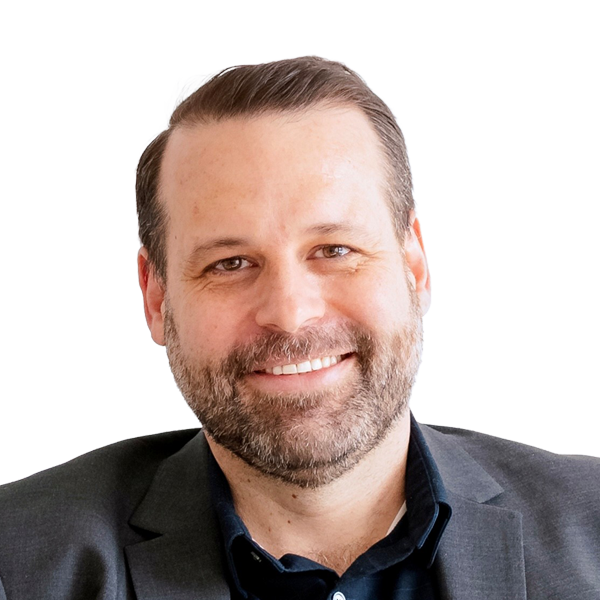
In this session, Rafael Cortina, LMFT — master addictions counselor certified in both trauma and Gestalt therapy — will give you practical interventions from a Gestalt framework to empower your clients when dysregulation arises. You'll learn:
- Functional and embodied assessments to explore and shift addictive behavior
- Tools to increase clients’ ability to stay present without overwhelm and shame
- Relational tracking to create a lived opportunity for connection and co-regulation

A Trauma-Informed Approach for Clients with Intoxication, Withdrawal, or Chronic Substance Use Disorders
Creator of the CAIMHP addictions certification and author of The Clinician's Guide to Substance Use Disorders
Many people who die by suicide have a substance in their body at the time of their death — and that's not counting deaths classified as overdoses, which may in fact have been suicide attempts.
With substance use disorders and trauma being leading risk factors for suicide, it's imperative that you have the tools you need to support safety for your at-risk clients. In this session, Paul Brasler — substance use disorders expert and author of The Clinician's Guide to Suicide Management — will show you core suicide assessment adaptations for this vulnerable population. You'll get:
- A trauma-informed suicide risk assessment approach that respects autonomy and self-determination
- Strategies to accurately assess risk when clients are experiencing intoxication or withdrawal
- Safety planning and treatment planning tools to reduce suicidal thoughts and behaviors

Sensory Grounding for Relapse Prevention in Early Recovery from Trauma and Addictions
Internationally recognized speaker on trauma and addiction recovery
Clients oscillate between numbing and flooding in early recovery.
And your attempts to widen their window of tolerance can backfire if you don't understand what's happening physiologically.
In this session, Linda Thai — distinguished expert in brain- and body-based modalities for the healing of complex developmental trauma — will show you how to read the edges of a client's window of tolerance and how to sequence mindfulness and sensory grounding so they build capacity instead of overwhelming your client. You'll get:
- Skill at mapping each client’s escalation curve and distinguishing actual calm from a “faux ventral” state
- Tools to build an individualized sensory grounding menu customized for each client
- Techniques focused on vestibular and proprioceptive senses that most grounding scripts leave out

Strategies to Support Sustained Recovery
Certified Clinical Trauma Professional and Fellow in Thanatology
Disconnection, shame, and loss of meaning aren't fully addressed by any one therapeutic modality.
But a focus on personal spirituality for clients struggling with trauma and addiction can provide the whole-person approach they need for sustained recovery.
In this session, Dr. Lisa Connors will show you how spirituality can be a key factor in improving motivation, bolstering engagement, strengthening resilience, and supporting posttraumatic growth. You'll get:
- Strategies for talking with clients about their spiritual beliefs and practices
- Culturally responsive interventions to strengthen resilience and support posttraumatic growth
- Tools to help clients explore their values and increase a sense of meaning and purpose

Attuned Interventions for Ambiguous, Nonfinite, and Living Losses in Trauma and Addictions
Nationally recognized speaker and Penn lecturer on grief, loss, and compassion fatigue
Many clients with trauma and addiction continue to suffer despite symptom reduction.
Because the grief and loss beneath the symptoms remain unnamed, unrecognized, and unresolved.
From loss of control to lost relationships, health, opportunities, and dreams — ongoing nonfinite and ambiguous losses and chronic sorrow impact clients even while recovery is progressing.
In this session, Lara Krawchuk, MSW, LCSW, MPH — sought-after trainer and creator of the Meaningful Grief model — will teach you a therapeutic stance that prioritizes deep presence, validation, compassionate witnessing, and meaning-making rather than fixing, rescuing, or prematurely encouraging change. You’ll get:
- Tools for recognizing and acknowledging relevant losses throughout all phases of treatment
- Practical skills for helping clients tolerate uncertainty and reconstruct meaning
- IFS-informed interventions to lend witness to parts impacted by suffering
Evidence-Informed Tools to Support Shame Reduction, Reparative Action, and More
Leading clinical psychologist and researcher on moral injury, grief, and the spiritual side of trauma
Many traumatic experiences cause moral pain — and that pain, along with trauma-related symptoms, may lead your client to self-medicate.
And now their addiction has them going against their core values, creating more injury.
How do you stop the cycle?
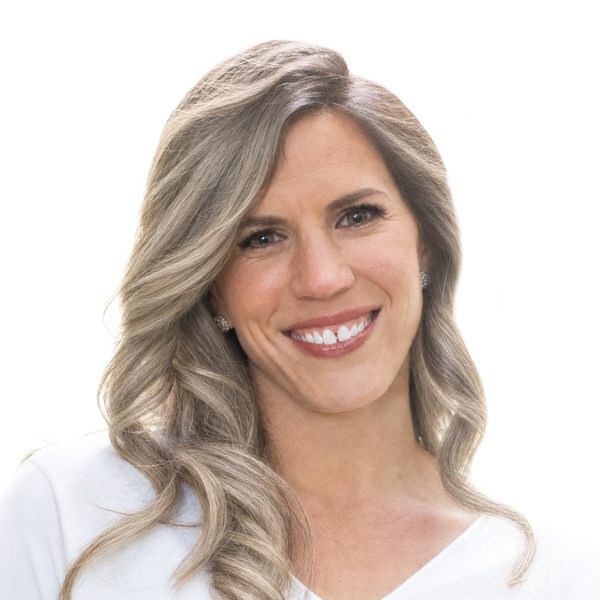
In this practical session, Dr. Melissa Smigelsky — moral injury subject matter expert, intervention developer, and implementation scientist — will show you what you need to know to address morally injurious experiences that may serve as barriers to your clients' recovery. You'll get:
- Strategies for bringing morality into the therapy space that encourage clients to open up rather than shut down
- Tools to channel guilt into pro-social behaviors that reinforce clients’ values and contribute to recovery
- Interventions to reduce shame and increase self-compassion and acceptance
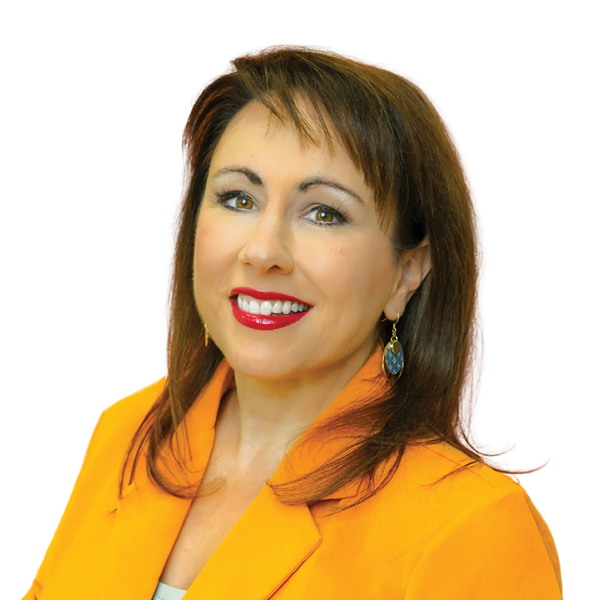
Identifying Gaslighting, Deception, and Paths to Relational Repair
TED speaker and bestselling author on ADHD, trauma recovery, and nervous system regulation
Concealment, denial, minimization, inconsistent recall, broken promises, and blame-shifting may leave those impacted by addiction-affected relationships questioning what they saw, what they remember, and whether they are somehow responsible.
Yet not every lie, defensive response, or memory discrepancy is gaslighting — and treating them as interchangeable can obscure risk, intensify shame, and lead therapists toward interventions that do not fit the pattern.
In this practical, trauma-informed session, Dr. Amelia Kelley — international trainer on trauma and empowerment-based therapy and author of Gaslighting Recovery for Women — will show you how to differentiate addiction-related deception, trauma dynamics, and self-protective distortion from gaslighting. You'll get:
- Tools to identify reality erosion and language for reality-based conversations
- Strategies to assess for relational harm, coercive control, and safety concerns
- Interventions for accountable communication, boundary setting, and — when appropriate — relational repair

Transform Trauma and Addiction Treatment with the Felt Sense Polyvagal Model
Founder of the Felt Sense Polyvagal Model Institute for trauma and addiction
Your relapsing, resisting, "unmotivated" client has a nervous system that is doing exactly what it was designed to do — protect them.
And when you can shift out of a focus on changing behavior first — and instead center interventions on the underlying dysregulation that drives it — you'll reduce shame, strengthen engagement, and promote lasting regulation and recovery.
In this session, Jan Winhall, MSW, PIFOT, developer of the Felt Sense Polyvagal Model and author of 20 Embodied Practices for Healing Trauma and Addiction, will show you the Four-Circle Harm Reduction Practice Tool to help your client move toward regulation of body, breath, voice, and mind. You'll get:
- A somatic roadmap for shifting clients out of shame and addiction
- Neuroscience-informed strategies for regulation, titration, and pacing
- Attachment-based techniques for grounding, attunement, and relational safety
Earn up to 12 LIVE CE hours
90-day replay access
Access to slides & handouts
BONUS: Includes up to 6 self-study CE hours
Credit approvals may differ per session.
Earn up to 18 self-study CE hours
12-month access to every session
Access to slides & handouts
Self-study CE hours and approvals may vary from the live event.
Content will be accessible for 12 months after the product becomes available.
Your registration is 100% risk-free. Cancel at any time for a complete refund.
— JOSEPH P.
— ALLISON K.
— NATALIA N.
— SABRINA B.
— ANTHONY A.
— MARIA B.
— HALEY B.
— ADRIANNE C.
— BRENDA D.
Earn up to 12 LIVE CE hours
90-day replay access
Access to slides & handouts
BONUS: Includes up to 6 self-study CE hours
Credit approvals may differ per session.
Earn up to 18 self-study CE hours
12-month access to every session
Access to slides & handouts
Self-study CE hours and approvals may vary from the live event.
Content will be accessible for 12 months after the product becomes available.
Your registration is 100% risk-free. Cancel at any time for a complete refund.
GET IMMEDIATE ACCESS TO THESE BONUS SESSIONS
Completely Free with Your Registration!
The transformation of the "Creating Change" model involves a comprehensive approach to trauma and addiction recovery. The model emphasizes 23 session topics covering:
- Origins of trauma and addiction
- Processing grief and regrets
- Reshaping life narratives
- Fostering resilience
- Exploration of trauma's impact on relationships
- Breaking the silence surrounding trauma experiences
- And more!
Don't miss this opportunity to revolutionize your approach to trauma and addiction recovery and help clients rewrite their life story with newfound resilience.
Sadly, personality is often overlooked when working with clients living with addiction, and personality assessments often do not inform treatment planning.
Narcissism and other antagonistic personality styles can turn addiction therapy into a complex puzzle. And understanding these personality dynamics is the key to preventing relapse and achieving lasting change.
Join Ramani Durvasula, PhD, New York Times bestselling author of, It's Not You: Identifying and Healing from Narcissistic People for an exploration of narcissism and its impact on addiction treatment. Dr. Durvasula offers a comprehensive overview of narcissism and Narcissistic Personality Disorder (NPD), including DSM formulations and relationship dynamics, guiding you through:
- How narcissistic traits complicate assessment, treatment, and long-term management of substance use disorders
- The parallels between narcissism and addiction, and gaining insights into effective engagement strategies for this challenging population
- The intersection of narcissism, trauma, and substance use disorders, and exploring practical tips for maximizing clinician efficacy as well as for families, spouses, partners, and friends
Don't let narcissism derail your addiction treatment efforts.
Research tells us that 40-70% of individuals in addictions recovery programs have histories of trauma. If we work with clients who have addictive disorders, it is imperative that we understand the traumatized brain.
Join the esteemed Janina Fisher, PhD, an illuminating voice in the field, as she provides integrative treatment strategies that address addiction and trauma-related brain and nervous system responses.
This workshop offers the clinical rationale for engaging addicted clients in therapy while they're still actively using, and teaches core skills for building alliance with them and exploring whether trauma is driving the addictive process.
You'll leave able to teach clients Urge Surfing to interrupt addictive urges, and Unwrapping the Urge to uncover the dissociated, trauma-related material those urges often carry.
The harm reduction frame meets clients wherever they're ready to begin, building a strong therapeutic alliance without requiring commitment to abstinence. Since substances often serve a real coping function, traditional abstinence requirements have kept many people from the care they need. This approach opens your practice to that population.
Is this conference right for me?
If you work with clients struggling with addiction, shame, guilt, and profound suffering and find that one-size-fits-all treatments aren't addressing the underlying trauma... and even lead to retraumatization and relapse — then this conference is for you.
This learning experience was designed for mental health providers who are dedicated to improving their skills and knowledge in treating addiction and trauma by learning the latest, most effective interventions from the world's premier experts.
Is this really live?
Yes! Both days will be live online, letting you interact with presenters and peers. When you sign up, you'll also have access to four self-study bonus sessions.
Will I be able to ask questions live?
YES! If you attend live, you'll be able to engage with the presenters and chat with colleagues throughout each presentation.
Can I get CE for this conference?
Continuing education credit is provided for psychologists, social workers, mental health counselors, marriage and family therapists, and psychotherapists. You must attend live in order to earn CE hours for the live sessions.
If I can't attend LIVE, can I still get credits?
Yes! Just register for our fully self-study version of this conference, which will be available 4-6 weeks after the live event dates of March 4-5, 2027. You'll get access to the content for 12 months after the product becomes available. During that access period, you will be able to earn self-study CE hours! Click here to learn more and register to earn CE on your own schedule.
When will the replays be available and for how long? Do I get them for free?
Yes! You get unlimited replay access for 90 days after the training. Replays will be available within the week after the training ends and will be in the same place where the live sessions took place in your account portal. For live CE credit, you must watch the live presentation in its entirety at its scheduled time and complete the CE quiz and evaluation within one week. Please note that this requirement may vary by credit type. Please see detailed credit information for specific requirements for each credit type.
Will there be breaks during the live conference?
There will be a 60-minute lunch and 15-minute breaks between workshops. The detailed schedule is above.
I still have a question. Who do I contact?
Please Contact Us for questions. We're happy to help!