ADHD + Autism Dual Certification for Rehab Professionals: Begins February 2027!


(ADHD-RSP & ASDCS)
Every rehab caseload includes ADHD and autism. Yet most trainings don't touch sensory processing, motor planning, or session-level intervention that is essential for OTs, SLPs and PTs.
The dysregulation that looks like defiance. The kid who holds it together at school and falls apart the second they're safe with you. The teen labeled "lazy" despite staying up until midnight trying to finish homework. The adult who masked for 30 years and doesn't understand why they're burned out.
This program is different.
It gives you practical solutions for what's actually in front of you.
You’ll get 14 self-paced modules built around the cases that keep you up at night:
- Sensory meltdowns that aren't "behavior"
- Executive dysfunction that presents as defiance
- Motor planning challenges hiding behind "weak core"
- Medication timing that shifts everything mid-session
- Strategies that work beautifully in clinic—and collapse at home
This isn't "manage the behavior." This is understand the nervous system—and help it adapt.
You'll learn how dopamine, interoception, and the Default Mode Network drive what you're seeing—and what to do about it. Not just theory: assessment frameworks you'll actually use, regulation tools that work across settings, environment design that prevents meltdowns before they start, and caregiver coaching that reduces defensiveness instead of triggering it.
Built for the clients who are 3 and the ones who are 43. Neurodiversity-affirming from the ground up. Created by OTs, SLPs, PTs and a PharmD who know that "try harder" was never the answer.
Know Exactly What's Driving the Behavior – and What to Do About It
Valued at $2,509.80
Click here for Credit details | Click here for course objectives and outline
How This Cohort Training Works
This isn't a video library you'll forget you bought. It's a 4-month cohort experience—structured enough to keep you on track, flexible enough to fit a clinical schedule.
Here’s what the 4-month journey looks like:
Weekly On-Demand Modules starting on February 5, 2027 — 1-2 hours weekly. Watch anytime.
- Covering what most trainings skip: interoception, medication timing, motor planning, sensory strategies that actually stick, caregiver coaching that reduces resistance, documentation that reflects what's really going on. Short enough to finish in a week. Deep enough to change how you practice.
7 Live Case-Based Q&A Calls — All sessions are recorded if you can't attend live
- Bring your real cases—or learn from the ones faculty present. Watch expert clinicians reason through assessment, intervention, and team collaboration in real time. Ask your own questions. Leave with answers you can use tomorrow.
Nationwide Peer Community
- A dedicated space to connect with OTs, PTs, and SLPs going through the program alongside you. Share wins, troubleshoot stuck cases, and build a network of clinicians who actually get neurodivergent care. Active for the duration of the program and beyond.
Dual Certification: ADHD-RSP + ASDCS*
-
Complete all 16 modules and you're eligible for both
credentials. The certifications are nationally recognized,
and all professional requirements are handled within the
program. You'll finish with two credentials that set
you apart—and the clinical skills to back them
up.
*Professional and clinical standards apply. Learn more about ADHD-RSP | Learn more about ASDCS
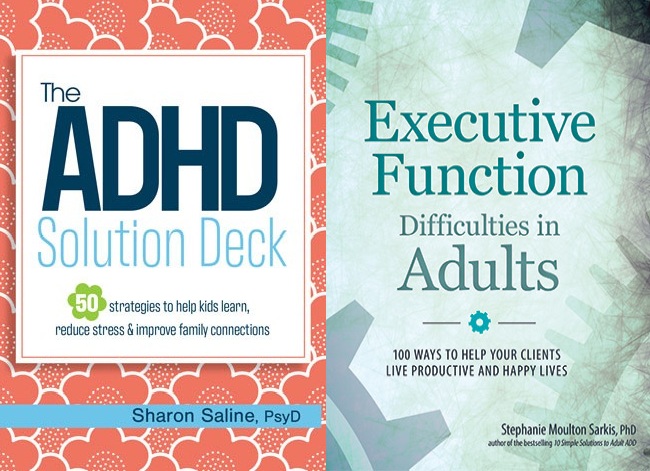
Two best-selling therapy resources delivered right to your door — ready to use with your clients the same week you get them:
- The ADHD Solution Deck: 50 strategies to Help Kids Learn, Reduce Stress & Improve Family Connections
- Executive Function in Adults: 100 ways to Help Your Clients Live Productive and Happy Lives – with 90+ printable tools and handouts!
By the End, You'll Be Able To:
- Look at a shutdown, meltdown, or refusal and know whether it's sensory, executive, motor, or emotional—and respond accordingly
- Adjust your session on the fly when medication timing, environment, or regulation state shifts the whole picture
- Write documentation that justifies services when the real issue is invisible to everyone but you
- Coach caregivers and teachers without triggering defensiveness—and build carryover that survives real life
- Support clients from toddlers in early intervention to adults navigating late diagnosis and burnout—with tools built for each stage
Starting February 2027
Karen Pryor, PhD, PT | Click here for information about Karen Pryor
Dopamine, norepinephrine, serotonin—and what dysregulation actually looks like in session. You'll map the Default Mode Network, salience network, and prefrontal cortex onto the behaviors you're already seeing: poor inhibition, inconsistent performance, emotional reactivity, sensory gating failures.
Polina Shkadron, SLP | Click here for information about Polina Shkadron
Late-identified teens. High-masking girls. The overlap between ADHD, autism, anxiety, trauma, and SPD. You'll learn functional interview techniques, red flags by age and gender, and how to document observations that support accurate referrals—not just confirm existing labels.
Cara Koscinski, OTD | Click here for information about Cara Koscinski
BRIEF-2, Conners, ADOS-2, Sensory Profile—when to use them, what they miss, how to interpret through a functional lens. You'll combine standardized tools with naturalistic observation and caregiver input to build profiles that reflect real life, not just test day.

February 24, 2027 — 12-1p Central
Polina Shkadron, SLP | Click here for information about Polina Shkadron
Working memory, inhibition, cognitive flexibility—how they break down and what to do about it. Visual scaffolds, task simplification strategies, co-regulation scripts, and documentation language that reframes "noncompliance" as executive dysfunction.
Cara Koscinski, OTD | Click here for information about Cara Koscinski
Interoception assessments, body-mapping tools, polyvagal-informed co-regulation for clients who can't identify hunger, anxiety, or overwhelm. You'll read breath, posture, and vocal tone as dysregulation cues—and respond before the meltdown.
Aditi Mehra, OTD | Click here for information about Aditi Mehra
Intrinsic motivation strategies beyond token boards. Movement bridges for transition tolerance. In-session distress tolerance tools. You'll differentiate fear of failure from task avoidance from sensory overload—and match your response accordingly.
March 17, 2027 — 12-1p Central
Ali Arena, SLP | Click here for information about Ali Arena Perkinson
Processing speed, verbal impulsivity, working memory load—how they masquerade as language delays. You'll distinguish comprehension breakdown from auditory overload, build narrative sequencing, and adapt your communication style to your client's regulation state.
Polina Shkadron, SLP | Click here for information about Polina Shkadron
The double empathy problem. Rejection sensitivity. Echolalia as functional communication. Connection-based strategies that build pragmatic competence without demanding masking—visual supports for turn-taking, emotional vocabulary tools, affirming approaches that stick.
March 31, 2027 — 12-1p Central
Cara Koscinski, OTD | Click here for information about Cara Koscinski
Sensory diets that fail vs. sensory strategies that stick. You'll decode when "behavior" is auditory overload, proprioceptive hunger, or vestibular dysregulation—and build individualized supports embedded into real routines, not laminated charts.
Karen Pryor, PhD, PT | Click here for information about Karen Pryor
Dyspraxia, low tone, postural instability, and the hypermobility-ADHD-autism overlap no one taught you. You'll differentiate motor-based task avoidance from sensory-based and executive-based—and adapt cueing, progression, and HEP accordingly.
April 14, 2027 — 12-1p Central
Cara Koscinski, OTD | Click here for information about Cara Koscinski
Lighting, clutter, acoustic load, spatial organization—hidden triggers that dysregulate before you start. You'll audit therapy spaces, classrooms, and home setups and walk away with low-cost modifications that turn environment into a regulation tool.
Aditi Mehra, OTD | Click here for information about Aditi Mehra
Caregiver coaching scripts that reduce defensiveness. Teacher collaboration strategies for IEPs and hallway consultations. Generalization frameworks that embed goals into mealtimes, morning routines, and community outings—with documentation that captures real-world progress.
April 28, 2027 — 12-1p Central
David Dadiomov, PharmD | Click here for information about David Dadiomov
Stimulants, non-stimulants, SSRIs, alpha-2 agonists—what they do, how they affect regulation, when side effects mimic the diagnosis. You'll time sessions around medication peaks, document observations without overstepping, and communicate with prescribers in language that gets heard.
Terri Samuels, LMHC, NCC | Click here for information about Terri Samuels
Vagus nerve, microbiome, blood sugar, sensory-based food aversions. You'll separate evidence from fad, identify when feeding challenges are sensory vs. behavioral vs. GI-related, and apply low-pressure strategies that support nutrition without power struggles.
May 12, 2027 — 12-1p Central
Cara Koscinski, OTD | Click here for information about Cara Koscinski
Four case studies across developmental stages—preschool meltdowns, elementary masking, middle school avoidance, teen shutdown. SOAP-style reasoning, documentation that reflects complexity, and practice differentiating trauma from neurodivergence from both.
Ali Arena, SLP | Click here for information about Ali Arena Perkinson
Late diagnosis, decades of masking, autistic burnout that looks like depression. Functional goals for vocational readiness, emotional regulation, daily routines, and relationships—with documentation that reflects medical necessity without pathologizing identity.
June 2, 2027 — 12-1p Central
Assessment, Intervention & Real-Life Rehab Tools for Every Age and Setting
Valued at $2,509.80
Plus, earn up to 31.25 CE Hours included in the course tuition.
Click here for Credit details | Click here for course objectives and outline
In today’s therapy landscape, where ADHD and
autism touch every corner of our caseloads, the right
training isn’t optional—it’s essential
if we want to give clients the care they truly
deserve.
That’s why we’ve come together—PTs,
OTs, and SLPs—to create something different.
Something we wish we had when we first started.
A comprehensive training that’s grounded in
evidence, filled with real-life tools, and built by
clinicians who are in the trenches with you.
But this isn’t just about the modules or the
techniques. It’s about the journey we’re
taking together.
When you join this cohort, you’ll be surrounded by
a nationwide community of like-minded
professionals—therapists who share your passion
for helping neurodivergent clients thrive. Together,
we’ll share insights, troubleshoot tough cases,
and grow as a team.
Throughout this program, we’ll tackle the
challenges that matter most in real-world practice:
- How to tease apart sensory overload from executive dysfunction
- What to do when shutdowns or refusals derail your session
- How to build supports that actually work for kids, teens, and adults across settings
- And how to collaborate with families and teams in ways that reduce resistance and create real progress
This is your invitation to step into a community-driven,
clinician-built program that will change the way you
practice. By the end, you’ll be eligible for two
powerful certifications—and the confidence,
clarity, and tools you need to support even your most
complex ADHD and autism cases.
We can’t wait to walk this path with you.
—Your ADHD + Autism Clinical Intensive
Faculty
For Occupational Therapists & OTAs
Finally go deeper than "sensory diet"—decode interoception, reframe behavior as sensory communication, and build regulation strategies that actually stick across settings and ages.
- Decode interoception breakdowns that sabotage ADLs, feeding, and emotional regulation—and build body awareness from the inside out
- Design sensory strategies that are individualized, age-appropriate, and embedded into real routines (not generic protocols that collect dust)
- Reframe "behavior" as sensory communication with clinical reasoning frameworks you can explain to parents, teachers, and teams
- Write documentation that justifies services when the challenge looks like "behavior" but is actually executive dysfunction or sensory mismatch
- Transform therapy environments into regulation tools—spot hidden barriers in clinic, classroom, and home setups
- Support the whole lifespan—from toddlers in EI to burned-out adults navigating late diagnosis
For Speech-Language Pathologists
Untangle what's really driving communication breakdowns—language impairment, executive dysfunction, or attention—and finally move beyond compliance-based social skills.
- Decode interoception breakdowns that sabotage ADLs, feeding, and emotional regulation—and build body awareness from the inside out
- Design sensory strategies that are individualized, age-appropriate, and embedded into real routines (not generic protocols that collect dust)
- Reframe "behavior" as sensory communication with clinical reasoning frameworks you can explain to parents, teachers, and teams
- Write documentation that justifies services when the challenge looks like "behavior" but is actually executive dysfunction or sensory mismatch
- Transform therapy environments into regulation tools—spot hidden barriers in clinic, classroom, and home setups
- Support the whole lifespan—from toddlers in EI to burned-out adults navigating late diagnosis
For Physical Therapists & PTAs
See past "weak core" and "low motivation"—recognize when motor challenges are actually tone, proprioception, or the hypermobility-ADHD connection most trainings ignore.
- Recognize when "poor endurance" or "weakness" is actually low tone, sensory avoidance, or proprioceptive dysfunction—and adapt treatment accordingly
- Understand the ADHD/Autism overlap with hypermobility and joint instability—a critical connection most programs miss entirely
- Decode motor planning breakdowns (dyspraxia) that show up as clumsiness, movement avoidance, or inconsistent performance
- Use movement as a regulation tool—not just a motor outcome, but a pathway to attention and emotional organization
- Adjust session timing and demands around medication cycles that dramatically affect motor performance and learning
- Stop misattributing behavior to motivation when the real barrier is vestibular processing or postural control


Become an ADHD-Certified Rehabilitation Services Provider (ADHD-RSP) and Certified Autism Spectrum Disorder Clinical Specialist (ASDCS). Your certification costs are included in this package, a $549 value.
Why dual certification?
Because no two neurodivergent clients are the same — and effective care requires more than a single framework.
The ADHD-RSP certification gives you the tools to address attention, regulation, and executive functioning with precision. The ASDCS certification equips you to meet sensory, communication, and identity-based needs with confidence and compassion.
Together, they give you the versatility to work across the lifespan and across settings — helping you differentiate what’s sensory, what’s behavioral, and what’s rooted in executive function. You’ll become the kind of rehab professional who can truly see the whole person and create interventions that stick.
Join thousands of clinicians who trust Evergreen Certifications for career advancing certifications.
No hidden fees.
*Professional and clinical experience standards apply
Learn more about ADHD-RSP
|
Learn more about ASDCS
Key Highlights for Your Practice:
- See inside the neurodivergent brain to understand how your clients process, regulate, and communicate — and finally make sense of behaviors others mislabel.
- Grab-and-go strategies for sensory challenges, language processing, and behavior mapping — tools you can plug directly into tomorrow’s session.
- Ready-to-use visuals, scripts, and task scaffolds for kids, teens, and adults — no more reinventing the wheel.
- Proven interventions that work for shutdown, masking, elopement, and executive overload — even in your toughest cases.
- Documentation shortcuts that show progress clearly and support reimbursement — saving you time while protecting your practice.
- Family-centered tools to coach caregivers, collaborate with teams, and reduce resistance at home and school.
- Unshakable confidence in managing even the most complex, misunderstood cases — because you’ll finally have a full clinical roadmap.
Assessment, Intervention & Real-Life Rehab Tools for Every Age & Setting
Launching February 2027!
Valued at $2,509.80
Click here for Credit details | Click here for course objectives and outline
Nope, the on-demand training content meets all education requirements for certification. However, we highly recommend and encourage you to join the live workshop sessions to take the on-demand content further, get real practice with an expert, and refine your skills in new ways. *Professional and clinical standards apply. Learn more about ADHD-RSP | Learn more about ASDCS
What if I miss a live session?
Don't worry, we've got you covered — all the live sessions are recorded and available in your course portal for you to view anytime.
Who is eligible for free shipping* on the books?
Free shipping is available for participants located within the United States — your two best-selling therapy tools will be mailed directly to your door at no cost. If you’re outside the U.S., you’ll still get full access to both tools in PDF, downloadable format through your training portal, so nothing is left out.
How do I know I’ll be able to use this in my practice?
Because every piece of this training was designed by rehab clinicians who know the realities of your caseload. This isn’t abstract theory — it’s plug-and-play strategies, visuals, scripts, and handouts you can take straight into your next session. You’ll see real-life case studies across pediatrics, schools, outpatient, home health, and adult rehab — so no matter where you work, you’ll know exactly how to adapt what you learn. Plus, the live Q&A calls give you the chance to bring your toughest cases to expert faculty and walk away with clear, actionable answers.
How long will I have access to this course?
This course comes with Unlimited Access. You can pause, replay, and review the material whenever it works best for your schedule. During your access period, you can revisit the content as often as you like!
We’re that confident you'll find this learning experience to be all that's promised and more than you expected.