This conference is for mental health professionals across disciplines, including counselors,
psychologists, social workers, marriage and family therapists, psychiatric nurses, and other
clinicians who work with adult clients. Whether you're newer to practice and want approaches you can
trust—or you're experienced and looking for the most current, evidence-based
methods—this conference is designed to strengthen your clinical judgment and expand your
toolkit.
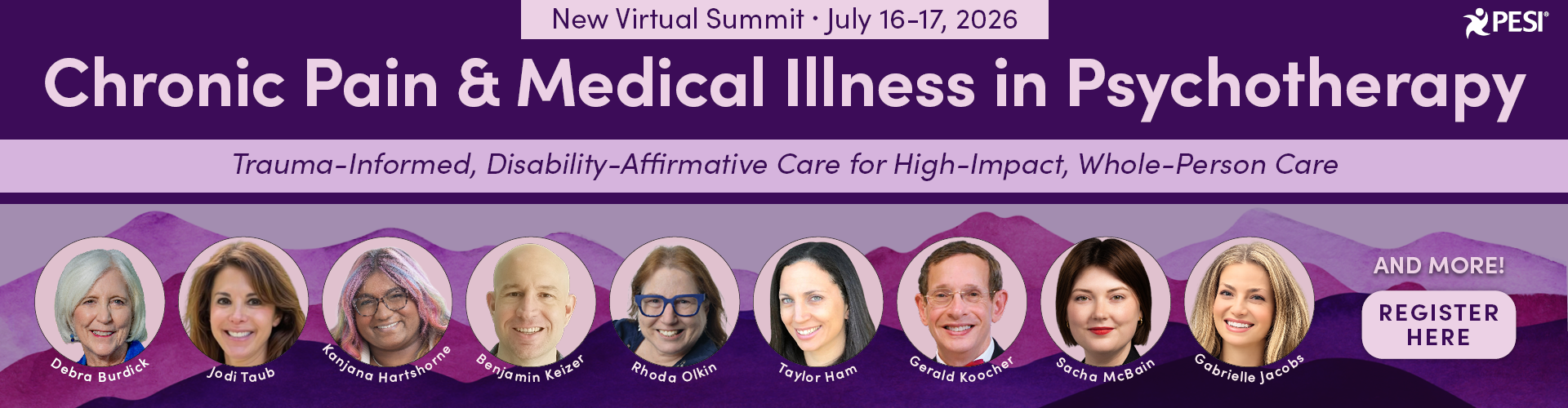
Chronic pain and medical illness are reshaping psychotherapy.
Train with the leading experts in one of mental health's fastest-growing clinical areas.
It may not be why they came to see you, but your clients’ chronic pain and medical illness profoundly shape treatment.
It changes what you can safely do in therapy.
Exposure techniques can trigger flares. Behavioral activation can cause collapse. And processing can overwhelm the nervous system.
You were trained well - just not for this.
The Chronic Pain & Medical Illness in Psychotherapy Conference is a two-day intensive training that will give you the clarity and confidence you need in your work with medically impacted clients.
You'll learn directly from nationally recognized experts, including:
- Destiny Davis, LPC, CRC — Clinician and host of The Chronic Illness Therapists podcast - sustainable practice strategies for clinicians with chronic illness
- Sacha McBain, PhD — Medical trauma expert & rebuilding trust after healthcare harm
- Kanjana Hartshorne, LCSW, C-IAYT, CCFP — Specialist in holistic, somatic, and relational approaches – tools to restore agency while clients deal with diagnostic uncertainty
- Rhoda Olkin, PhD — Leading expert in disability-affirmative care — helping clients deal with ableist microaggressions
- Gerald Koocher, PhD — National authority on healthcare ethics — medical aid in dying & complex decision-making
- Gabrielle Jacobs, MSW, LCSW — PRT & EAET specialist — cutting-edge neuroscience-based mind-body reprocessing for pain relief
And 10 other expert faculty who will translate cutting-edge research into practical, immediately applicable clinical tools.
You'll learn how to:
- Time interventions so sessions align with client's in-the-moment physiological capacity — and keep therapy progressing without triggering flares or shutdown
- Address grief, identity disruption, and diagnostic complexity in ways that validate pain and preserve dignity
- Reframe client presentation through the lens of stress physiology—reducing misdiagnosis and deepening clinical empathy
And so much more!
In only two days, you'll deepen your skills with clear, practical clinical insight on the issues shaping practice today – SAVE YOUR SPOT NOW!
Medical Gaslighting
Ableism & Disability Prejudice
Grief and Trauma
ACT & CBT for Pain
Couples & Family Work
Opioids and Cannabis
Health Anxiety & OCD
Pain Neuroscience
Diagnostic Uncertainty
Pain Reprocessing Therapy
Medical Aid in Dying
And More!
Chronic Pain & Medical Illness in Psychotherapy:
Trauma-Informed,
Disability-Affirmative Treatment for High-Impact, Whole-Person Care
LIVE Online July 16–17, 2026 | 9:00 AM – 5:00 PM Central
Time
JOIN US LIVE ONLINE
All-Access Pass
- Live, interactive sessions
- Real-time Q&A with speakers and peers
- 30-day on-demand replay access
- Downloadable tools and resources
- Earn up to 12 live CE hours and up to 4 self-study CE hours
CAN'T ATTEND LIVE?
Complete Recording Package
- Unlimited access to every session
- Self-paced learning anywhere, any time
- All learning materials included
- Earn up to 16 self-study CE hours
CE details available 4–6 weeks after the event
Your registration is 100% risk-free. Cancel at any time for a complete refund.
Clinical Capabilities You'll Develop
✓
Conceptualize and treat chronic pain and trauma without
escalating symptoms or reinforcing helplessness
✓
Address grief, loss, and identity disruption associated with chronic
illness and pain
✓
Integrate evidence-based pain strategies across modalities, including
ACT, CBT, somatic approaches, and emerging pain science
✓
Respond effectively to medical trauma and experiences of gaslighting
while supporting appropriate engagement with care
✓
Apply disability-affirmative frameworks that honor lived
experience and reduce inadvertent harm
✓
Support couples and families impacted by chronic pain and long-term
illness
✓
Navigate the overlap between health anxiety, OCD, and chronic
illness
✓
Understand the clinical considerations around opioids, medical
marijuana, and pain management
✓
Work skillfully with complex pain conditions such as
fibromyalgia, Lyme disease, and related syndromes
✓
Incorporate positive emotions and psychological flexibility into
chronic pain treatment
✓
Examine racial and gender disparities in pain assessment, diagnosis,
and treatment
✓
Apply Pain Reprocessing Therapy (PRT) and Emotional
Awareness and Expression Therapy (EAET) where appropriate
Grounded in evidence, lived experience, and clinical judgment.
Your All-Access Pass Includes:
- Up to 12 Live CE hours included with your registration PLUS 4 bonus self-study CE hours
- Live, interactive sessions with the opportunity to ask your questions directly — or watch on your own schedule
- Flexible replay access: 30 days with the live package or unlimited access with the recording package
- Downloadable tools and resources you can use in your sessions right away
That's over $1,049.85
in value — including training, tools, and up to 12 live CE hours + 4
bonus self-study CE hours.
Right now, you can secure your spot for just $249.99.
Right now, you can secure your spot for just $249.99.

Here's what your colleagues are saying
about your presenters:

“This training increased my sensitivity to the true needs of disabled
clients.”
(on Rhoda Olkin, PhD)
(on Rhoda Olkin, PhD)
“This was the best webinar training I have ever participated in. Dr.
McBain was relatable, responsive, intelligent, and
well-informed.”
(on Sacha McBain, PhD)
(on Sacha McBain, PhD)
“Excellent presentation. The best I've attended related to managing
chronic illness.”
(on Jessica Vanderlan, PhD)
(on Jessica Vanderlan, PhD)
“Taylor Ham was a great presenter! I thoroughly enjoyed this
training.”
(on Taylor M. Ham, LMFT, CCATP)
(on Taylor M. Ham, LMFT, CCATP)
“Kanjana is brilliant! What a wonderful presentation based in
research with experiential learning!”
(on Kanjana Hartshorne, LCSW, C-IAYT, CCFP)
(on Kanjana Hartshorne, LCSW, C-IAYT, CCFP)
Chronic Pain & Medical Illness in Psychotherapy:
Trauma-Informed,
Disability-Affirmative Treatment for High-Impact, Whole-Person Care
LIVE Online July 16–17, 2026 | 9:00 AM – 5:00 PM Central
Time
JOIN US LIVE ONLINE
All-Access Pass
- Live, interactive sessions
- Real-time Q&A with speakers and peers
- 30-day on-demand replay access
- Downloadable tools and resources
- Earn up to 12 live CE hours and up to 4 self-study CE hours
CAN'T ATTEND LIVE?
Complete Recording Package
- Unlimited access to every session
- Self-paced learning anywhere, any time
- All learning materials included
- Earn up to 16 self-study CE hours
CE details available 4–6 weeks after the event
Your registration is 100% risk-free. Cancel at any time for a complete refund.
Your Conference Schedule
Day 1 | Thursday, July 16, 2026
9:00 AM – 5:00 PM Central Time

Rhoda Olkin, PhD
9:00 AM – 10:05 AM
Ableism and Disability Prejudice:
Clinical Tools to Help Clients Navigate Microaggressions
Clinical Tools to Help Clients Navigate Microaggressions
Featuring Rhoda Olkin, PhD | Click here for information about Rhoda Olkin
Therapy operates within a broader culture shaped by ableism—and clinicians receive little guidance on how to help clients with disabilities and chronic conditions navigate the microaggressions they face, or on how to keep disability bias from entering the therapy room itself.
Too often, disability simply goes unaddressed in treatment.
In this session, Dr. Rhoda Olkin—developer of disability-affirmative therapy and author of What Psychotherapists Should Know about Disability—will give you a practical framework for supporting clients living with chronic illness and disability. You'll learn how to:
- Assess clients' experience of microaggressions and understand how they are impacted
- Use strengths-based reframing and values prioritization to help clients manage microaggressions
- Decrease the chance that you perpetrate a microaggression — and how to repair if you do

Sacha McBain, PhD
10:20 AM – 11:25 AM
Medical Gaslighting and Institutional Betrayal:
Practical, Multi-Level Strategies to Restore Client Agency & Mitigate Harm
Practical, Multi-Level Strategies to Restore Client Agency & Mitigate Harm
Featuring Sacha McBain, PhD | Click here for information about Sacha McBain
Directly or indirectly, your clients with chronic illness and chronic pain have been told it's all in their heads—or that they simply need to manage stress better—by the very system that was created to help them.
It's medical gaslighting and institutional betrayal. And therapy can be a corrective experience—but you weren't trained for this.
In this session, Dr. Sacha McBain—medical trauma expert and co-author of Medical Trauma: Assessment Tools, Coping Skills, and Recovery Strategies for Survivors and Therapists—will give you multi-level, research-informed strategies including:
- Practical, research-informed strategies to restore trust and decrease self-blame
- A comprehensive toolkit for coaching advocacy, interpersonal effectiveness, and navigation of healthcare systems
- Actionable, ethically grounded approaches that go beyond general trauma-informed care

11:40 AM – 12:45 PM
Health Equity in Chronic Pain & Medical Illness:
Integrative Interventions to Reduce Appropriated Oppression
Integrative Interventions to Reduce Appropriated Oppression
Featuring Kira Banks, PhD | Click here for information about Kira Banks
Bias in healthcare hurts: “It’s all in your head.” “It’s just stress.”
Minimization and misattribution of pain is the norm for individuals from oppressed groups, whether BIPOC, disabled, LGBTQ+, or female...
...leading to un- and under-treated pain and illness which creates a profound mental health burden in addition to delayed recovery, reduced quality of life, and increased disability.
In this session, equity and inclusion expert Dr. Kira Banks will show you how oppression impacts the pain and illness experience of your clients who are from marginalized groups. You’ll learn:
- The role of liberation psychology in improving health equity
- A toolkit of interventions to reject clients’ negative beliefs about their health
- How to minimize the impact of health disparities in your practice
— Lunch Break 12:45 PM – 1:15 PM Central —

Taylor M. Ham, LMFT, CCATP
1:15 PM – 2:20 PM
When Health Anxiety and Chronic Illness Overlap:
CBT and ACT Interventions to Reduce Distress Despite Ongoing Symptoms
CBT and ACT Interventions to Reduce Distress Despite Ongoing Symptoms
Featuring Taylor M. Ham, LMFT, CCATP | Click here for information about Taylor M. Ham
Of course, clients with chronic pain or illness have real, ongoing symptoms and legitimate health concerns—but many also have health anxiety that can worsen distress. You're left wondering: how much worry is expected here, and how much might be disordered anxiety I should treat?
In this session, Taylor Ham—author of The Health Anxiety Workbook—will give you tools to differentiate expected anxiety from illness anxiety disorder and address both. You'll learn:
- CBT and ACT interventions to reduce fear-driven behaviors, tolerate uncertainty, and engage with life despite ongoing symptoms
- A framework to avoid both overpathologizing and unintentionally reinforcing clients' anxiety
- How to helpfully respond when medically complex, anxious clients seek reassurance or hyperfocus on symptoms

Benjamin M. Keizer, PhD, ABPP
2:35 PM – 3:40 PM
Pain's Hidden Story:
How Early Life Experiences and Trauma Shape Chronic Pain in Adulthood
How Early Life Experiences and Trauma Shape Chronic Pain in Adulthood
Featuring Benjamin M. Keizer, PhD, ABPP — Board Certified in Clinical Health
Psychology | Click here for information about Benjamin M. Keizer
Chronic pain is one of the most complex challenges clinicians face, with roots that often extend far beyond injury or illness. In this clinically grounded session, Dr. Benjamin Keizer explores how adverse childhood experiences (ACEs) and trauma contribute to the development and maintenance of chronic pain in adulthood. You'll walk away with:
- A clear understanding of shared neurobiological mechanisms linking trauma, ACEs, and pain
- Practical strategies for screening trauma in chronic pain populations
- Trauma-informed interventions that address the pain–trauma feedback loop

Kanjana Hartshorne, LCSW, C-IAYT, CCFP
3:55 PM – 5:00 PM
The Impact of Diagnostic Uncertainty in Complex, Multi-System Chronic
Illness:
Psychotherapy Strategies to Restore Agency & Reduce Shame
Psychotherapy Strategies to Restore Agency & Reduce Shame
Featuring Kanjana Hartshorne, LCSW, C-IAYT, CCFP | Click here for information about Kanjana Hartshorne
When clients' physical symptoms don't follow predictable patterns and a clear diagnosis is delayed or never comes, they live in a state of ongoing uncertainty. Without specialized training, therapists can unintentionally cause harm by misunderstanding clients' focus on their body as avoidant, resistant, or obsessive.
In this session, Kanjana Hartshorne—specialist in trauma-informed, body-based, and relational approaches—will share keys to help clients regain trust in their own bodies, including:
- How to find a balance between solution-focused and relational work
- Tools to counter self-blame and shame when clients experience skepticism from medical providers
- Strategies for meaning-making in ongoing illness
Day 2 | Friday, July 17, 2026
9:00 AM – 5:00 PM Central Time
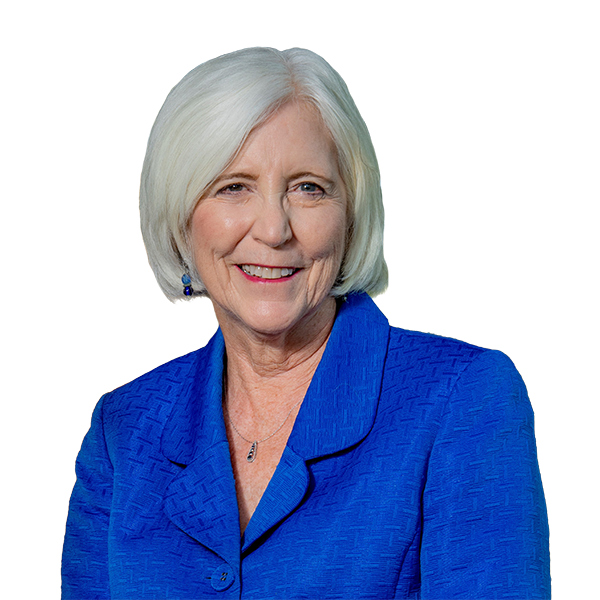
Debra Burdick, LCSW
9:00 AM – 10:05 AM
Psychotherapy Skills for Chronic Pain:
The Top 5 Evidence-Informed Frameworks Every Clinician Should Know
The Top 5 Evidence-Informed Frameworks Every Clinician Should Know
Featuring Debra Burdick, LCSW | Click here for information about Debra Burdick
Chronic pain is never just physical, and effective psychotherapy requires more than a single approach. In this clinically focused session, Debra Burdick integrates five evidence-informed frameworks to help you build a more complete chronic pain toolkit. You'll learn:
- How CBT-CP, ACT, Mindfulness, PRT, and Neurofeedback conceptualize chronic pain
- Practical, session-ready skills from each framework to reduce distress and shift pain relationships
- How to integrate multiple approaches without overwhelming clients or losing clinical focus

Gabrielle Jacobs, LCSW, CADC-I

Paulina Soble, LCSW
10:20 AM – 11:25 AM
Pain Reprocessing Therapy (PRT) & Emotional Awareness and Expression
Therapy (EAET):
Neuroscience-Informed Treatment Strategies to Reduce or Eliminate Chronic Pain
Neuroscience-Informed Treatment Strategies to Reduce or Eliminate Chronic Pain
Featuring Gabrielle Jacobs, LCSW, CADC-I & Paulina Soble, LCSW | Click here for information about Gabrielle Jacobs | Click here for information about Paulina Soble
Psychotherapy for chronic pain has traditionally focused on helping clients learn to accept and live with their condition, assuming that it cannot and will not improve.
But what if, for certain types of pain, therapists could do more than that?
In this session, chronic pain experts Gabrielle Jacobs and Paulina Soble will show you how to determine whether your clients might benefit from new, neuroscience-based treatments – Pain Reprocessing Therapy (PRT) and Emotional Awareness and Expression Therapy (EAET) - that could actually reduce and eliminate chronic pain. You’ll learn:
- Strategies to gently guide clients to relate differently to their pain without offending them or damaging rapport
- How to determine the type of pain your client is experiencing – and pivot strategies accordingly
- Techniques for mindful somatic tracking and expressing avoided emotions
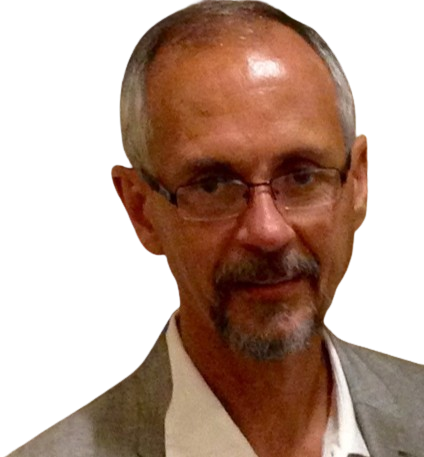
Hayden Center, PhD, LPC
11:40 AM – 12:45 PM
Cannabis and Opioids in Chronic Pain Management: Benefits, Risks, and
Emerging Evidence
Featuring Hayden Center, PhD, LPC | Click here for information about Hayden Center
Chronic pain affects millions, and in the midst of the opioid crisis, clinicians are being asked to navigate increasingly complex treatment decisions with limited guidance about the potential for medication misuse and dependence.
And as cannabis use becomes more common among individuals with chronic pain, mental health practitioners are on the front lines of questions about safety, effectiveness, and clinical appropriateness.
In this session, Dr. Hayden Center - substance use disorders expert - breaks down what clinicians actually need to know, cutting through the noise to examine the real benefits, risks, and clinical applications of both cannabis and opioids. You’ll also gain a clearer understanding of the neurobiology driving their effects on pain, mood, and functioning.
You'll learn:- How to recognize when substance use is shaping pain, mood, and treatment outcomes
- Evidence-informed insights into the benefits and risks of cannabis and opioid use
- Practical strategies for clinical decision-making, including assessing misuse, dependence, tolerance, and withdrawal
— Lunch Break 12:45 PM – 1:15 PM Central —

Jodi Taub, LCSW, PLLC
1:15 – 2:20 PM
Treating Chronic Illness in Context: Relational and Family-Based
Approaches for Supporting Clients and Caregivers
Featuring Jodi Taub, LCSW, PLLC | Click here for information about Jodi Taub
Chronic illness doesn’t just affect the patient. It reshapes the entire support system.
Caregiving stress, shifting roles, identity changes, and relationship strain often become some of the most challenging parts of the experience. In this practical session featuring chronic illness and rare disease expert Jodi Taub - author of More Than A Patient, you’ll learn how to address the relational impact of illness and support both patients and the people who care for them.
You'll learn how to:- Identify common relational stressors that emerge in chronic illness, including role changes, caregiver burnout, and loss of independence
- Use practical clinical interventions to support patients while also working effectively with partners, families, and caregivers
- Help support systems adapt to the long-term emotional and psychological impact of chronic illness while maintaining connection, communication, and resilience

Rachel Zentner, MSE, LPC, SAS
2:35 – 3:40 PM
Grief and Chronic Pain:
The Neurobiology of Holding What Hurts in Clinical Practice
The Neurobiology of Holding What Hurts in Clinical Practice
Featuring Rachel Zentner, MSE, LPC, SAS | Click here for information about Rachel Zentner
Chronic pain and grief often show up together in clinical practice—but they're rarely treated that way. Too often, emotional loss and physical pain are minimized, misunderstood, or addressed in isolation.
In this session, you'll learn how grief and chronic pain interact—and how to translate that insight into more effective clinical care. You'll discover how to:
- Recognize the shared neurobiology linking grief and chronic pain
- Identify when unresolved grief is amplifying somatic distress
- Implement powerful meaning-centered strategies to support healing

Destiny Davis, LPC, CRC
3:55 – 5:00 PM
Chronic Illness-Informed Treatment & Practice:
Essential Strategies for Clinicians
Essential Strategies for Clinicians
Featuring Destiny Davis, LPC, CRC | Click here for information about Destiny Davis
Without training, it’s easy to inadvertently reinforce the toxic wellness narratives that clients with chronic illness are already drowning in. And it’s common to make even more harmful mistakes – to pathologize pacing as avoidance...grief over the loss of health as depression...appropriate attentiveness to health as anxiety.
And the problem deepens when the clinician is also a person with chronic illness, facing the distinct professional and clinical challenges that come with it.
In this session, Destiny Davis – expert in psychotherapy with chronic illness and host of The Chronic Illness Therapist podcast – will show you a framework to work more ethically, effectively, and sustainably with chronic illness populations as you examine how your own health experience shapes treatment. You’ll learn how to:
- Cope with unpredictable symptoms while providing responsive client care
- Navigate disclosure decisions and related ethical dilemmas
- Manage internalized ableism, countertransference, and more
Your Bonus Sessions
Watch Anytime On-Demand
A $209.97 value — yours free with registration!

Carly Hunt, PhD
Low Pain Recipes:
Helping Clients Self-Manage Chronic Pain Through Brain-Based, Holistic Care
Helping Clients Self-Manage Chronic Pain Through Brain-Based, Holistic Care
Featuring Carly Hunt, PhD — Health & Sport Psychologist, Research
Psychologist at Johns Hopkins School of Medicine | Click here for information about Carly Hunt
Decades of pain neuroscience have reshaped how chronic pain is understood, yet many clients still rely on pills and procedures as their primary solution. In this applied session, Dr. Carly Hunt translates the latest research into practical clinical strategies. You'll learn:
- How to explain pain neuroscience in motivating, client-friendly language
- Brain-retraining and behavioral strategies targeting stress, reward, and fear of movement
- How to guide clients in building a realistic, science-backed pain self-management plan

Jessica Vanderlan, PhD
Integrating Cancer Concerns into Psychotherapy:
Essential CBT Strategies to Treat Anxiety, Depression, and Fatigue
Essential CBT Strategies to Treat Anxiety, Depression, and Fatigue
Featuring Jessica Vanderlan, PhD — Click here for information about Jessica Vanderlan
As the number of cancer diagnoses grows, it’s likely that you’ll soon work with a client who is going through or who has survived cancer.
And you’ll need targeted tools for this unique illness experience.
In this session, Dr. Jessica Vanderlan – psychotherapy service manager at one of the nation’s top cancer hospitals – will show you how manageable adaptations of interventions you already know will have a positive impact on your clients with cancer. You’ll learn:
- Key distress points in your clients’ cancer journey and how to be most helpful during vulnerable times
- CBT techniques to reduce cancer-specific distress to reduce clients’ burden of suffering
- Strategies to manage cancer-related fatigue so clients can conserve energy for what’s most important

Gerald Koocher, PhD, ABPP
Mental Health Professionals and Medical Aid in Dying (MAiD)
Featuring Gerald Koocher, PhD, ABPP — Click here for information about Gerald Koocher
Access to medical aid in dying has increasingly become legally available in the United States, Canada, and European countries, and mental health professionals are being called upon to provide a crucial assessment and support role.
In this session, Dr. Gerald Koocher – ethics expert and author of seminal texts including Ethics in Psychology and the Mental Health Professions and the Psychologists’ Desk Reference – will help you:
- Evaluate your own belief system as you understand patient motivations for medical aid in dying
- Begin to assess patient competence – including cognitive and emotional factors
- Align with legal and ethical responsibilities as you collaborate with medical teams
Chronic Pain & Medical Illness in Psychotherapy:
Trauma-Informed,
Disability-Affirmative Treatment for High-Impact, Whole-Person Care
LIVE Online July 16–17, 2026 | 9:00 AM – 5:00 PM Central
Time
JOIN US LIVE ONLINE
All-Access Pass
- Live, interactive sessions
- Real-time Q&A with speakers and peers
- 30-day on-demand replay access
- Downloadable tools and resources
- Earn up to 12 live CE hours and up to 4 self-study CE hours
CAN'T ATTEND LIVE?
Complete Recording Package
- Unlimited access to every session
- Self-paced learning anywhere, any time
- All learning materials included
- Earn up to 16 self-study CE hours
CE details available 4–6 weeks after the event
Your registration is 100% risk-free. Cancel at any time for a complete refund.
Frequently Asked Questions
Not at all. While this conference is highly relevant for clinicians who regularly work with chronic
pain and illness, the material applies broadly to adult mental health practice. Many clients present
with anxiety, depression, trauma, grief, relational distress, or identity concerns that are
shaped—often invisibly—by pain, illness, or ongoing health conditions. The skills you'll
gain here will strengthen your work across a wide range of presentations.
Many pain-focused trainings emphasize education, symptom management, or a single modality. This
conference goes further. It's practice-forward by design. You'll learn from trusted,
interdisciplinary experts who integrate ACT, CBT, somatic, trauma-informed, and emerging pain
science approaches—grounded in real clinical decision-making, not just theory. You'll walk
away with concrete strategies, case examples, and clinically grounded frameworks you can apply
immediately.
Yes. The insights from this conference apply across a wide range of clinical concerns, including
anxiety, depression, trauma, OCD, grief, relational stress, identity disruption, and caregiver
burnout—especially when a client's medical history is part of the picture, even in the
background.
No. You can attend live if you want to join the Q&A, or choose the self-study option and watch
on your own schedule. Either way, you will earn CE hours while learning from some of
the
most respected voices in this field.
You're fully covered by our 100% money-back guarantee. If you don't feel the conference delivered
value, simply let us know and we'll refund you in full—no questions asked.
Visit our FAQ page at www.pesi.com/faq or
contact us at www.pesi.com/info.
100% Satisfaction Guarantee
Register for this intensive training course without risk. If you're not completely
satisfied, give us a call at 800-844-8260.We’re that confident you'll find this learning experience to be all that's promised and more than you expected.

Event Countdown
0
Days
:
0
Hours
:
0
Minutes
:
0
Seconds
Chronic Pain & Medical Illness in Psychotherapy:
Trauma-Informed,
Disability-Affirmative Treatment for High-Impact, Whole-Person Care
LIVE Online July 16–17, 2026 | 9:00 AM – 5:00 PM Central
Time
JOIN US LIVE ONLINE
All-Access Pass
- Live, interactive sessions
- Real-time Q&A with speakers and peers
- 30-day on-demand replay access
- Downloadable tools and resources
- Earn up to 12 live CE hours and up to 4 self-study CE hours
CAN'T ATTEND LIVE?
Complete Recording Package
- Unlimited access to every session
- Self-paced learning anywhere, any time
- All learning materials included
- Earn up to 16 self-study CE hours
CE details available 4–6 weeks after the event
Your registration is 100% risk-free. Cancel at any time for a complete refund.