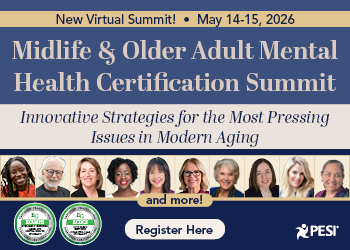
This summit is for mental health professionals of all backgrounds: counselors, psychologists, social workers, marriage and family therapists, psychiatric nurses, and other clinicians who want to strengthen their practice working with midlife and older adult clients. Whether you are newer to practice and want strategies you can trust, or you are experienced and want the most current methods, this summit is built for you.

LIVE EVENT! | Midlife & Older Adult Mental Health Summit
Become a Certified
Aging and Mental Health Specialist and
Confidently Navigate Regrets, Loss of Purpose, Changing Roles, and More
Confidently Navigate Regrets, Loss of Purpose, Changing Roles, and More
When your new 52-year-old client says “I don’t feel like
myself anymore” – it could be so many things.
You’re thinking: Is this depression? Menopause? A lost relationship?
Normal aging? Early dementia?
As a therapist, where do you even begin?
Your training taught you trauma, anxiety, and depression. But nobody taught you
how to hold space for:
“I feel irrelevant.” “My body is betraying me.” “I
wasted the first half of my life.” “I’m scared to die.”
And with midlife and older adults among the fastest-growing populations in
therapy, you can’t rely on outdated models or surface-level interventions.
You need a roadmap.
Now, for the first time ever, the most sought-after experts on aging and mental
health will come together on one virtual stage for two intensive days that will
fundamentally upgrade how you work with midlife and older adults.
- Alua Arthur, trainer of 2,500+ death doulas in 15+ countries, will guide you toward the conversations about mortality, grief, and life completion that your older clients desperately need.
- Richard Leider, MA, NCC, NCMCC, bestselling author of The Power of Purpose and Who Do You Want to Be When You Grow Old? and affectionately known as “The Godfather of Purpose,” will show you what your older clients wish therapists understood about meaning in later life.
- Regina Koepp, PsyD, ABPP, founder of the Center for Mental Health & Aging and host of the Psychology of Aging podcast, will give you the tools you need to eliminate the harm caused by internalized ageism and redefine getting older as a growing stronger.
- PLUS 17 more world-class experts!
You’ll get approaches that are evidence-based, clinically grounded,
and useable in real sessions…
…so that you can harness these powerful transition periods to help
your clients move from fear and limitations to meaning and growth.
In only two days, you’ll deepen your skills with clear, practical clinical
insight on the issues shaping practice today, including:
Menopause • Gray divorce •
Empty nest • Caregiver burden • Retirement anxiety • Loneliness •
Cognitive decline • And more

PLUS: Become a Certified
Specialist—FREE ($449.98 Value)
Your registration includes TWO professional certifications:
Certified Aging and Mental Health Specialist (ECAMHS)
($199.99 value)
Certified Dementia Care Specialist (ECDCS) ($249.99
value) ― Start learning immediately with 6.25 hours of on-demand training you can access
TODAY
*Professional standards apply. Visit evgcert.com/ecamhs and evgcert.com/ecdcs for details.
With demand skyrocketing for
specialists who understand how to support midlife and older adult clients, these credentials
position you as the expert clients are desperately searching for.
Sign up today!
Sign up today!
Midlife & Older Adult Mental
Health Summit:
Innovative Strategies for the
Most Pressing Issues in Modern Aging
LIVE Online May 14th and 15th, 2026
JOIN US LIVE ONLINE
ALL-ACCESS PASS
Only
$349.99!
(Total Value $1,889.80
)
- 30-day on-demand replay access
- Real-time communication with speakers and peers
- Earn up to 13 live CE hours and up to 16 self-study CE hours
If you purchase Live CE, please note you would need
to watch the presentations that are being presented live in order to receive live credit.
This requirement may vary by credit type. Please see detailed credit information for
specific requirements for each credit type.
CAN'T ATTEND LIVE?
Complete Recording Package
Only
$349.99!
(Total Value $1,889.80
)
- Unlimited access to every session
- Self-paced learning anywhere, any time
- Earn up to 28 self-study CE hours
Please note that CE hours and approvals on
self-study recording may differ from live CE approvals. Since the self-study recording
include the same content as the live event, you cannot earn credit on both.
CE details available 4–6 weeks after the event
This is NOT another generic "geriatric mental health" training.
Over two intensive days, you’ll receive clear, practical
guidance for treating the emotional, relational, cognitive, and existential realities
your clients are facing, drawn from today’s most effective clinical approaches, including how
to:
- Treat anxiety, depression, and loneliness rooted in midlife and aging
- Use CBT, ACT, meaning-centered, and somatic tools that fit this life stage
- Guide identity and role transitions without minimizing loss
- Address cognitive concerns and emotional regulation with confidence
- Support caregivers and families without burning out
- Work effectively with menopause, gray divorce, retirement, grief, health changes, death anxiety, and much more
Get the clinical confidence you’ve been missing at the Midlife & Older
Adult Mental Health Summit – the ONLY training that gives you both the clinical skills
AND the professional credentials to confidently market yourself as an aging specialist.

Your All-Access
Pass Includes:
Everything you need
to confidently treat midlife and older adult clients ― without piecing together
multiple trainings
What's included:
- Live, interactive sessions – or watch on your own schedule
- Downloadable tools and client-ready resources you can use in your sessions right away
- Earn up to 28 total CE hours
- $449.98 in FREE bonus certifications, including:
- Certified Aging and Mental Health
Specialist (ECAMHS)
$199.99 value — included FREE - Certified Dementia Care Specialist
(ECDCS)
$249.99 value — included FREE with immediate on-demand access to start learning now
- Certified Aging and Mental Health
Specialist (ECAMHS)
- Additional on-demand bonus sessions on psychotherapy with older adults, working with caregivers, suicide prevention for older adults, and death anxiety – a $459.96 value – yours FREE!
Total value: $1,889.80
+
Your price today: $349.99
Your Conference Schedule
Day 1 | Thursday May 14, 2026
*Times are listed in central time (CT)

Alua Arthur
9:00–10:00am
Keynote Address - Making the Most of Threshold Moments: Lessons for Life From a Death Doula
Alua Arthur | New York Times bestselling author, speaker,
death doula, and teacher
Each death we encounter – that of another person or that of our own identities – creates an opportunity for us to live a life that is authentic.
Using mortality as a lens, this keynote session with Alua Arthur – death doula and bestselling author of Briefly Perfectly Human – will explore how the seeds that are planted during the thresholds of life contain unlimited potential to create opportunities focused on reconciling realities, realigning values, and shedding past selves. Using awareness from her work with dying patients, she will show us how contemplating death can help us support others in their journey deeper into themselves.
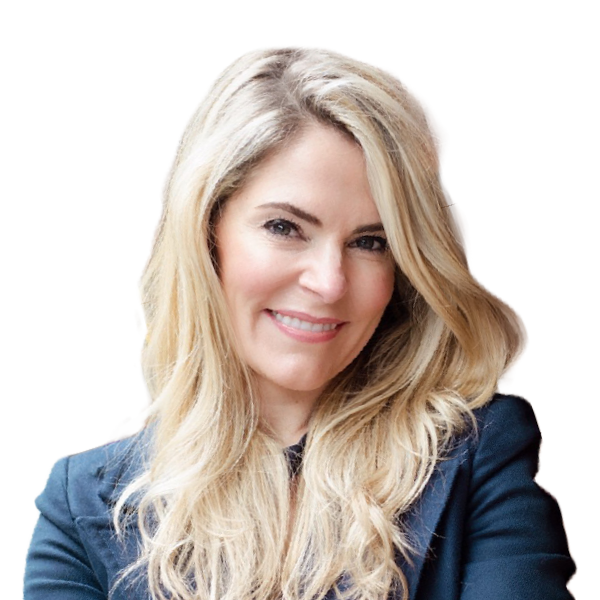
Regina Koepp, PsyD, ABPP
10:15-11:15am
Ageism and Mental
Health: Longevity Mindset Tools and Age-Affirmative Strategies to Improve Mental
Health Outcomes
Regina Koepp, PsyD, ABPP | More information on Regina Koepp.
If your clients have expectations that their lives will be worse the older they get – it may very well turn out that way. What we believe about aging matters.
And with rampant anti-aging messaging pervasive in many corners of society, it can take a rooting out of internalized ageism on the part of the therapist – and direct communication about ageism with clients – to make a difference.
In this session, Dr. Regina Koepp – renowned geropsychologist and founder and CEO of the Center for Mental Health & Aging – will show you to how to reframe aging as a time of continued growth, strength, and connection.
You'll walk away with:
- Longevity mindset shifts to center new, positive expectations for growing older
- Strategies to make a real impact on quality of life in older adulthood
- Tools to enhance older adults’ resilience and sense of community

Katherine King, PsyD
11:30-12:30pm
Cultural Humility Across
Generations: Practical Strategies to Improve Case Conceptualization and Effective
Intervention with Older Adult Clients
Katherine King, PsyD | More information on Katherine King.
All clients are impacted by the historical events, social norms, and power structures in which they live.
And so are all therapists.
To be effective across generations, clinicians must expand their understanding of culture by viewing age cohort and generation as critical variables—going beyond stereotypes about how “Boomers” or “The Silent Generation” will present in and respond to psychotherapy.
In this session, Dr. Katherine Dearborn King—geropsychology expert and author of The Well Helper—will share tools to explore how intersectional identities converge to shape how older adults understand mental health, express distress, relate to authority, and engage in treatment.
You’ll walk away with:
- A practical framework to improve generational solidarity and mutual understanding
- Strategies to reduce the harmful effects of misattunement and stereotyping
- A framework to adapt communication and intervention across generational and cultural differences

Lillian Gibson, PhD
12:45-1:45pm
Interpersonal Psychotherapy
(IPT) for Life Transitions: Roadmap of Top Strategies to Help Clients Navigate Identity
Shifts & Relational Changes
Lillian Gibson, PhD | More information on Lillian Gibson.
Clients in midlife and beyond frequently find themselves struggling with difficult life changes. Whether retirement, marital shifts, caregiving, health challenges, or bereavement - all transitions include uncertainty and can trigger emotional distress, interpersonal strain, and feelings of loss or disconnection.
Now there’s a roadmap for how to guide your clients through life transitions to emotional wellness!
In this session, Dr. Lillian Gibson – highly recommended speaker and expert in Interpersonal Psychotherapy (IPT) – will show you a practical, evidence-based approach for helping clients navigate change while utilizing strategies to strengthen emotional resilience.
You'll walk away with:
- How to apply the stages of change model to life transitions so clients can set targeted goals
- Tools for identifying patterns in your clients’ relationships that contribute to emotional distress – and what to do about them
- Communication analysis strategies to help clients move forward with greater confidence and connection
Lunch: 1:45 – 2:15 pm Central Time
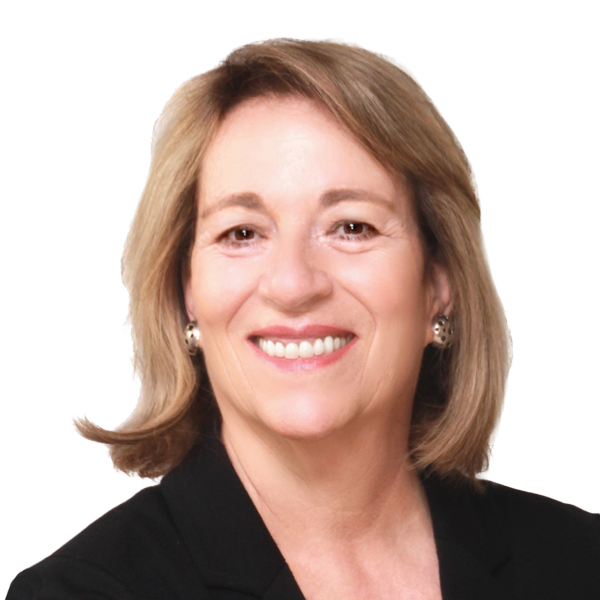
Leslie Korn, PhD, MPH, LMHC, ACS, FNTP, BCTMB
2:15-3:15pm
Aging with Wisdom:
Integrative Strategies for Mental Health Across Midlife and Beyond
Leslie Korn, PhD, MPH, LMHC, ACS, FNTP, BCTMB | More information on Leslie Korn.
When symptoms persist despite “doing everything right,” anxiety, depression, and trauma responses often deepen—especially for midlife and older clients navigating hormonal shifts, chronic pain, sleep disruption, and existential stress.
In this training with Leslie Korn, PhD, MPH—a renowned integrative medicine clinician and educator—you’ll gain practical tools to support client well-being while staying clearly within your scope of practice.
You'll walk away with:
- Personalized mind-body and lifestyle-based recommendations for clients over age 45
- Support sleep, energy, and cognition using integrative approaches appropriate for mental health clinicians
- Motivate sustainable lifestyle changes that improve mental and physical health
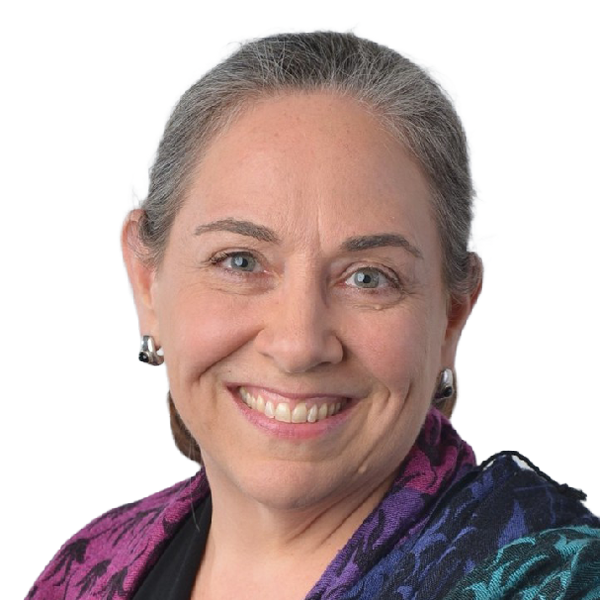
Ann Steffen, PhD, ABPP
3:30-4:30pm
The Clinician’s Guide
to Brain Health in the Second Half of Life: Essential Strategies for Supporting
Cognitive Health
Ann Steffen, PhD, ABPP | More information on Ann Steffen.
Clients in the second half of life often notice changes in memory, attention, and mental stamina—and many assume these shifts mean something is “wrong.” Therapists must help clients understand what’s typical while avoiding both over-pathologizing and minimizing their concerns.
In this session, Ann M. Steffen, Ph.D., ABPP, Professor of Psychological Sciences and Board-Certified Clinical Geropsychologist will give you a clear roadmap of the top strategies clinicians need to support brain health with confidence and nuance.
You’ll walk away with:
- Clear psychoeducation strategies for explaining normal cognitive changes
- Practical tools to help clients make sense of cognitive changes without fear or self-blame
- Evidence-based approaches to strengthen cognitive vitality across diverse populations
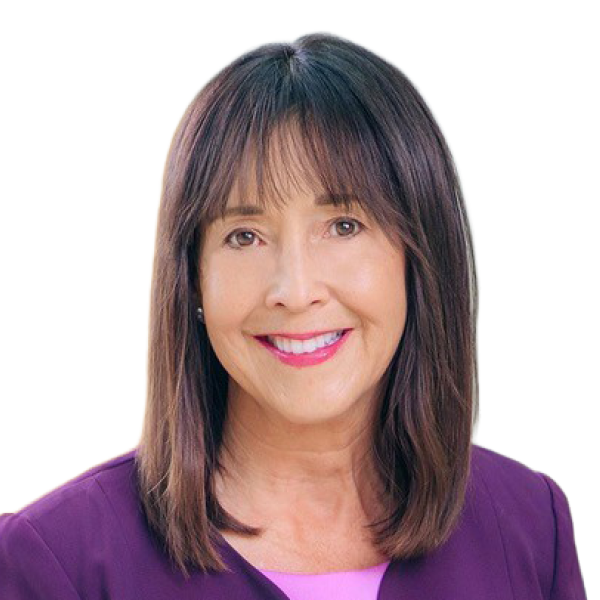
Afton L Hassett, PsyD
4:45-5:45pm
Aging with Pain:
Evidence-Based Interventions for Pain Reduction and Functional Improvement
Afton Hassett, PsyD | More information on Afton L Hassett.
Your older clients’ chronic pain can profoundly impact every aspect of their lives – from preoccupation with managing discomfort that directs their decisions... to fatigue and irritability created by disrupted sleep... to isolation caused by avoiding meaningful life activities and feeling misunderstood.
It’s easy for them – and for you – to feel hopeless that anything can change.
In this session, Dr. Afton L. Hassett - leading expert in the field of resilience and pain and author of Chronic Pain Reset: 30 Days of Activities, Practices and Skills to Help You Thrive – will give you the top tools every therapist needs when working with older adults experiencing chronic pain.
You’ll walk away with:
- Strategies for providing psychoeducation to help clients shift their relationship to pain
- A roadmap identifying the best treatment targets for rapid success
- Digital tools to help your clients establish sustainable pain self-management plans
Day 2 | Friday, May 15th, 2026
*Times are listed in central time (CT)
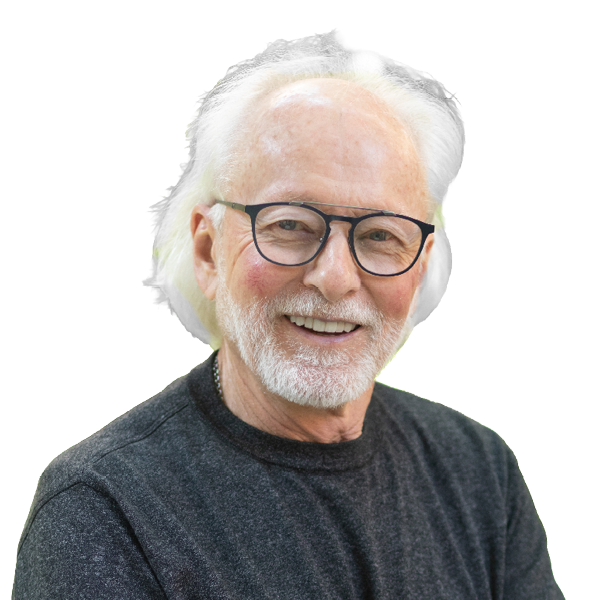
Richard Leider, MA, NCC, NCMCC
9:00-10:00am
Unlocking the Power of
Purpose: Clinical Strategies for Meaning, Motivation, and Healing
Richard Leider, MA, NCC, NCMCC | More information on Richard Leider.
In this session, Richard Leider, internationally bestselling author of Who Do You Want to Be When You Grow Old? The Path of Purposeful Aging, will teach you how disruptions in purpose during later life often show up clinically as anxiety, depression, burnout, and emotional numbness—offering a clear framework for restoring meaning, vitality, and direction as we age.
Drawing on decades of counseling-based training, research, and work across healthcare, government, and community systems, this session reframes purpose as a core driver of mental health, resilience, and psychological well-being.
You’ll walk away with:
- Purpose-centered practices clinicians can use to help clients reconnect with meaning and motivation
- Clinical strategies for supporting a “growing and giving” life intention and mindset
- Practical guidance for helping clients cultivate purpose across life stages and major transitions
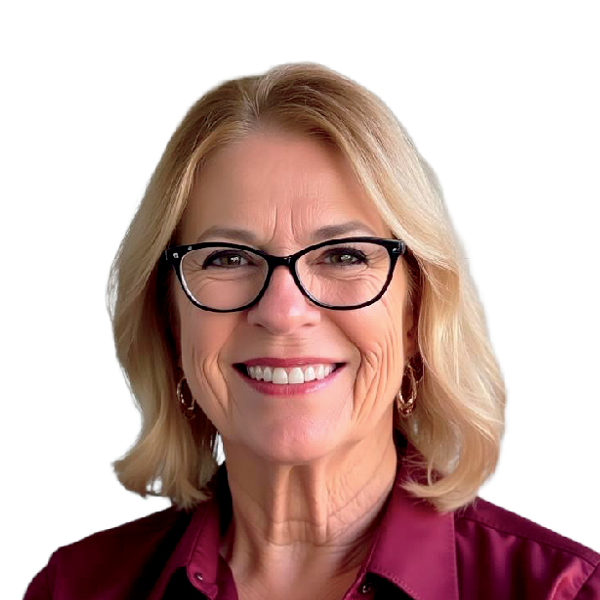
Margaret Wehrenberg, PsyD
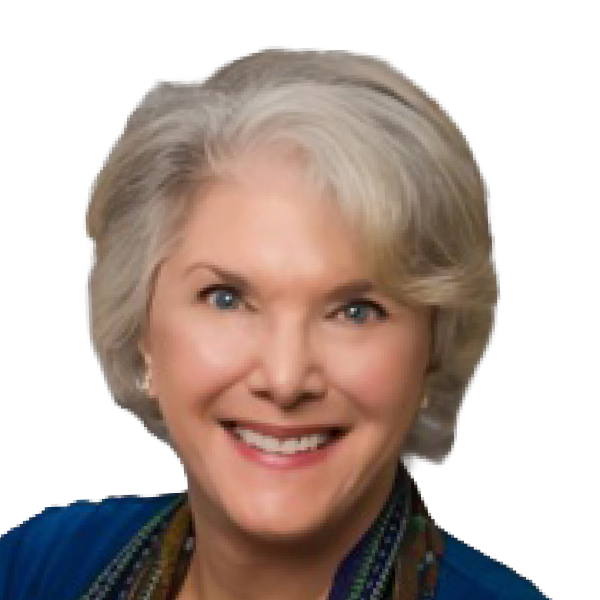
Lynn Grodzki, LCSW, MCC
10:15-11:15am
Retirement Anxiety:
Practical Clinical Tools for Working with Ambivalence and Transition
Margaret Wehrenberg, PsyD & Lynn Grodzki, LCSW, MCC |
More information on Margaret Wehrenberg. More information on Lynn Grodzki.
Retirement is not a single moment but a process—a developmental stage that can evoke both anticipation and anxiety.
Clients have spent decades building a meaningful career, developing skills and expertise, and creating a professional identity rooted in a sense of competence and connection – only to face the unsettling tasks of letting it all go.
Many therapists are challenged by not knowing how to guide clients as they contemplate this transition and may feel pressured to provide “the right answers” about when and how to retire.
In this session, Margaret Wehrenberg, PsyD and Lynn Grodzki, LCSW, MCC – renowned experts and co-authors of Letting Go of the Work You Love – offer a clear, clinically grounded, evidence-based roadmap that you can use immediately with your clients or for yourself.
You’ll learn:
- Evidence-based approaches to ease retirement-related anxiety
- Strategies for gently expanding identity beyond professional roles
- Tools to help clients define and assess their legacy
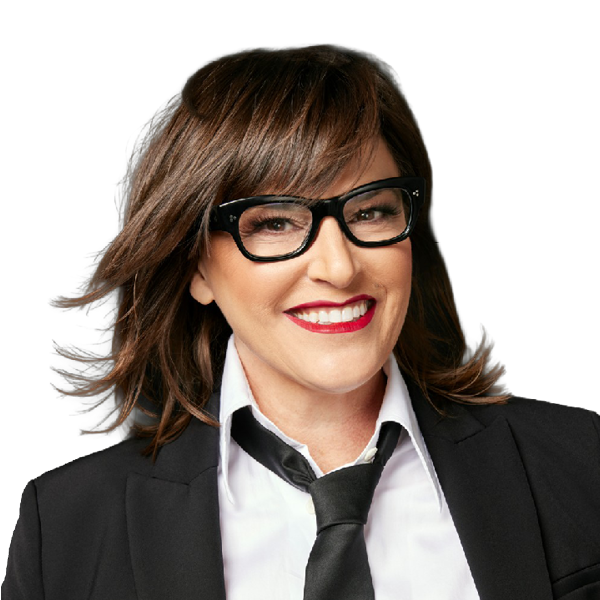
Signe Darpinian, LMFT, CEDS
11:30am-12:30pm
The Menopause Map: 7 Best
Strategies for Working with Midlife Women
Signe Darpinian, LMFT, CEDS | More information on Signe Darpinian.
Most women aren’t prepared for the changes they’ll experience with the menopause transition and often describe related mood dysregulation, anxious thoughts, weight gain, and sleep problems as things that are “wrong.” And since menopause is a natural feature of aging, therapists must walk a fine line between medicalizing and trivializing their menopausal clients’ complaints.
In this session, Signe Darpinian, LMFT, CEDS – author of A Women’s Guide to Menopause, Body Image, and Emotional Well-being at Midlife – will give you a roadmap of the top strategies you need to know to work effectively with your menopausal clients.
You’ll learn:
- Client-friendly ways to explain what’s happening in the brain and body
- Concrete interventions for when clients say they don’t feel like themselves
- Tools to address body dissatisfaction without reinforcing diet culture
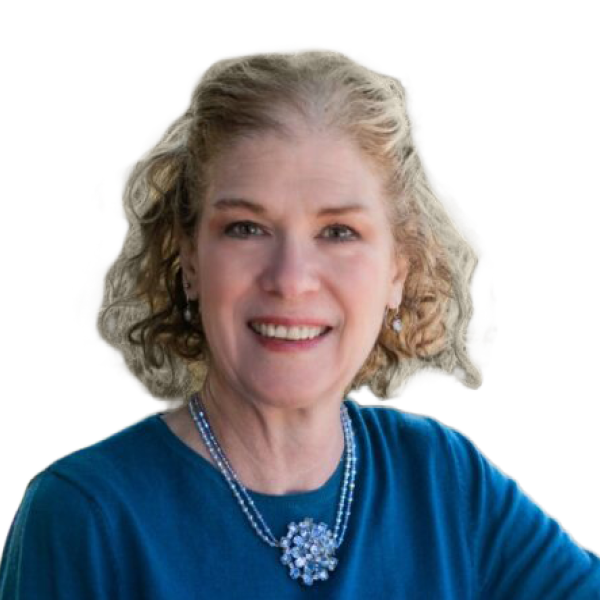
Linda Hershman, LMFT
12:45-1:45pm
Gray Divorce: Effective
Strategies to Foster Clarity and Calm for Midlife & Older Adult Clients
Linda Hershman, LMFT | More information on Linda Hershman.
Every divorce is unique, of course.
But a “gray divorce” – one that occurs after age 50 and following many years of marriage and its related entanglements – presents unique challenges for the individual, the couple, and the family.
With older couples often parting for reasons that differ from those of the younger generation – and potentially facing age-related obstacles – it's important for therapists to understand the differing challenges experienced by those over 50, versus those of their younger counterparts.
In this session, Linda Hershman – author of Gray Divorce: Everything You Need to Know About Later-Life Breakups – will give you the tools you need to be ready to help divorce-questioning, divorcing, and post-divorce clients and their adult children.
You’ll learn:
- Clarifying questions to ask clients who are struggling with the divorce decision-making process
- How to help divorcing or divorce-questioning clients connect with supports
- Strategies for families to understand and navigate the changing family dynamics of gray divorce
Lunch: 1:45 – 2:15 pm Central Time
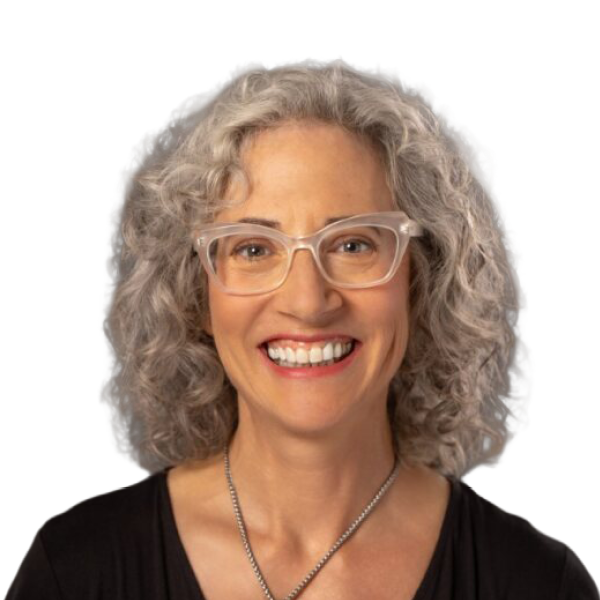
Dr. Ellen Albertson
2:15-3:15pm
Self-Compassion for Midlife Transitions: Evidence-Based Practices for
Emotion Regulation, Growth, and Flourishing
Dr. Ellen Albertson | More on Ellen Albertson
Clients in midlife are navigating challenging stressors like changing
identities, loss, caregiving, and existential transitions that can trigger heightened
self-criticism as they wonder if they're doing it all "right.”
And while traditional psychotherapy interventions are valuable, many
clients also benefit from a more compassion-focused and embodied approach.
In this session, Dr. Ellen Albertson – author of Rock Your Midlife
– will give you the tools you need to enhance your clients’ emotional
regulation, resilience, and overall well-being during midlife transitions as you:
- Reshape clients' nervous systems with clear, evidence-based self-compassion practices
- Support clients in meeting aging-related changes with greater wisdom and vitality
- Transform self-judgment and shame into motivation and fulfilment
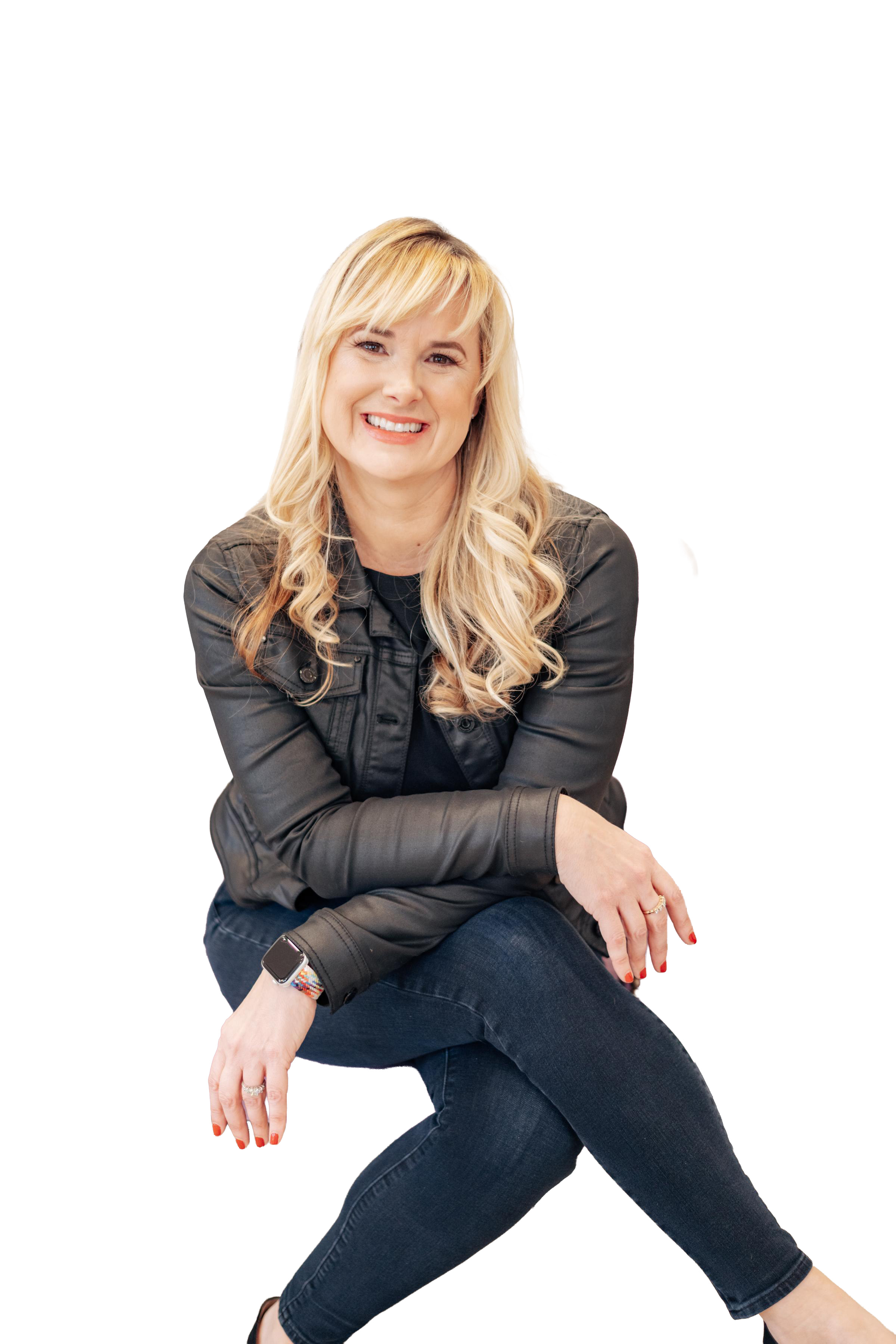
Keely Rodriguez, MEd, NCC, LPC-S
3:30-4:30pm
Empty Nest: Integrative
Tools from ACT and DBT to Support Shifting Parenting Roles
Keely Rodriguez, MEd, NCC, LPC-S | More information on Keely Rodriguez.
Many midlife clients are surprised by the emotional impact of launching children into adulthood and transitioning toward an empty nest.
And there are ways to navigate these changes well… and ways to make the adjustment—for both parents and children—much harder.
In this session, Keely Rodriguez—specialist in women’s midlife issues—will share tools for working with identity loss, heightened parenting anxiety, and emotional fatigue embedded in this developmental transition.
You’ll walk away with:
- Clarity on how to distinguish normative meaning struggles from clinical distress
- Practical ways to explore identity transitions, grief, and mortality with sensitivity
- CBT, dignity therapy, and acceptance-based tools to support meaning-making and reduce existential distress
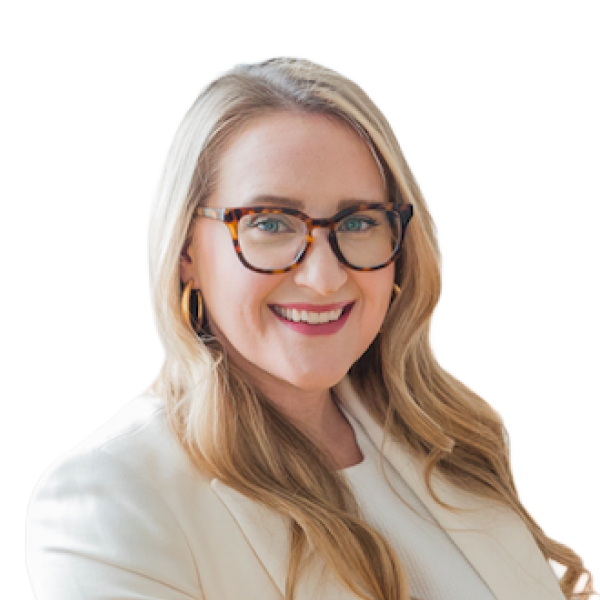
Julie Erickson, PhD
4:45-5:45pm
“What Now?”
Clinical Tools to Help Older Adults Reconstruct Meaning in the Second Half of
Life
Julie Erickson, PhD | More information Julie Erickson.
Later life has a way of stripping away old roles and forcing the question many clients are afraid to ask out loud: What now?
In this practical, clinician-focused session, Dr. Julie Erickson—published aging scholar and author of The Aging Well Workbook for Anxiety and Depression—shares evidence-based tools for helping older adults work through identity shifts, loss, and existential anxiety without collapsing into hopelessness or avoidance.
You’ll walk away with:
- Clarity on how to distinguish normative meaning struggles from clinical distress
- Practical ways to explore identity transitions, grief, and mortality with sensitivity
- CBT, dignity therapy, and acceptance-based tools to support meaning-making and reduce existential distress
Midlife & Older Adult Mental
Health Summit:
Innovative Strategies for the
Most Pressing Issues in Modern Aging
LIVE Online May 14th and 15th, 2026
JOIN US LIVE ONLINE
ALL-ACCESS PASS
Only
$349.99!
(Total Value $1,889.80
)
- 30-day on-demand replay access
- Real-time communication with speakers and peers
- Earn up to 13 live CE hours and up to 16 self-study CE hours
If you purchase Live CE, please note you would need
to watch the presentations that are being presented live in order to receive live credit.
This requirement may vary by credit type. Please see detailed credit information for
specific requirements for each credit type.
CAN'T ATTEND LIVE?
Complete Recording Package
Only
$349.99!
(Total Value $1,889.80
)
- Unlimited access to every session
- Self-paced learning anywhere, any time
- Earn up to 28 self-study CE hours
Please note that CE hours and approvals on
self-study recording may differ from live CE approvals. Since the self-study recording
include the same content as the live event, you cannot earn credit on both.
CE details available 4–6 weeks after the event
EXCLUSIVE BONUS
BUNDLE
A $909.94 value —
yours FREE!
Bonus #1 ― Certified Aging and Mental Health Specialist (ECAMHS)
$199.99 value — included FREE
- Eligibility unlocked after completing the summit (live or on demand)
- Recognition for advanced training in aging and mental health
Bonus #2 ― Certified Dementia Care Specialist (ECDCS)
$249.99 value — included FREE
Led by Sherrie All, PhD | More information on Sherrie All
- Immediate access to a 6.25-hour on-demand seminar
- Start learning right away and work toward certification immediately
- Practical, evidence-informed training designed for clinical use

Sherrie All, PhD
Dementia training is vital for anyone who works with older adults!
In this recording, Dr. Sherrie All provides you with the assessment tools and interventions you need to identify and differentiate between dementias, prevent and reduce difficult behaviors, and improve your ability to communicate with cognitively impaired clients.
More than just an overview of dementia and Alzheimer’s, this program will offer practical solutions to some of the most challenging real-life situations you face and bring you up to speed on the latest medications, preventative treatments, and advances in early detection that could impact your work.
Best of all, upon completion of this training, you’ll be eligible to become an Evergreen Certified Dementia Care Specialist (ECDCS) through Evergreen Certifications. Certification lets colleagues, employers, and clients know that you’ve invested the extra time and effort necessary to understand the complexities of dementia care. Professional standards apply. Visit evgcert.com/ecdcs for details.
Bonus #3 ― Psychotherapy with
Older Adults: Effective Assessment and Treatment Strategies to Serve an Aging
Population
$249.99 value— FREE
$249.99 value— FREE
Led by Dr. Katherine King | More information on Katherine King
Dr. katherine King
Loss. Physical ailments. Regrets about the past. Anxiety about the future.
Often overlooked in clinical training, the needs of aging clients are unique...
...and while most mental health professionals don’t feel equipped to treat them, the truth is that you can easily supplement your existing skillset and expand your practice so that you can provide needed care for anxiety, depression, grief, and more in this rapidly growing yet profoundly underserved population.
Watch Dr. Katherine King, geropsychology expert, to discover the latest evidence-based assessment approaches and intervention strategies to transform your practice with older adults. You’ll get the roadmap you need and the necessary skills to:
- Differentiate depression from delirium and dementia – and address other common diagnostic challenges
- Employ Life Review and Reminiscence Therapy, CBT, DBT, ACT, and IPT to support aging clients through life transitions, illness, and end-of-life issues
- Identify legal aspects of serving older adults, such as recognizing elder abuse, financial exploitation, and self-neglect
Bonus #4 ― Central Needs of
Caregivers
$69.99 value— FREE
$69.99 value— FREE
Led by Edward G. Shaw, MD, MA | More information on Edward G. Shaw
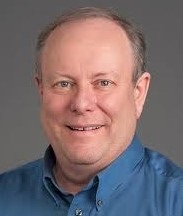
Edward G. Shaw, MD, MA
Dementia caregivers re-center their lives around their loved ones, giving unquantifiable time and attention as they carry a heavy emotional load.
Of worry and of grief, of course – but also, at times, of frustration, irritability, guilt, and resentment. All of it alongside heartbreak.
And as a therapist, if you don’t understand the nuance of this complicated role, you can’t be helpful.
In this session, Dr. Edward Shaw – dually trained physician and geriatric mental health counselor and author of The Dementia Care Partner’s Workbook and A Leader’s Manual for Dementia Care-Partner Support Groups – will give you a framework to assess and support the ever-changing needs of dementia caregivers. You’ll learn:
- How to develop a useful care plan for the caregiver client that decreases stress and burden
- Useful questions to help caregivers open up and shift focus to their own needs
- Tools to help caregivers adapt to changing relationships and deal with anticipatory grief
Bonus #5 ― Understanding and
Preventing Suicide Among Older Adults
$69.99 value— FREE
$69.99 value— FREE
Led by Dr. Daniel L Segal | More information on Daniel L Segal

Dr. Daniel L Segal
Suicide remains a significant public health concern among older adults, who consistently experience elevated rates of suicide compared to other age groups. While many clinicians feel confident addressing depression and anxiety in later life, suicide risk in older adults presents with some nuanced facets and can be difficult to detect.
In this session, you’ll gain a clear, evidence-based understanding of suicide in aging populations and learn practical assessment and intervention strategies you can apply immediately in your clinical work, including how to:
- Recognize key risk and resilience factors associated with suicide in older adulthood
- Conduct developmentally informed suicide risk and lethality assessments and incorporate safety planning strategies
Bonus #6 ― Death Anxiety and
Psychological Wellbeing: Aging in the Shadow of Mortality
$69.99 value— FREE
$69.99 value— FREE
Led by Dr. Rachel Menzies | More information about Rachel Menzies!

Dr. Rachel Menzies
Death is a taboo topic, and death anxiety along with it.
Yet death anxiety is increasingly recognized as a transdiagnostic factor that’s related to a wide range of mental health problems –
And leaving it out of your clients’ treatment may limit the relief they can achieve.
In this session, Dr. Rachel Menzies – death anxiety expert and author of Free Yourself from Death Anxiety: A CBT-Self-Help Guide for a Fear of Death and Dying – will show you how to integrate practical strategies for addressing this largely unrecognized treatment target into your care framework. You’ll learn:
- How and why death anxiety might change in older adulthood
- Assessment strategies to discover hidden death anxiety
- Evidence-based CBT interventions to reduce death anxiety so clients can focus on living
Midlife & Older Adult Mental
Health Summit:
Innovative Strategies for the
Most Pressing Issues in Modern Aging
LIVE Online May 14th and 15th, 2026
JOIN US LIVE ONLINE
ALL-ACCESS PASS
Only
$349.99!
(Total Value $1,889.80
)
- 30-day on-demand replay access
- Real-time communication with speakers and peers
- Earn up to 13 live CE hours and up to 16 self-study CE hours
If you purchase Live CE, please note you would need
to watch the presentations that are being presented live in order to receive live credit.
This requirement may vary by credit type. Please see detailed credit information for
specific requirements for each credit type.
CAN'T ATTEND LIVE?
Complete Recording Package
Only
$349.99!
(Total Value $1,889.80
)
- Unlimited access to every session
- Self-paced learning anywhere, any time
- Earn up to 28 self-study CE hours
Please note that CE hours and approvals on
self-study recording may differ from live CE approvals. Since the self-study recording
include the same content as the live event, you cannot earn credit on both.
CE details available 4–6 weeks after the event
Frequently Asked Questions
Not at all. The insights in this training apply across the lifespan. You'll learn to support clients in midlife and beyond—helping them address changing identities, evolving relationships, health concerns, and new definitions of purpose. The content also applies to clinicians working with adult children, caregivers, and families impacted by these life transitions.
Yes. The insights you'll gain apply to depression, anxiety, identity shifts, trauma, and relational challenges that often surface during major life transitions. These tools will enhance your work with any client navigating loss, reinvention, or questions of meaning.
Most aging-focused trainings stop at the basics—developmental theory, loss, and decline. This summit goes further. You'll hear from top experts in adult development, geropsychology, grief, and meaning-making who bring fresh, integrative tools you can apply right away. You'll see how midlife and aging can be powerful times of transformation and how to help your clients move from fear and limitation to meaning and growth.
Even if you've studied aging, grief, or adult development before, this event will give you a new, integrative perspective. You'll learn how neuroscience, mindfulness, and meaning-centered therapies converge in midlife and aging. You'll see tools modeled by experts in ways you can replicate directly with clients, bridging theory with real-world application.
You can earn two certifications with this summit! The Evergreen Certified Aging and Mental Health Specialist (ECAMHS) can be earned via the summit sessions and bonus content, and your registration includes free access to training that meets requirements for the Evergreen Certified Dementia Care Specialist (ECDCS) credential. This certification expands your expertise in dementia care and cognitive health—helping you better serve clients and families facing memory-related challenges while boosting your professional credibility.
Visit *Professional standards apply. Visit evgcert.com/ecamhs and evgcert.com/ecdcs for details.Yes! Just register for our fully on-demand version of this conference, which will be available 4-6 weeks after the live event. You'll get unlimited access to the training and will be able to earn self-study CE hours! Self-study CE hours and approvals may vary from live event. Click here to learn more and register to earn CE on your own schedule.
0
Days
:
0
Hours
:
0
Minutes
:
0
Seconds
100% Satisfaction Guarantee
Register for this intensive training course without risk. If you're not completely
satisfied, give us a call at 800-844-8260.We're that confident you'll find this learning experience to be all that's promised and more than you expected.