Cognitive Behavioral Therapy for Insomnia (CBT-I) Certificate Course: Evidence-based Insomnia Interventions for Trauma, Anxiety, Depression, Chronic Pain, & more

If you're not asking your clients about their sleep, you may be missing a critical piece of the clinical picture.
Up to 80% of your clients may meet the criteria for clinical insomnia — and missing this diagnosis can slow or even stall therapeutic progress with depression, trauma, anxiety, chronic pain, and more.
The good news? There's a safe, evidence-based approach you can start using right away: Cognitive Behavioral Therapy for Insomnia (CBT-I).
Join leading sleep experts Colleen E. Carney, PhD, and Meg Danforth, PhD, CBSM for this comprehensive CBT-I Certificate Course, where you'll follow a structured, step-by-step training based on a proven clinical framework — covering everything from assessment and case formulation to advanced interventions for complex and comorbid cases.
Both Dr. Carney and Dr. Danforth are clinicians, researchers, and educators with over 15 years of experience each in behavioral sleep medicine and training providers across diverse clinical settings.
Their clear, session-by-session approach will show you how to confidently apply core CBT-I interventions like stimulus control, sleep restriction, cognitive therapy, and counterarousal strategies — while also adapting treatment for real-world challenges like depression, PTSD, chronic pain, and sleep medication dependence.
This is your opportunity to be part of the solution to sleep problems and join the ranks of the thousands of clinicians who know how vital good sleep is to their clients' overall mental health.
Register Now!
Cognitive Behavioral Therapy for Insomnia (CBT-I) Certificate Course
Click here for Credit details | Click here for course objectives and outline
And that's just the beginning.
When you enroll, you'll also receive valuable bonus trainings designed to expand your clinical reach—including specialized strategies for addressing sleep disturbances in women and improving sleep and mental health outcomes in children and adolescents.
By the end of this training, you'll be equipped with practical tools, treatment protocols, and evidence-based techniques that you can immediately integrate into your next session—helping clients achieve lasting improvements in sleep and overall mental health.
- Help clients who have taken sleep medication for years
- Be as effective as pharmacotherapy in the short term, and more effective in the long term
- Effectively treat the root causes of insomnia, not just the symptoms as medication does

Cognitive Behavioral Therapy for Insomnia (CBT-I) Certificate Course
Click here for Credit details | Click here for course objectives and outline
Assessment and the Basics of CBT-I
- Goals of assessment
- Clinical tools for assessing insomnia
- Screen for other sleep disorders
- When to make a referral to a sleep clinic
- Contraindications for CBT-I
- Normal sleep architecture
- Two-process model of sleep: Circadian rhythm and sleep drive
- The arousal system
- What causes chronic insomnia?
- Key perpetuating factors for chronic insomnia
- Behaviors that interfere with “buildup” of sleep drive
- Behaviors that interfere with the optimal timing of sleep
- Conditioned arousal and physiological/cognitive hyperarousal
- Perpetuating factors and CBT-I
- Stimulus Control (SC): Addressing conditioned arousal
- Rules for reassociating the bed with sleep
- Sleep Restriction Therapy (SRT): Restoring the sleep drive
- How to present rationale
- Calculate time-in-bed prescription
- Placing the time-in-bed window
- Identify and overcome potential obstacles to adherence
- Sleep extension
- Combining SC and SRT
- The myth of sleep hygiene
- Counterarousal strategies: Quieting an active mind
- Establishing a buffer zone
- Processing strategies (including constructive worry and rumination strategies)
- Mindfulness and relaxation therapies
- Cognitive therapy: Identify and change distorted thoughts about sleep
- Thought Records
- Behavioral Experiments
- Socratic Questioning
- Models of Delivery
- Four-session individual therapy format
- Seven-session group therapy format
- Single session CBT-I
- CBT-I and hypnotic medication
- Practice guidelines: CBT-I as first-line treatment for chronic insomnia
- Combining CBT-I with sleep medication
- Positive and negative effects of sleep medications
- Use of ineffective sleep medications
- Promote noncontingent use of sleep medication
- Strategies to support hypnotic discontinuation
Delivering CBT-I in the Context of Comorbidities
- CBT-I and MDD
- Troubleshooting adherence in depressed patients
- Anhedonia
- Sleep or bed as avoidance
- Fatigue and fatigue management strategies
- Rumination in depression
- Case examples
- Sleep and antidepressants
- Troubleshooting adherence in depressed patients
- Sleep effort: Core target of CBT-I
- Covert manifestations of sleep effort
- Cognitive restructuring of sleep anxiety
- Paradoxical Intention
- Troubleshooting adherence with anxious clients
- When SRT/SC increase anxiety
- Counter control and sleep compression
- High sleep anxiety vs high arousal
- Panic Disorder and nocturnal panic
- OCD and CBT-I
- Sleep and PTSD
- CBT-I trials in PTSD
- Behavioral targets in clients with insomnia vs PTSD
- Common treatment challenges in clients with PTSD
- Nightmares and nightmare treatments
- Comorbid TBI
- Sleep and TBI
- Efficacy of CBT-I in mild TBI (mTBI)
- Modify insomnia treatment for mTBI
- Efficacy of CBT-I for those with chronic pain
- Chronic pain and stimulus control
- Common treatment challenges in clients with chronic pain
- Pain medications and other considerations
- Combined guided hypnotic taper approach
- Factors sustaining hypnotic dependence
- Unhelpful beliefs
- Learning
- Strategies to support client during hypnotic taper
- Psychoeducation about psychological dependence and rebound insomnia
- Cognitive therapy to target unhelpful beliefs
- Sample taper schedules
Co-Occurring Sleep Disorders and Advanced Case Formulation
- Obstructive sleep apnea
- Morbidity and mortality of OSA
- Relationship of nocturia and OSA
- Sleep apnea treatments
- Obstacles to treatment adherence
- Physical comfort
- Mechanical problems
- Social and other factors
- Psychological factors
- Improve adherence
- Work with stages of change
- Respond to common concerns
- CPAP desensitization for claustrophobia
- Treating insomnia in patients with comorbid OSA
- Morbidity and mortality of OSA
- Using light to leverage circadian timekeeper
- ”Exogenous” circadian challenges
- Cope with shift work
- Adjust to jet lag
- ”Endogenous” circadian disorders: Advanced and delayed sleep phase
- Phototherapy for delayed sleep phase
- Nightmares and nightmare disorder
- Differential diagnosis
- Assessment
- Self-monitoring via nightmare log
- Combine nightmare log and sleep diary
- Imagery Rescripting and Rehearsal
- Psychoeducation and rationale
- Nightmares and trauma
- Shaping imagery skills
- IRT steps
- Prazosin for nightmares
- Case conceptualization: Asking the right questions
- Case Formulation Form
- Factors weakening sleep drive
- Factors weakening the clock
- Evidence of hyperarousal
- Unhelpful sleep behaviors
- Comorbidities
- Case Examples
Cognitive Behavioral Therapy for Insomnia (CBT-I) Certificate Course
Click here for Credit details | Click here for course objectives and outline
(A $259.98 value)!
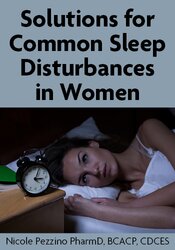
Nicole Pezzino, PharmD, BCACP, CDCES
This insightful two-hour training is dedicated to exploring common sleep disturbances that affect women, while looking at underlying causes and their impact on overall health.
You'll learn to:Through case studies and evidence-based discussions, you'll learn practical insights and tools essential for optimizing patient care in women's sleep health.
You'll also gain a deeper understanding of pharmacological approaches used in managing sleep disturbances specific to women, including considerations for hormonal influences, medication interactions, and patient-centered treatment strategies.
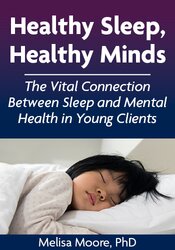
Melisa Moore, PhD
Sleep is a cornerstone of mental health that is underrecognized and undertreated. As child health providers, understanding the intersection of sleep and psychological well-being is crucial for effective assessment and intervention.
This evidence-based workshop is designed to deepen your knowledge of sleep science and its impact on mental health. We'll explore:- The neurobiology of sleep and its role in emotional regulation and cognitive functioning
- How sleep disturbances present in anxiety, depression, ADHD, and trauma-related disorders
- Screening tools for identifying sleep-related concerns
- Clinical strategies for improving sleep hygiene and overall mental health
- The "good, better, best" approach to sleep habits (i.e., where the ideal meets the real)
- The influence of technology, social stressors, and developmental changes on sleep patterns

Click here for information about Colleen Carney

Click here for information about Meg Danforth

Dr. Pezzino consistently challenges the status quo of pharmacy. She is considered a leader in the state and nation regarding the implementation of her diabetes services and mentor's other pharmacies in being successful in each. Her clinical focus includes employee wellness and disease state management-specifically with diabetes self-management and diabetes prevention, wellness and preventative care services, immunizations and other medication and disease state therapy management.
Click here for information about Nicole Pezzino

Click here for information about Melisa Moore
Cognitive Behavioral Therapy for Insomnia (CBT-I) Certificate Course
Click here for Credit details | Click here for course objectives and outline
We’re that confident you'll find this learning experience to be all that's promised and more than you expected.