PESI
Information
Healing Protective and Wounded Parts Using Internal Family Systems Therapy
Copyright :
Description
Internal Family Systems (IFS) Therapy is an attachment-based, trauma-focused model of psychotherapy. Just as when children attach outwards to their parents to find a sense of safety, in IFS therapy, parts attach inwards to the Self, and find a safe haven and self-regulation. While many attachment-focused therapies tend to focus on the corrective experience that occurs between the therapist and client, in IFS therapy this becomes somewhat secondary to the facilitation of a healing connection between the client’s Self, and their protective and wounded parts that hold the residues of traumatic experiences. Concurrently, the therapist notices their own parts that become activated in the therapeutic dyad, with the aim of remaining in their own regulated Self-led state, in order to effectively facilitate the client’s process. The client’s Self provides the corrective experience, and in particular, the relationship between the Self and the vulnerable parts leads to inner, and ultimately, outer transformation.
This practical session provides an introduction to Internal Family Systems therapy for clinicians and will cover:
- Providing participants with an introduction to some of their own protective parts through an experiential IFS exercise
- the organising principles of IFS therapy
- An introduction to the IFS concept of Self
- An overview of the main categories of protective parts in IFS
- How to connect to protective parts using the 6Fs process of IFS
- A fictionalised case study to illustrate the model
- options for therapists seeking IFS training, consultation, and supervision in Australia/NZ.
This product is not endorsed by, sponsored by, or affiliated with the IFS Institute and does not qualify for IFS Institute credits or certification.
Speakers
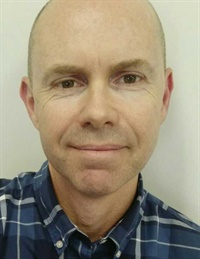
Sean Cuthbert, Clinical Psychologist, M. Psych (Clinical) MAPS, IFS Institute (IFS-I) Certified IFS Therapist, IFS-I Approved Clinical Consultant
Speaker Disclosures:
Financial: Sean Cuthbert maintains a private practice. He receives a speaking honorarium from PESI, Inc. He has no relevant financial relationships with ineligible organizations.
Non-financial: Sean Cuthbert is a member of the Australian Psychological Society, the APS College of Clinical Psychologists, the International Society for the Study of Trauma and Dissociation.