

Workshop Schedule
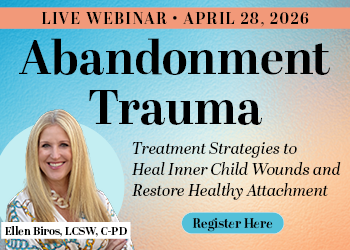
April 28, 2026 from 8:00am-4:00pm Central Time
Based on her decades of experience with abandonment trauma, Ellen will share tools, real examples, and guided practices that will immediately enhance your work.
Abandonment, Attachment, and Early Experiences
- Early childhood’s role in shaping the inner child
- Impact of attachment patterns on inner child development
- Recognize vulnerability, resilience, and a healthy inner child
- Formation of core beliefs from early experiences
- Link between self-identity and inner child health
Trauma and the Spectrum of Abandonment
- Differentiate between acute, chronic, and complex trauma
- Types of trauma and the impact on attachment
- Understand abandonment as a core psychological wound
- How abandonment influences personality development
- Impact of attachment on forming and maintaining healthy relationships
- Barriers to healthy relationships in adulthood
Recognize Signs and Symptoms
- Behavioral manifestations
- Cognitive and emotional symptoms
- Attachment-related behaviors
- Impact on self-esteem and identity
- Cultural considerations
The Abandonment Trauma Treatment Toolbox: CBT and DBT Strategies and Exercises to Repair Inner Child Wounds
- Principles and techniques for trauma and abandonment issues
- DBT skills training for emotional regulation and interpersonal effectiveness
- Tools to set healthy boundaries and reduce exposure to toxic people
- Cognitive exercises to challenge negative thought patterns about self-worth
- Cognitive restructuring exercises to rebuild trust and self-confidence
- Behavioral interventions for self-compassion and fear of rejection
- Self-soothing techniques for abandonment triggers
- Graded exposure and desensitization for abandonment-related anxieties
- Research, risks and treatment limitations
Therapeutic Relationship and Therapist Self-Care
- Build a therapeutic alliance
- Strategies for managing countertransference and vicarious trauma
- Self-care practices for therapists
Objectives
- Identify the concept of the inner child and its relationship to treatment.
- Analyze the relationship between core abandonment beliefs and early maladaptive abandonment/instability schemas in adult individuals.
- Determine the role of the expectation of abandonment as a contributing factor to the development of anxious and avoidant attachment styles in clients.
- Use cognitive strategies to reframe negative thought patterns, beliefs, and behaviors related to the fear of abandonment and self-worth.
- Choose DBT strategies to help clients address difficulties in handling interpersonal relationships.
- Utilize graded exposure and desensitization to reduce abandonment-related anxieties.