

You're not imagining it...
Some of your ADHD clients are working hard in therapy — and still not changing.
They're engaged.
They're articulate.
They have insight.
They even want the change.
And yet by the time they leave each session and re-enter real life, the plan collapses.
They forget.
They shut down.
They overload.
They know exactly what to do — and still can't do it when it counts.
So you go back over the same ground again. And again. And again.
Not because you're missing effort.
Not because your client is resistant.
Not because the therapy is bad.
It's because of the nervous system.
When your client’s nervous system is overloaded, dysregulated, emotionally flooded, or running on depleted executive function...
...the smartest intervention in the world will fail.
And it’s the reason why so much of your therapy feels productive in the room — but disappears the moment life gets hard.
- ✓ Up to 30.5 CE hours
- ✓ Downloadable slides and handouts
- ✓ $1,639.84 Value
- ✓ Just $299.99!
- ✓ Application for ADHD-CCSP certification (*Professional and clinical experience standards apply)
- ✓ 100% satisfaction guarantee
- Register Live
The next era of ADHD treatment is here...
And it belongs to clinicians who know what to do when their client's capacity is stretched thin — when regulation, not motivation, is the limiting factor.
This year's ADHD Conference is built for clinicians just like you who are tired of watching motivated, high-insight clients stay stuck.
The ones who recognize that in order for therapy to stick, you have to take your client beyond simply understanding themselves...
...to a place where they can follow through, adapt under stress, and actually carry the work into real life.
And it all starts here: learning a deeper, science-backed, neuroaffirming, regulation-first framework.
You don't need just another ADHD training...
you need to learn from the people who are defining how ADHD is treated right now.
At the ADHD Conference, you're not just hearing from practitioners — you're training with the clinicians and researchers other clinicians learn from.
| Ari Tuckman, PhD | Erick Messias, MD | Douglene Jackson, PhD, OTR/L |
| Sasha Hamdani, MD | Amelia Kelley, PhD | ...and more. |
| Russ Ramsay, PhD, ABPP | Kate Truitt, PhD |
These aren't just speakers. They are field-shapers who have...
- Written the books your colleagues recommend
- Built the trainings clinicians rely on
- Published the research that informs best practice
- Helped shape how ADHD is diagnosed and treated across disciplines
This is decades of combined experience at the intersection of neuroscience, diagnosis, and real-world clinical care — distilled into practical training you can actually use.
And here's the real advantage...
You're not just getting strategies. You're getting how they think. How they:
- Make decisions when a client gets stuck
- Adapt interventions when executive function collapses
- Translate complex ADHD science into repeatable clinical moves that work outside the therapy room
| Before | After |
|---|---|
|
|
|
|
|
|
|
|
|
|
|
|
|
|
|
|
|
|
|
|
Your Conference Schedule
Fifteen leaders in the field.
One integrated training experience.
This conference brings together the developers of the W-CAT, SENSE, NeuroTriad, and Emotional Pool models, along with other dynamic experts in a single, collaborative setting — offering a rare opportunity to learn directly from the top leaders in the field.
Through live Q&A, peer discussion, and guided practice, you'll build skills you can apply right away in your sessions.
See what's in store for you...DAY 1 | Wednesday, December 9, 2026 • All Times Shown in US Central Time

Adults with ADHD often carry chronic shame into relationships — this practical seminar shows you how to help them move toward connection and security.
- Recognize how shame and perceived danger show up in ADHD presentations
- Use nervous-system informed strategies to support emotional regulation
- Help clients move from chronic dysregulation toward greater safety and connection
- Interventions to support secure attachment and healthier relational patterns
In your caseload: The client who apologizes constantly, assumes they're done something wrong, or feels "too much" in relationships. You'll leave this session with a tool you can use before the next session ends

ADHD treatment often leans hard on insight, structure, calendars, reminders, and beautifully reasonable plans...
...those strategies matter — and they can still fall apart the moment a client's internal state changes.
- NeuroTriad Model framework to understand state-dependent executive functioning and follow-through
- Identification of state shifts driving procrastination, avoidance, and inconsistency
- Interoceptive tracking tools to detect early nervous system changes and adjust in-session pacing
- Match micro-actions to clients' current state for improved task initiation
- Between-session practices to strengthen regulation, planning, and sustainable behavior change
In your caseload: The client who says "I know what I'm supposed to do, I just can't make myself do it." You'll leave this session with a tool you can use before the next session ends.
LUNCH | 11:40 AM - 12:10 PM CENTRAL

Rejection sensitivity in ADHD runs deeper than "overreaction." Often misunderstood or mislabeled, it reflects a complex interaction of neurobiology, attachment patterns, and lived experiences of invalidation — not simply emotional reactivity.
This integrative session moves beyond surface-level explanations to help clinicians recognize and respond to the nervous system and relational drivers underlying RSD.
- ADHD-related rejection sensitivity from attachment trauma and personality-based presentations with greater clinical confidence
- Nervous system dynamics driving emotional flooding, hypervigilance, and rapid state shifts
- Regulation-first strategies to reduce reactivity and expand clients' capacity for emotional processing
- Unmasking, boundaries, and relational repair to rebuild authentic connection and reduce shame
In your caseload: The client who canceled again after one off-hand comment in a group chat — now in full shutdown, convinced everyone secretly finds her exhausting. This session gives you the intervention for that exact moment.

When ADHD clients lose access to regulation, it's often not the task that's too hard — it's the sensory load exceeding what the nervous system can organize in that moment.
- Detect the tipping point where sensory load silently collapses executive functioning — even when skills are intact
- Track how environments — not motivation — drive fluctuations in capacity across the day
- Intervene at the moment regulation fractures, not after behavior surfaces
- Translate awareness into usable capacity by aligning demands with the nervous system in real time
In your caseload: The teenager who masks all day at school and comes home and screams at her mother for an hour isn't defiant. This session gives you the assessment and the intervention to explain exactly what's happening — and what to do about it.

In this session, author of My Whirling, Twirling Motor and My Wandering, Dreaming Mind — takes you inside what it actually feels like to be the child who can't stop, and the child who goes quiet and disappears.
- The shame, social fallout, and identity damage that accumulates from chronic correction before the child is old enough to name what's happening
- The invisible inattentive presentation — the quiet girls who internalize 'lazy,' 'careless,' 'not smart enough' while going entirely undetected
- Children's literature that shifts caregiver conversations from behavioral compliance to the child's internal experience
In your caseload: The parent who apologizes for "over-reacting" in family sessions — and the child who hears dozens of corrections before breakfast. Session #5 gives you language that changes both of those conversations.
DAY 2 | Thursday, December 10, 2026 • All Times Shown in US Central Time

Session details coming soon.

ADHD is more visible than ever — but visibility doesn't equal accuracy.
As it moved into the mainstream, the most visible traits — distraction, procrastination, overwhelm — became the story. What got lost was the driver underneath: nervous system reactivity shaped by brain structure, neurotransmitter signaling, and hormonal shifts. Without that core, ADHD became easy to oversimplify, easy to self-diagnose, and easy to confuse with everything else.
- What current diagnostic frameworks miss or underrepresent — especially around emotional dysregulation
- Accurate self-recognition vs. misinformed self-diagnosis fueled by social media trends
- How ADHD is simplified, distorted, or amplified online — and the clinical impact of that messaging
In your caseload: Every differential conversation you've navigated with a client who came in already diagnosed by a TikTok video — and everyone you've had with a client who should have been diagnosed years ago. Session #7 is for cases just like those.
LUNCH | 11:40 AM - 12:10 PM CENTRAL

Kids and teens with ADHD aren't broken — their brains are wired differently. The real challenge is that ADHD rarely travels alone. Anxiety, learning differences, ODD, sensory processing, and mood dysregulation overlap in ways that blur the clinical picture and send interventions in the wrong direction.
This session brings clarity to the most common comorbid patterns so your strategies align with the actual brain in front of you.
- Rregulate without sitting still — pair movement with breathing in ways the ADHD nervous system actually responds to
- Coping tools that match the child, not the behavior, so they fit sensory needs and don't get abandoned
- Play-based, sensory-friendly approaches that feel engaging rather than corrective
- A visual toolkit for home they'll actually reach for when stress is high
In your caseload: The child who throws away every coping tool you've introduced the moment real stress arrives isn't resistant. The strategy just doesn't fit the nervous system in front of you. This session fixes that.

"I use all the recommended skills with my adult ADHD clients but they still don't get any better at using them! They're still struggling and so am I...help!"
Sound familiar? ADHD is not a knowledge problem — it's a performance problem. The real challenge isn't teaching clients what to do; it's helping them actually do it. And that gap leaves even the most dedicated clinicians feeling helpless.
This session translates neuroscience into practice and cuts to the heart of that gap.
- A clear understanding of the braided core of disruptive mindsets, avoidant behaviors, and emotional reactions
- Implementation-focused tactics that help clients finally put the skills they already know into practice
- CBT strategies to reduce procrastination, improve time management, and support lasting well-being
In your caseload: The adult client whoknows exactly what to do but still can't follow through when it matters most isn't lazy or unmotivated. The strategies just don't align with how their brain initiates, prioritizes, and sustains effort under pressure. This session fixes that

ADHD doesn't live in one person. It moves through families. Dr. Rosier's Emotional Pool framework makes the invisible escalation patterns visible — and gives families a shared language for repair.
- Map how emotional contagion, executive function strain, and nervous system activation interact to drive the family system spirals you're trying to interrupt
- Individualized "pool plans" for emotional recovery — and guide repair conversations that build accountability without shame
- Reduce over functioning, emotional rescuing, and co-regulation fusion — the patterns that keep the cycle going even when everyone understands what's happening
In your caseload: The parent over functioning while the child keeps escalating. The partner cycling between withdrawal and explosion. Session #10 maps the pattern and gives you a tool families can actually use
DAY 3 | Friday, December 11, 2026 • All Times Shown in US Central Time

ADHD at work isn't just a productivity problem — it's a nervous system under pressure. Clients aren't just struggling with tasks. They're caught in shame spirals, hypervigilant about what others think, and exhausted from masking all day. The clinical question isn't simply how do we fix their performance? It's what does this nervous system need to function?
- Workplace triggers: demand overload, time pressure, and social evaluation activate threat responses
- Shame and hypervigilance: past failures spill forward, driving overcompensation and eventual burnout
- Nervous system first: regulation strategies before productivity strategies — the body has to feel safe before the prefrontal cortex can lead
- Disclosure decisions: what they mean emotionally, what's reasonable to ask for, and how to protect workplace relationships
- Identity integration: build self-esteem that holds ADHD — not in spite of it, but with full understanding of it
In your caseload: An adult client excels professionally on paper but feels overwhelmed by deadlines, overthinks workplace interactions, and ends each day exhausted from masking ADHD symptoms. Despite strong abilities, shame from past struggles and fear of judgment are fueling burnout, avoidance, and diminishing confidence at work.
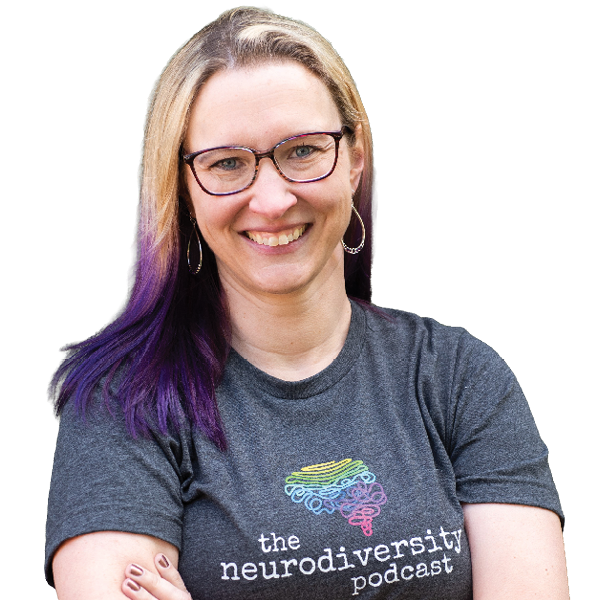
ADHD and trauma don't take turns — they show up together, tangled, and wearing each other's symptoms. The pressure to decide which on you're "really" dealing with leads to frameworks that miss the person in front of you. The better clinical question isn't either/or. It's what does this particular client need?
- Overlapping presentations: inattention, reactivity, avoidance, shutdown
- Nervous system lens for case conceptualization and regulation patterns
- Assessment strategies: developmental history, trauma exposure, functional patterns
- Integrated supports: regulation-first approaches with ADHD-specific scaffolding, shame repaire, and follow-through tools
In your caseload: An adult client shows strong insight in session but little follow-through, with lifelong distractibility and a history of invalidation — leaving trauma work in place, but ADHD-related needs unaddressed.
Your On-Demand Sessions
Strengthen collaboration with prescribers by understanding how medications for ADHD work, what to monitor, and how to support clients across the lifespan.
This session translates neuroscience and pharmacology into practical insights for therapists.
- Dopamine pathways, prefrontal cortex functioning, medication mechanisms across stimulant and non-stimulant classes
- Best medications, preventing pitfalls, and helping monitor side effects in collaboration with prescribers
- Medication classes, underlying neuroscience, and evidence supporting their use
- Recognizing, addressing, and monitoring side effects, including when to consider dose escalation or medication changes

That frustrating gap between knowing and doing isn't a lack of discipline — it's a mismatch between strategies and how the brain actually activates motivation.
- Motivation through sensory processing, dopamine, and executive function
- Redefining discipline as a scaffolded, learnable skill
- Brain-body strategies for task initiation and momentum
- Self-talk shifts to reduce shame and support follow-through
- Practical tools for procrastination and shutdown patterns

ADHD in women is shaped by hormonal changes across the lifespan — this session links shifting biology to attention, mood, and functioning so care can be more targeted and effective.
- Hormone-brain interactions impacting attention, mood, and executive function
- Lifespan patterns: puberty, menstrual cycle, pregnancy, perimenopause, menopause
- Distinct presentation patterns in women and girls, including under recognition
- Treatment and support considerations aligned with hormonal phases
- Practical strategies for stabilizing functioning across fluctuations

In this session, neurodivergent therapist, psychologist, and trainer, Dr. Tasha Oswald will teach you crucial insight that care providers need to know to help clients with autism. Topics covered in this training include:
- What autistic clients need from a therapist
- COMPASS mnemonic for neuro-affirming therapy
- Neuro-affirming principles and strategies
- Applying a neuro-affirming approach to case examples
- Overcoming treatment barriers
Gain a deeper understanding of autistic identity, examine the intersection of neurodiversity and cultural responsiveness, and learn practical ways to recognize and challenge ableist assumptions in your work. Topics covered in this training include:
- History of the neurodiversity movement
- Autistic identity and autistic culture
- Neurodiversity-affirming approach is culturally responsive
- Evaluating and addressing your own ableist biases
- Alternatives to ableist language
Claim My Seat at the Summit
ADHD Conference
17 Sessions | 15 Expert Clinicians | On-Demand + Live Q&A
$299.99
$1,639.84
If after the first two sessions this training doesn't give you at least one immediately applicable clinical tool, contact us for a full refund. No questions asked.
Become an ADHD-Certified Clinical Services Provider...
 Right now, there are two types of ADHD clinicians:
- The ones whose clients understand everything... and change very little
- And the ones whose clients actually function differently in everyday life
This certification draws that line.
What Sets This Training & Certification Apart
After this, you're not:- Re-explaining the same insight for the third time
- Wondering why motivated clients still can't follow through
- Hoping your interventions hold once life gets messy
You're the clinician who can:
- Shift stalled cases without starting over
- Work effectively with clients other approaches haven't helped
- Create visible change between sessions — not just insight within them
And Yes — It's Simple to Complete
- Watch the training
- Complete the CE tests
- Purchase your certification application (purchased at no cost with a discount code provided at the end of the event)
*Professional and clinical experience standards apply. Learn more at www.evergreencertifications.com/adhd-ccsp
Your Hesitations Answered
"I already know ADHD. I've been treating it for years."
Knowing ADHD symptoms isn't the same as knowing what's happening in your client's nervous system at the moment they stop following through. If you've never worked with interoceptive training, the SENSE Framework, or state-contingent micro-practices, there are concrete tools in this summit you haven't used yet.
"I don't have time."
Your ADHD clients are already in your caseload — you're just working with incomplete tools. Sessions are recorded, chunked, and built to deliver one immediately applicable framework per hour. The real question isn't whether you have time for this It's how much longer your clients can afford for you not to have it.
"My clients are too complex. Generic ADHD frameworks never fit."
Complexity is the explicit clinical population here, not the edge case.If your caseload includes high-masking adults, late-diagnosed women, or kids whose presentations blur into anxiety and learning differences — these sessions were built for exactly that picture.
"Is this worth the cost?"
A single supervision hour runs $150 — $300 and gives you one perspective on one case. This gives you fifteen specialists across ADHD, autism spectrum, nervous system regulation, and family systems — frameworks you apply across every neurodivergent client on your caseload, starting tomorrow.
The client whose RSD gets mislabeled as BPD, whose treatment stalls for months, whose family keeps escalating because no one mapped the emotional contagion — that's not a billing gap. That's a clinical and ethical exposure.
Frequently Asked Questions
Yes, it includes up to 30.5 CE hours (up to 18 Live CE Hours and up to 12.5 Self-Study CE Hours) at the very low price of $299.99
If I can't attend LIVE, can I still get credits?
Yes! Just register for our fully on-demand version of this conference, which will be available 4-6 weeks after the live event dates of December 9-11, 2026. You'll get unlimited access to this training and will be able to earn Self-Study CE hours! Click here to learn more and register to earn CE on your own schedule.
Will I be able to ask questions live?
YES! If you attend live, you'll be able to engage with the presenters and chat with colleagues throughout each presentation.
When will the replays be available and for how long? Do I get them for free?
Yes! You get unlimited replay access for 30 days after the training. Replays will be available within the week after the training ends and will be in the same place where the live sessions took place in your account portal.